/
Bhagwat tells protesters regime change 'has never happened anywhere', opposition says India is not Bangladesh
In his Vijayadashami address in Nagpur, the RSS chief warned that agitations aimed at toppling governments solve nothing, citing Bangladesh, Nepal, France and Albania. Congress replied that it wants fair elections, not regime change.
P
5 min
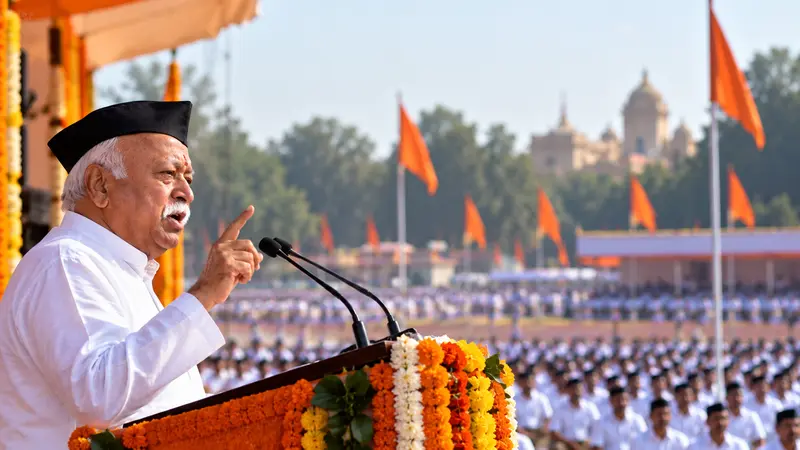
Rashtriya Swayamsevak Sangh chief Mohan Bhagwat used the organisation's most important speech of the year on Tuesday to tell India's protesters that toppling a government fixes nothing. "They say changing the regime will change the situation. But that has never happened anywhere," he said in Nagpur, on the Vijayadashami that marks the Sangh's founding in 1925 and closes its centenary year.
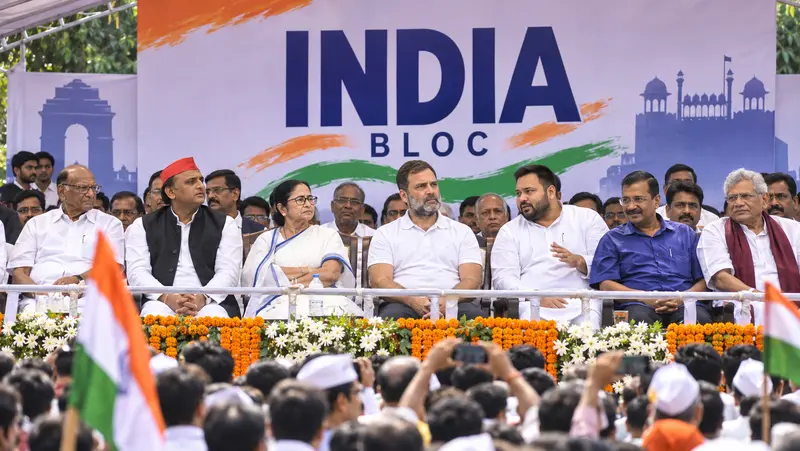
The line landed in a country that has watched near-daily marches this month over the revision of its voter rolls, and the opposition answered within hours. "India is not Bangladesh and India is not France," Congress MP Shashi Tharoor said. "We only believe in peaceful protest."
What Bhagwat said
Bhagwat named four countries where street anger has brought down or shaken a government in recent years: Bangladesh, Nepal, France and Albania. Forces pursuing their own interests, he said, use regime change as a way to alter political circumstances, and they rarely get what they intended. The claim that regime change was coming to India was misguided. "Regime change has neither happened nor will it happen," he said.
He did not ask people to stop protesting. Protest is unavoidable in a democracy, he said, and should aim at solving a public problem. The trouble begins when a protest serves another purpose. Then it becomes political, deepens division and stokes hostility towards a person, a group or an idea. Whatever the feeling in the moment, he said, action must stay within "the boundaries of the Constitution, the law, and civil decorum". Leaders, protesters and the administration all carried a duty not to create bitterness.
He placed the unrest in a larger frame. Some global powers, he said, want India to grow but not to become too powerful, because a strong India would challenge their dominance. He spoke of a "storm coming in from the West" that stood against order, culture and human values, and said forces inside and outside the country were trying to weaken it by working on its social differences. A stronger India, he argued, was the answer. "Social participation and mutual dialogue must increase," he said. "We also have a responsibility to run society and the country."
The rest of the address ranged widely. Development driven only by consumerism brings convenience and a larger human loss, he said; science and technology are means, not ends. He asked the government to consider regulating online content, streaming platforms in particular, and to move quickly against drug addiction. He blamed one-sided development in the Himalaya for part of this year's floods in Nepal. He told young people to learn to judge what they consume online. And he held up the pilot Smit Machchhar, who foiled an attempted hijacking, as an example of what he called Hindu consciousness, a quality he said was not defined by religion, food or political ideology.
The Sangh's centenary outreach, he reported, had reached more than 10 crore households in some 4.6 lakh villages and 41,000 urban areas, and its workers had travelled to Western countries to explain Hindutva.
The reply from the opposition
Prime Minister Narendra Modi praised the speech for its stress on national progress, social unity, self-reliance and the character of society, and for its emphasis on service and the Sangh's five-point programme of change.
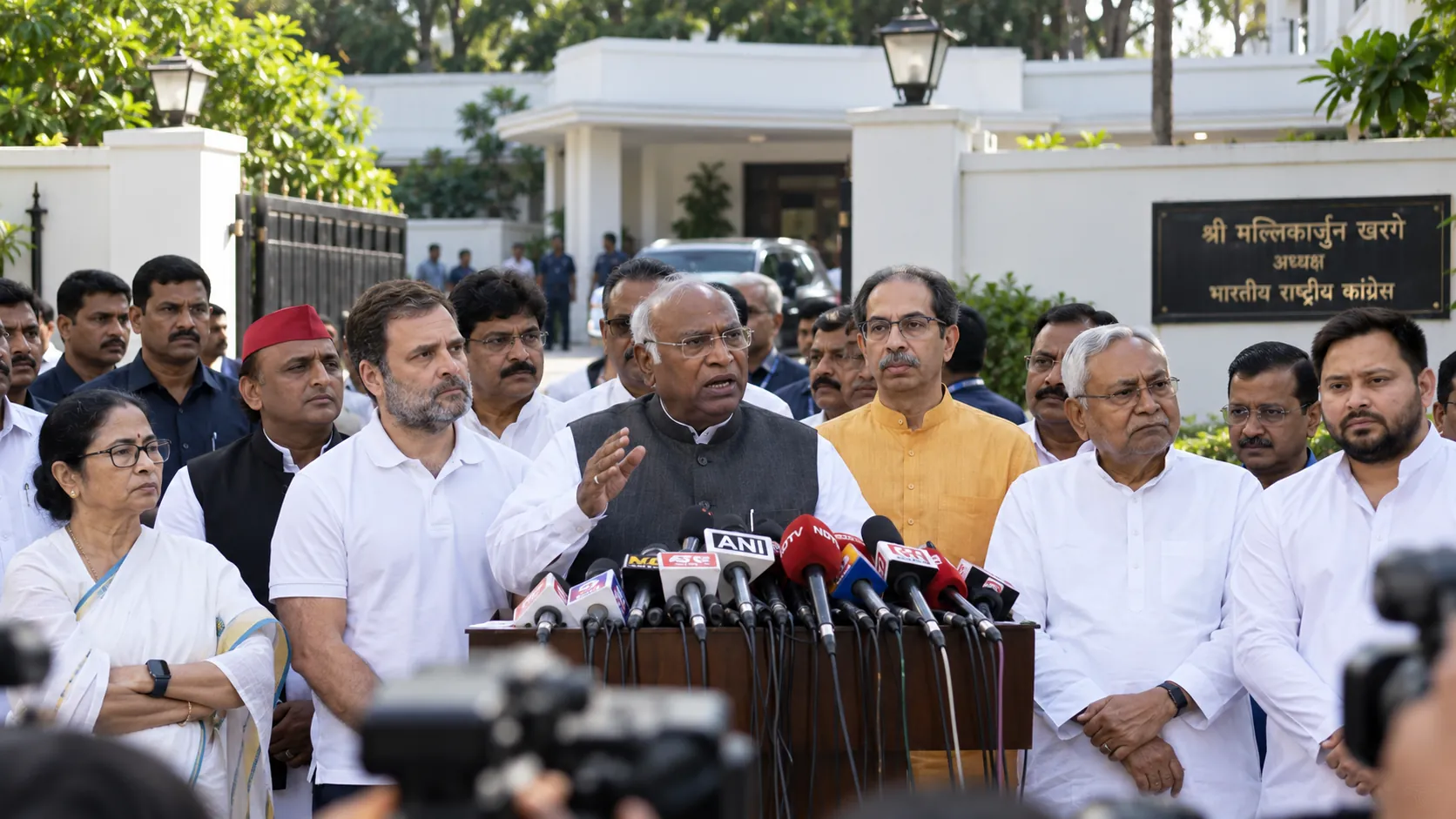
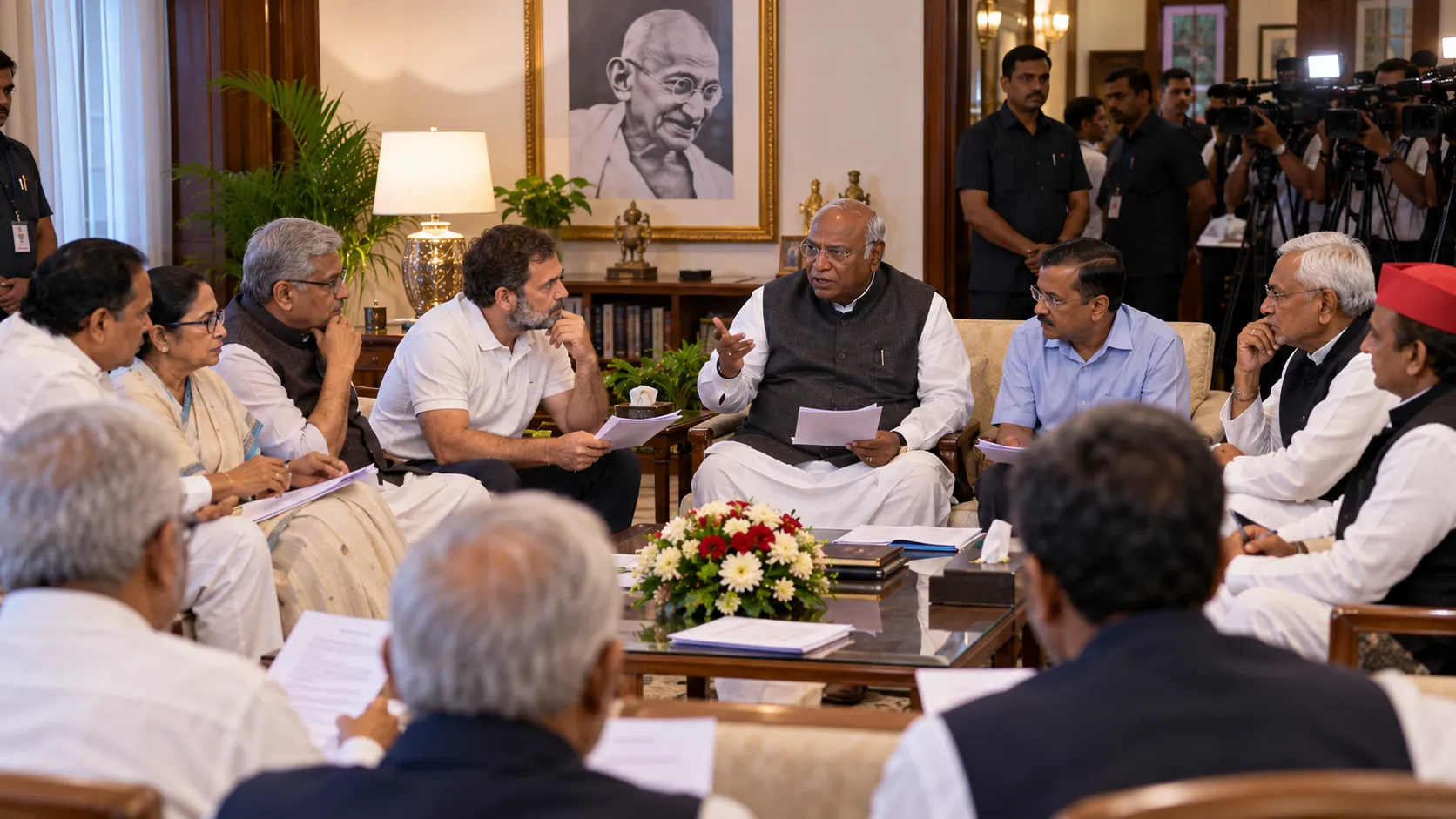
The opposition heard something else. Tharoor said there was no point distorting a phrase like regime change when what the opposition wanted was free and fair elections. Large numbers of people had been removed from the electoral rolls in the Election Commission's Special Intensive Revision, he said, and that was a constitutional question. Congress would not condone violence of the kind seen in France, where buses and police stations were burned. Party spokesman Pawan Khera accused the ruling party of using events abroad to discredit peaceful demonstrations at home. Sanjay Raut of the Shiv Sena (UBT) went the other way and said other countries, "especially India", should learn from Albania, where he said public anger grew out of a court siding with corrupt leaders.
Union minister Kiren Rijiju defended the speech. "Regime change in India is absolutely possible, but only through elections, not through Soros," he said, alleging that anti-India groups and some politicians were trying to incite young people. He gave no evidence for the claim.
Why the timing matters
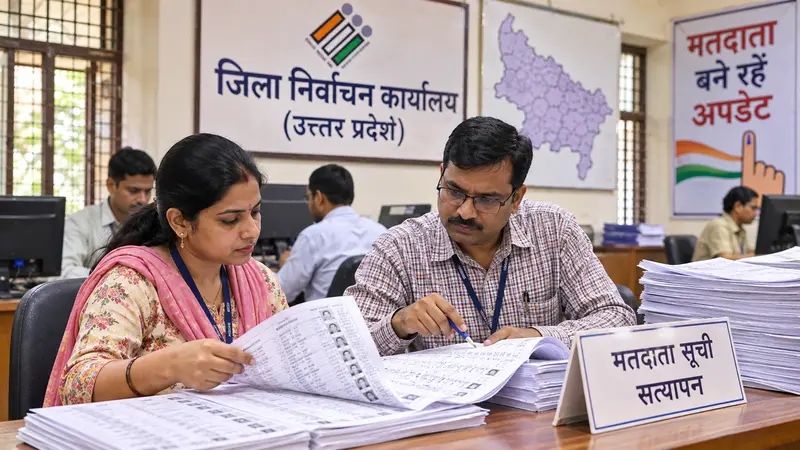
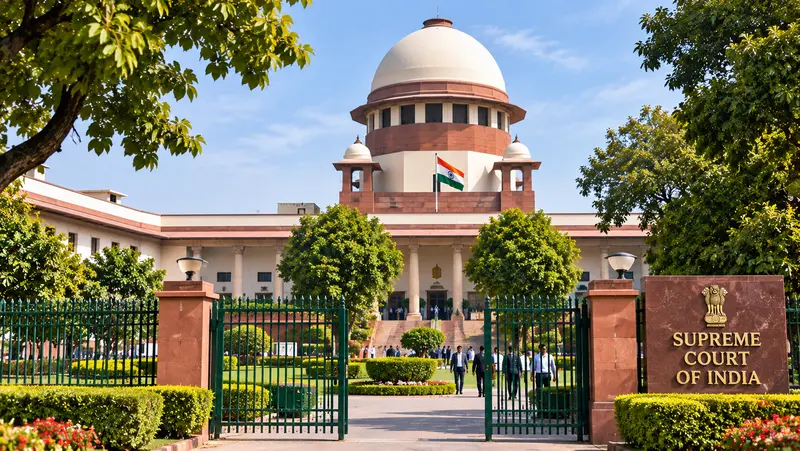
The address came on the same day a Delhi court kept two leaders of the Cockroach Janta Party in custody until Wednesday over a protest at Jantar Mantar. That youth movement, along with opposition parties and student groups, has spent October demanding the resignation of Chief Election Commissioner Gyanesh Kumar. Protesters say about 130 million names were struck off the rolls in the revision. The commission says the deletions covered people who had died, moved or could not be traced, and that anyone wrongly removed can enrol again. The Supreme Court issued notice to the commission on the matter last week.
The same movement forced the resignation of Education Minister Dharmendra Pradhan in July, after a sit-in over leaked examination papers. That is the record Bhagwat was speaking against when he said agitation rarely solves anything, and the record the opposition points to when it says protest works.
Bhagwat speaks once a year at this length, and the Sangh's affiliates, the ruling party among them, treat the address as the line for the twelve months that follow. This one It offered the protesters a hearing and a warning in the same breath: argue, but inside the law, and do not expect the government to fall. The opposition's answer is that it never asked for that. It asked for a clean voter list, and on Tuesday neither side gave any sign of moving.
P
5 min
What did you think?