/
Pralay missile clears user trial off Odisha and induction is now 'imminent': what the 500-km weapon adds
DRDO flight-tested the Pralay quasi-ballistic missile from Abdul Kalam Island at about 11.10 am on 5 November as part of user evaluation trials, and the Defence Ministry said induction has become imminent. It is the fourth test run in user trials since July 2025, for a 150–500 km weapon.
S
4 min
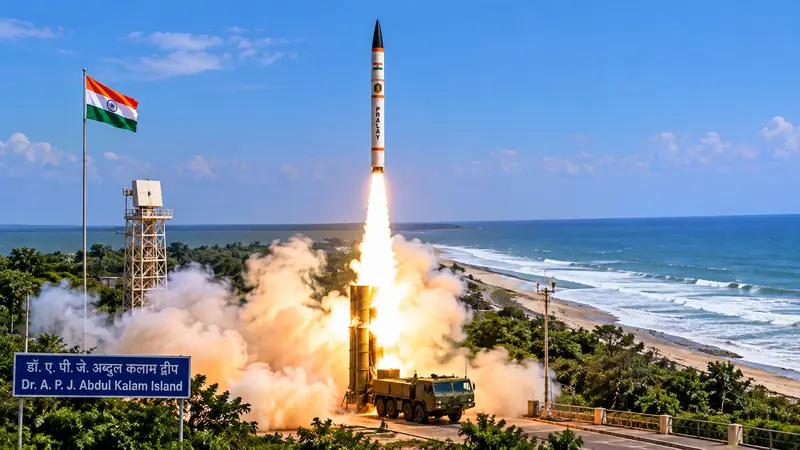
The Defence Research and Development Organisation conducted a successful flight-test of the quasi-ballistic missile Pralay from Dr APJ Abdul Kalam Island off the Odisha coast at about 11.10 am on 5 November 2026, the Ministry of Defence has said. All test objectives were fully met, according to data captured by range instruments of the Integrated Test Range, Chandipur. The ministry added a line it had not used so plainly before: with this test, "the induction of the system has become imminent."
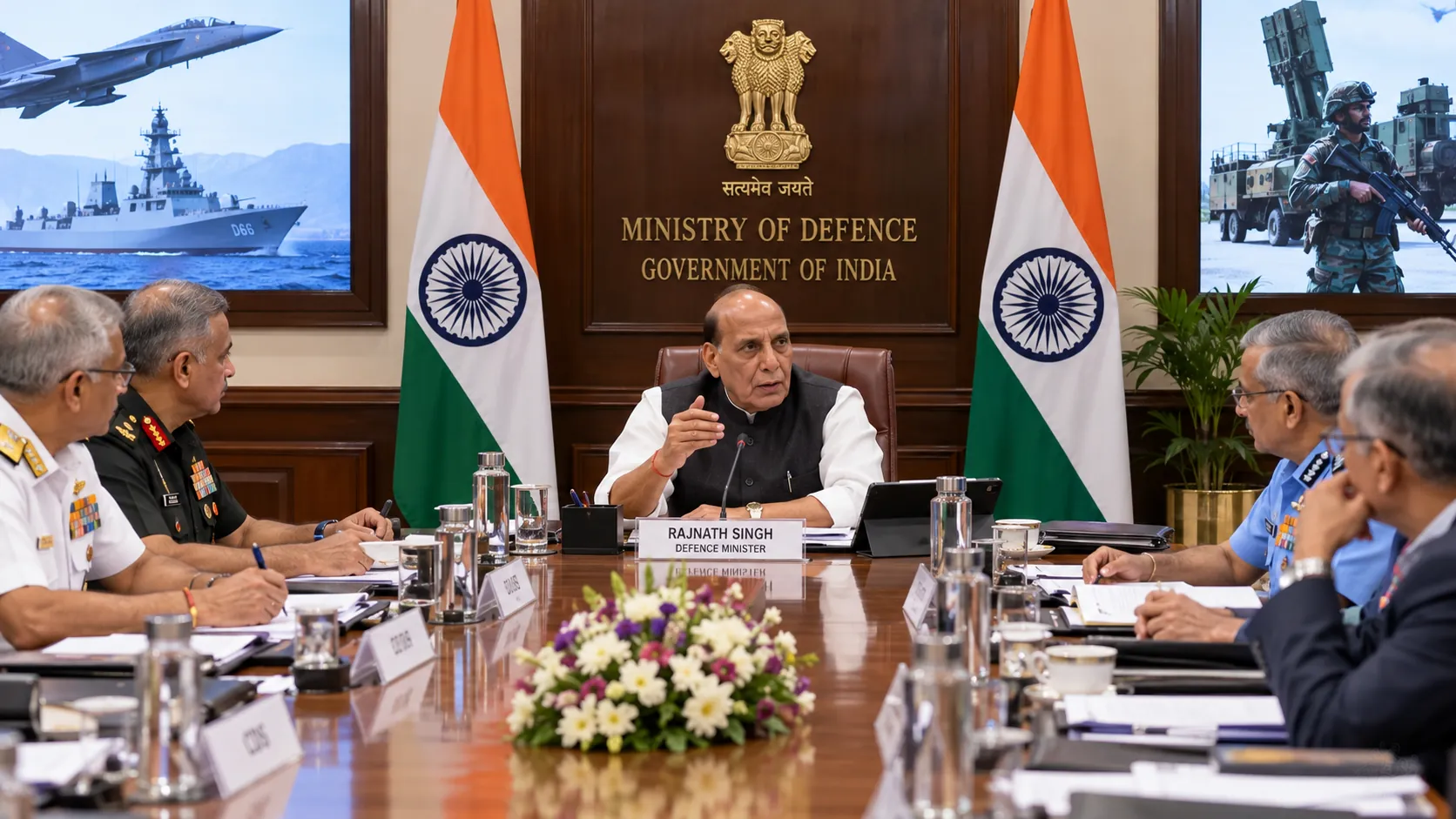
The flight was part of user evaluation trials, watched by senior DRDO officials, industry representatives and the Defence Forces. Defence Minister Rajnath Singh complimented DRDO, the forces and industry, and said the missile would enhance technological capability and operational preparedness against emerging threats.
What Pralay is
Pralay is a surface-to-surface missile powered by a solid propellant rocket motor. The Ministry of Defence describes it as quasi-ballistic, and when it announced the first test in December 2021 it gave a range of 150 to 500 kilometres, launched from a mobile launcher.
The term quasi-ballistic is the key to the design. A conventional ballistic missile flies a largely predictable arc once its motor burns out. A quasi-ballistic missile stays on a flatter path and can change its course during flight, which makes it harder for defences to predict where it will come down. DRDO says the missile uses state-of-the-art guidance and navigation for high precision, and can carry multiple types of warheads against various targets.
Earlier statements call it a conventional weapon. That places it in a gap in India's arsenal between long-range artillery and rockets on one side and heavier strategic missiles on the other. A commander could use it for targets such as airfields, command posts or logistics hubs well behind a front line, without using a system tied to nuclear deterrence. That is an interpretation of its role based on the published range and the conventional label. The ministry has not set out a doctrine for its use.
Five years of testing
The development path can be traced through the ministry's own statements.
| Date | Test | Purpose stated by the ministry |
|---|---|---|
| 22 December 2021 | Maiden flight | Validate control, guidance and mission algorithms |
| 23 December 2021 | Second flight | Follow-up development test |
| 28–29 July 2025 | Two flights | User trials: maximum and minimum range |
| 31 December 2025 | Salvo of two | User trials: two missiles from one launcher in quick succession |
| 5 November 2026 | Single flight | User trials: all objectives met |
The sequence shows why the word "imminent" carries some weight. The July 2025 flights proved the missile at both ends of its range. The December salvo showed that a single launcher can fire two rounds rapidly, and the Defence Minister said it established reliability. At that time the then DRDO chief spoke of imminent readiness for induction, so the language has been used before. Thursday's statement goes a step further by placing it in the official account of the test.
Production is also in view. Research Centre Imarat in Hyderabad led the development with other DRDO laboratories, and Bharat Dynamics Limited, one of the Development-cum-Production Partners, has produced the system tested. That matters because the move from a laboratory prototype to a production unit is often the slowest part of Indian defence programmes.
Why it matters
The Indian Air Force and Indian Army have both been represented at the user trials, which indicates interest from both services. Pralay would give India a non-nuclear option with a reach of up to 500 km, launched from a road-mobile vehicle that can move and hide. A mobile system is harder to find and destroy than a fixed site.
Three cautions apply. The ministry has given no number of missiles to be bought, no delivery schedule and no cost. Induction also depends on orders, production and training, so an "imminent" system can still take time to reach units. And the published range comes from 2021, so any change since then is not on the public record.
Neighbouring states will take note of it too. There is also a broader argument among strategists: critics warn that conventional missiles with long reach can raise the risk of misjudgement in a crisis, because a defender may not know what a missile is carrying until it lands. However, India's position is that such systems strengthen deterrence by giving commanders more options short of escalation.
Export is another question. Defence exports have become a stated government priority, and a proven tactical missile from an Indian production line would draw interest, though nothing has been said about Pralay in that context.
The next signal to look for is a formal order or a Defence Acquisition Council approval. Until then, what is on record is a clean test, a production partner in place and an official statement that the wait is nearly over.
Sources
About the Author
S
Subhash Gupta
Desk Editor
Subhash Gupta is a writer at Wirony, contributing articles that are reviewed and verified by the editorial team before publication. The publication prioritises accuracy, editorial…
S
4 min
What did you think?