/
VISTAR: Cabinet funds 59 surveys, district-level data and the 8th Economic Census with Rs 4,371 crore
The Union Cabinet approved the Rs 4,371.10 crore VISTAR scheme on 4 November for 2026-27 to 2030-31. MoSPI plans 59 surveys against 43 earlier, new services and informal-sector indices, district estimates and the 8th Economic Census. It will also use mobile, scanner and e-commerce data.
S
5 min

The Union Cabinet on 4 November 2026 approved the Viksit Bharat Initiative for Statistical Transformation, Analytics and Research, or VISTAR, with an outlay of Rs 4,371.10 crore for 2026-27 to 2030-31, the Press Information Bureau said. The central sector scheme will cover all statistical and data management work of the Ministry of Statistics and Programme Implementation. It works out to about Rs 874 crore a year.
Statistics schemes rarely make headlines, but this one sets what India will be able to measure for the next five years: jobs, consumption, services, informal businesses and district-level economies. Those numbers shape budgets, welfare targeting and monetary policy.
What the scheme contains
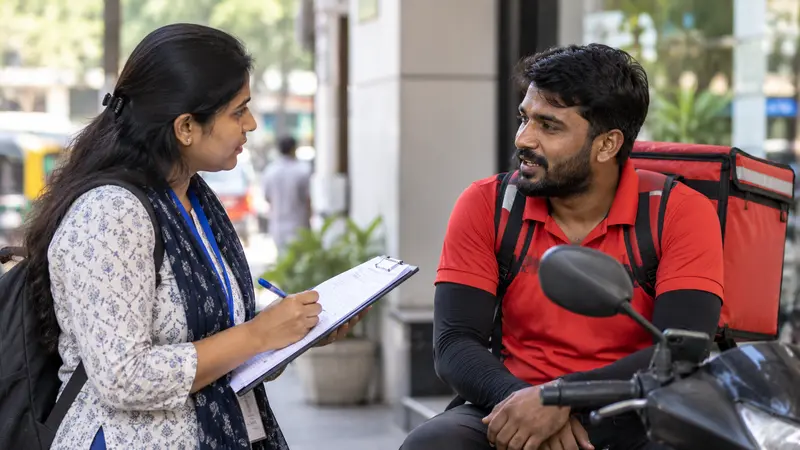
VISTAR has three components. The first, Comprehensive Statistical Operations and Strengthening of Ecosystem, is the largest in scope. MoSPI proposes to conduct 59 surveys during the 16th Finance Commission cycle, against 43 major surveys earlier, to fill gaps in various sectors. It will digitise statistical processes from end to end and use artificial intelligence and machine learning for processing, validation and analysis. It will also release new measures, including a Headline Index of Services Production and an Index of Unincorporated Sector Enterprises.
The second component, Support for Statistical Strengthening, or SSS 2.0, gives funds to states and Union Territories under a deliverable-linked framework. MoSPI will provide technical support to produce district-level estimates and estimates for cities of more than a million people from the flagship surveys, such as the Periodic Labour Force Survey, the Household Consumption Expenditure Survey and the Annual Survey of Unincorporated Sector Enterprises. It will also help compile state and district GDP and a state-level Index of Industrial Production.
The third component is the 8th Economic Census, to be conducted with the states. It will record all non-farm establishments and the workers they hire, down to gram panchayat and ward level. The results will assess the unorganised sector and form the baseline for a National Statistical Business Register, which is meant to support targeted enterprise surveys.
Why it matters
Three gaps explain the design. Services make up the largest part of India's economy, but the country has no headline monthly index for them comparable to the Index of Industrial Production. A Headline Index of Services Production would give policy makers a much earlier signal of what is happening in the largest sector.
The informal sector is the second gap. The Cabinet note says the Economic Census will pave the way for estimating the contribution of the unorganised sector to GDP. An Index of Unincorporated Sector Enterprises would track small firms that official data have struggled to see. How the informal economy is measured has been one of the main criticisms of India's GDP figures, and the new data would give a firmer base for that debate.
The third gap is geography. Most official numbers stop at the national or state level. A district collector or a state planning department usually has no reliable local estimate of employment or consumption. District-level and city-level estimates would allow budgets and schemes to be aimed at the places that need them, and let voters and researchers see how their own district is doing.
The scheme builds on a busy two years at MoSPI. The new GDP series with base year 2022-23 was scheduled for release on 27 February 2026, using more administrative data, including GST records, and double deflation. A new Consumer Price Index with base 2024 followed, with weights from the 2023-24 consumption survey, and the Index of Industrial Production moved to a 2022-23 base. The labour force survey moved to monthly estimates from January 2025. VISTAR provides the money to keep that pace going instead of treating each revision as a one-off.

The new data sources, and the questions they raise
The most forward-looking line in the note concerns alternate sources. MoSPI aims to use mobile phone, scanner and e-commerce data to complement traditional surveys, reduce the burden on respondents and fill gaps.
This is also where the scheme will need the most care. Mobile and transaction data are held by private companies, and they are not a random sample of the population, since they tend to under-represent poorer, older and rural people. The note promises "privacy by design", data cataloguing, machine readability and sharing protocols to dismantle silos between departments. It does not yet say how consent, anonymisation or access by researchers will work, or who will audit the methods.
Critics of India's statistics have long argued that the deeper issue is trust as much as technique: delays in publishing surveys, breaks in comparability between old and new series, and a poverty line that has not been officially updated. Money alone does not settle those concerns. However, the scheme does include several things that can help, among them a regular survey calendar, an internship scheme for students and research funding for academic institutions, which brings outside eyes to the data.
The note also says VISTAR will give MoSPI the flexibility to allocate resources dynamically according to immediate policy needs. That is useful in a crisis, but independent statistical systems usually publish their calendars in advance so that release dates cannot be questioned.
Four markers will show whether the scheme delivers. The first is a dated schedule for the 8th Economic Census, including when field work begins and when the results will be published. The second is the first release of the Headline Index of Services Production, and whether its methodology is published alongside it. The third is the first set of district estimates. The fourth is the publication of a data governance framework for alternate sources, which will show how privacy and quality are protected.
For now the scheme is a funded commitment. Its value will be judged by whether the surveys arrive on time, whether the methods are open, and whether a citizen in any district can look up what is happening where they live.
Sources
- Cabinet approves Viksit Bharat Initiative for Statistical Transformation, Analytics & Research (VISTAR) (PIB)2026-11-04
- New series of Gross Domestic Product estimates with base year 2022-23 (PIB)2026-02-27
- Counting What Counts: Strengthening India's National Accounts and Core Economic Statistics (PIB)2026-01-28
About the Author
S
Subhash Gupta
Desk Editor
Subhash Gupta is a writer at Wirony, contributing articles that are reviewed and verified by the editorial team before publication. The publication prioritises accuracy, editorial…
S
5 min
What did you think?