/
Tata Capital says RBI's draft revolving credit ban would hit only 3-4% of assets; Q2 profit up 51%
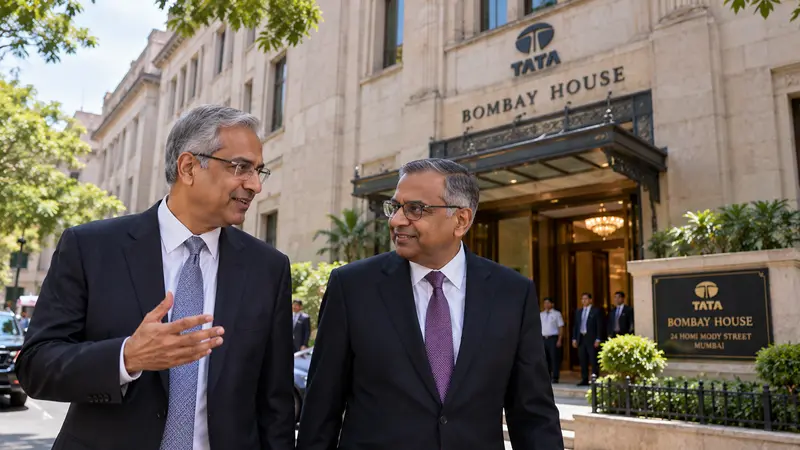
Tata Capital's chief executive Rajiv Sabharwal said the RBI's draft ban on revolving credit by non-bank lenders would affect only 3 to 4 per cent of the company's assets under management. The company's second-quarter profit rose 51% to Rs 1,660 crore and its loan book crossed Rs 3 lakh crore.
S
4 min

Tata Capital's managing director and chief executive Rajiv Sabharwal said on the company's second-quarter earnings call that the Reserve Bank of India's draft ban on revolving credit by non-bank lenders would affect only 3 to 4 per cent of its assets under management if it were issued as drafted. The company reported a 51 per cent rise in consolidated net profit to Rs 1,660 crore for the quarter, from Rs 1,097 crore a year earlier, and its gross loan book crossed Rs 3 lakh crore. The remarks came as the industry waits for the final rules.
What the RBI proposed
In August, the central bank issued draft amendments to its directions on credit facilities for non-banking finance companies. The draft, called the RBI (NBFC-Credit Facilities) Amendment Directions, 2026, was published on 6 August. It would limit these lenders, in general, to term loans and bar them from offering revolving credit, which is a facility that lets a borrower draw down, repay and draw again within a set limit. The exception is for companies that are authorised to issue credit cards, and there are only two such lenders at present, SBI Card and BoB Financial Solutions.
The central bank had raised concerns about high-risk loan products, including revolving lines of credit, because borrowers may use them to repay existing dues, which can create a cycle of debt. Industry bodies argue that the draft is broad and would capture products which are not of that kind.
What Tata Capital says
Sabharwal said that the portion of its book that the company would not be able to convert into a standard term loan under the draft would come to 3 to 4 per cent of assets under management. He said the interpretation of the words revolving credit covers a number of products, and that overdraft products are beneficial to customers because they pay interest only to the extent that they borrow. He added that supply chain finance and loans against securities have existed in the industry for more than 30 years.
He said the company continues to talk to the RBI, is piloting alternative products and will comply with whatever the final regulation says. In his words, the company does not believe that the proposed regulations will have a significant impact on its books over a period of time. In an interview in August, he had put revolving credit at below 5 per cent of the loan book. The two figures use different bases, assets under management and the loan book, so they cannot be compared directly.



The wider industry
Other lenders have been less relaxed. Bajaj Finance, Tata Capital and Shriram Finance sought a meeting with RBI officials soon after the draft appeared. The industry has said that products with total assets under management of more than Rs 2 lakh crore could be affected, and that nearly 90 per cent of this lending serves small businesses and individuals. The Finance Industry Development Council, the self-regulatory body for these lenders, has sent its recommendations to the central bank.
The lenders also argue that the draft creates an uneven playing field, since banks could continue to offer similar working-capital and short-term liquidity products. The reports do not say when the RBI will finalise the rules.
Tata Capital's net total income rose 24 per cent to Rs 4,676 crore from Rs 3,774 crore. Assets under management grew 26 per cent to Rs 3,08,030 crore, and the gross loan book stood at Rs 3.03 lakh crore on 30 September 2026. The company attributed the profit growth to strong loan growth, stable asset quality and a healthy rise in net interest income.
Examples of what lenders say could be caught include overdraft lines, supply chain finance and loans against securities, in which a borrower is given a limit and can draw and repay within it. Industry executives argue that these are used by businesses to manage day-to-day cash needs, and that converting them to fixed term loans would make them less useful.
For borrowers, the draft affects products such as overdraft lines for small businesses and flexible credit limits, which allow a person to borrow only what is needed and to repay early. If the rules are passed as drafted, lenders would have to turn these into term loans with fixed schedules, or move them to banks. For the lenders, the effect depends on how much of the book is of this type, which is why the company-level figure of 3 to 4 per cent is a useful number, and why others with a larger share of such products are pressing for changes.
S
4 min
What did you think?