/
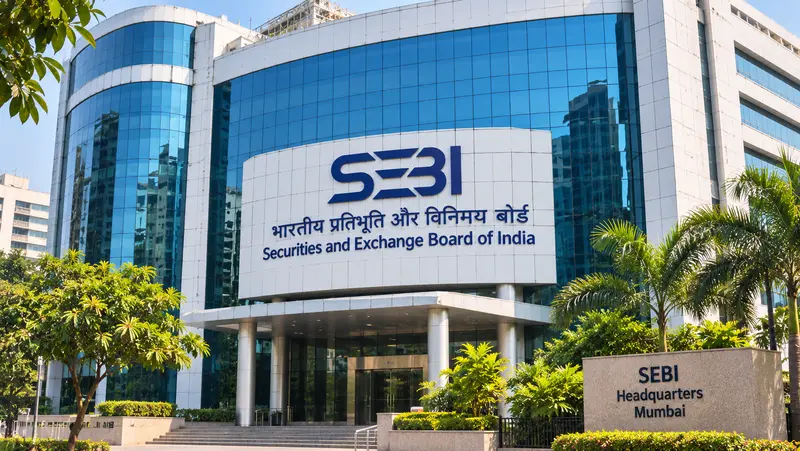
SEBI lets fund managers accredit investors and adds a Rs 5 crore market test: who now qualifies
A SEBI circular of 5 November, effective at once, lets AIF, SIF and PMS managers determine accredited investor status for three years, adds a test of Rs 5 crore in securities market exposure for individuals, deems all non-residents accredited and recognises LLPs. Conflict safeguards apply.
S
5 min

The Securities and Exchange Board of India has changed how investors can become Accredited Investors, the group allowed into products with more flexibility and less regulatory oversight than those sold to retail customers. A circular dated 5 November 2026, numbered HO/19/34/11(6)2026-AFD-POD1/I/25244/2026, takes effect immediately. It follows amendments to the Alternative Investment Funds Regulations notified on 15 October.
Four things change. Fund managers can now determine accreditation themselves. A new eligibility test based on securities market exposure is added. All persons resident outside India are deemed accredited. And limited liability partnerships can qualify.
How accreditation worked, and what is new
The framework dates from 2021. It exists because regulators accept that some investors can understand and bear the risks of complex, less liquid and concentrated products. Until now a person had to approach an Accreditation Agency, a subsidiary of a stock exchange or depository. There are two, CDSL Ventures and NSDL Database Management, and they verified income or net worth and issued a certificate.
An individual, Hindu Undivided Family, family trust or sole proprietorship qualifies with annual income of at least Rs 2 crore, or net worth of at least Rs 7.5 crore with at least Rs 3.75 crore in financial assets, or income of at least Rs 1 crore with net worth of at least Rs 5 crore, of which Rs 2.5 crore is financial assets. A body corporate or a non-family trust needs net worth of at least Rs 50 crore.
The circular adds a third door.
| Route | Who | Threshold or rule |
|---|---|---|
| Securities market exposure | Individual, HUF, family trust, sole proprietorship | Rs 5 crore |
| Securities market exposure | Body corporate, trust other than family trust | Rs 20 crore |
| Manager-led accreditation | Managers of AIFs, SIFs, portfolio managers | Valid three years |
| Deemed status | All persons resident outside India | No certificate needed |
| LLP | Limited liability partnerships | Each partner must meet the criteria independently |
Securities market exposure includes securities in dematerialised form, mutual funds held through folios, unlisted securities held in demat form, overseas market investments and investments under the National Pension System. Demat holdings are valued from the eCAS statement. Unlisted and overseas holdings not valued there need a chartered accountant's certificate.
This is a real widening. A retired professional with Rs 5 crore in shares and funds, but low income and little other wealth on paper, may now qualify. Before this, that person would have needed Rs 7.5 crore of net worth. SEBI's board papers show the size of the change: about 3.7 lakh investors met the proposed exposure test on data as of 30 April 2026, against about 96,000 AIF investors today and just 4,492 accredited investors on 28 August 2026, up from 649 on 29 May 2025. One proposal did not survive into the circular's list: futures open interest, floated in the board paper as a form of exposure, is not among the five qualifying items.
The manager-led route
The largest change is who decides. A manager of an alternative investment fund, the asset management company of a Specialized Investment Fund or a portfolio manager may determine and record an investor's status at onboarding or during a scheme, after checking eligibility. That decision is recognised across managers in the same corporate group for AIFs, SIFs and portfolio services for three years. An investment adviser or research analyst cannot determine status independently, but can rely on a valid determination by a manager in its group.
The route is additional and optional. The agency route stays, and a manager must accept a valid agency certificate. Accreditation by a manager outside the group must be done afresh. An investor accredited at onboarding stays accredited for the remaining life of that scheme, and certificates issued before the circular remain valid for their unexpired period.

Documents are specified. For income, the latest income tax return or a chartered accountant's certificate. For net worth, audited financial statements or a CA certificate not older than six months. For exposure, an eCAS summary from a depository not older than six months, or a CA certificate.
Why it matters
SEBI's stated aim is to make accreditation easier and faster, widen the participation of sophisticated investors and deepen risk capital. For managers, the process no longer waits on a separate agency. Under the old arrangement a manager could onboard an investor but could not make a drawdown or investment until the agency's certificate arrived.
The concern is plain, and SEBI's safeguards acknowledge it. A manager earns fees from the investor it is certifying. So the circular requires an accreditation policy with conflict of interest controls, including separating the accreditation function from business development and distribution. Managers must keep records for at least five years from accreditation, or until five years after the investor leaves, whichever is later. They must document each decision so that it can be independently reviewed, run periodic internal audits and offer a grievance route. They carry responsibility for compliance.
Critics of the change will say that these controls depend on enforcement and that a salesperson's incentive does not disappear because a policy forbids it. Supporters will reply that the investors in question are wealthy, that the agency route remains open and that the documents are objective. How inspections treat the first cases will decide which view holds.
For a person resident outside India, deemed status removes a step, but it does not reduce anti-money laundering checks. The circular says AIFs and managers must still carry out client due diligence, identify beneficial owners and meet source-of-funds requirements. The manager must record why the investor has been identified as a non-resident.
For an individual considering accreditation, status is not a recommendation. It opens products that SEBI itself describes as carrying lesser oversight, longer horizons and concentrated exposures, and an accredited investor accepts that fewer protections apply. A sensible step is to ask who is doing the accreditation, how that person is paid and what protections are being given up. The updated Master Circular for AIFs is on SEBI's website.
This article is for information and is not investment advice.
Sources
About the Author
S
Subhash Gupta
Desk Editor
Subhash Gupta is a writer at Wirony, contributing articles that are reviewed and verified by the editorial team before publication. The publication prioritises accuracy, editorial…
S
5 min
What did you think?