/
Rupee ends October with best monthly gain since February as measures curb dollar demand
The rupee strengthened into month-end on 30 Oct, logging its best monthly gain since February after steps to curb dollar demand. USD-INR has traded around ₹94.90–₹95.26, with oil prices still a key risk.
R
3 min
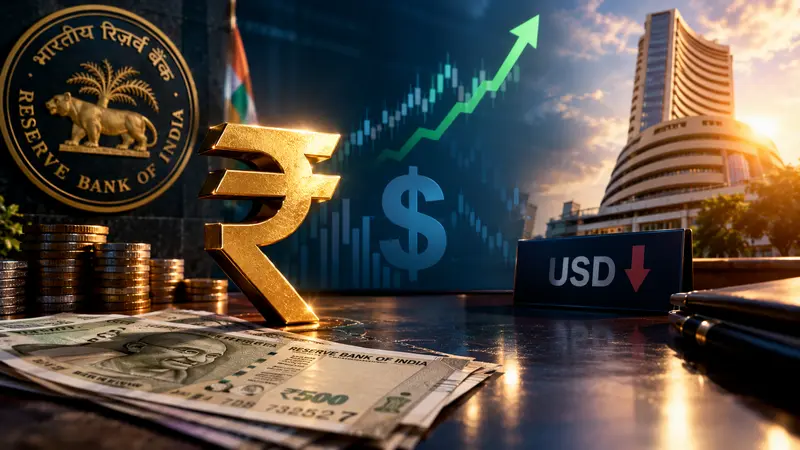
The rupee ended October on a firmer note on 30 October 2026, capping its best monthly gain since February after policy steps aimed at reducing dollar demand helped steady the currency.
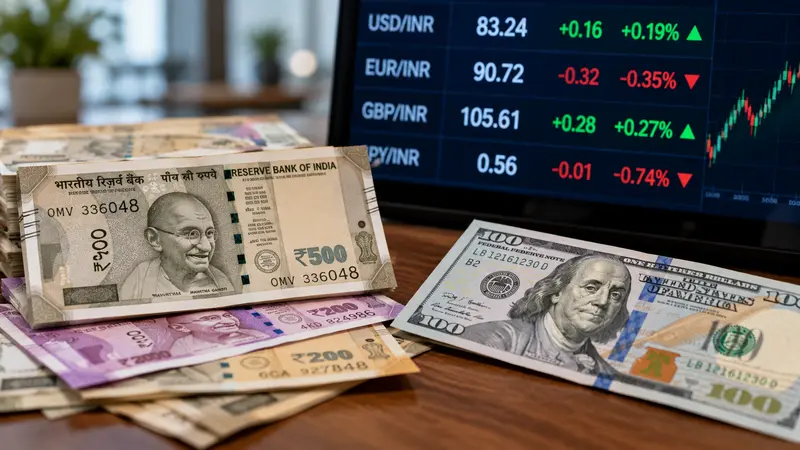
In the spot market, the USD-INR exchange rate has been trading in a recent band of ₹94.90 – ₹95.26 per US dollar, with the latest close cited near ₹94.93. The moves came as traders weighed a softer US dollar, shifts in foreign investor flows and the impact of measures designed to temper demand for dollars in the domestic market.
RBI measures curb dollar demand
The month’s rise has been linked to steps taken to support the rupee by limiting dollar buying pressure. While the day-to-day drivers remained familiar, the policy signal mattered: when demand for dollars eases, the rupee tends to find more breathing room, especially during periods when importers and borrowers would otherwise add to the bid for foreign currency.
The Reserve Bank of India manages and issues the rupee under powers set out in the Reserve Bank of India Act, 1934. That mandate includes the central bank’s role in currency management and, when it chooses, market intervention and reserve management aimed at smoothing volatility.
The rupee is India’s official currency, represented by the symbol ₹ and the code INR. It is subdivided into 100 paise. The symbol, adopted in 2010, blends the Devanagari “र” and the Latin “R”, a visual shorthand that has since become standard on banknotes, price tags and trading screens.
The currency’s rebound has come despite firmer oil prices, a reminder of the rupee’s sensitivity to energy markets. India is a major crude importer, so higher oil can widen the import bill and pressure the currency when dollar outflows rise.
Even so, some market participants now argue that the worst of the rupee’s recent stress may be passing. A. Balasubramanian, managing director and chief executive of Aditya Birla Sun Life AMC, said he expects the rupee to stay broadly stable, with a marginal appreciation bias in 2027.
He pointed to expected support from FCNR deposit inflows, additional overseas borrowings and what he described as adequate foreign exchange cover. Balasubramanian also flagged the role of the RBI’s intervention and reserve management in limiting sharp swings.
On the trade side, he said expanding manufacturing and export capability, especially in automobiles and electronics, could lend support. With exports gaining momentum and the current account position described as relatively comfortable, he said he saw limited reasons for a steep depreciation, while still identifying elevated crude prices as a key risk.

Market commentary during the session also focused on technical levels in the USD-INR pair, with attention on resistance around 95.40 and support near 94.75 as traders assessed near-term direction.
What the rupee is, and what’s next
For households and businesses, the rupee’s month-end performance matters beyond the trading screen. A steadier currency can help import costs from rising as quickly, while exporters watch for any loss of price competitiveness if the rupee strengthens too far, too fast.
The RBI’s remit over issuance and currency management sits alongside its newer work on the Digital Rupee, a central bank digital currency issued in both retail and wholesale forms. The e₹, also referred to as eINR, is designed to be a sovereign digital version of cash, distinct from private cryptocurrencies.
The term “rupee” is also used for official currencies in several other countries, but India’s rupee remains one of the most closely watched in Asia because it reflects the balance between energy imports, capital flows and domestic growth.
The next test for the currency is whether October’s support holds into November as oil prices, foreign investor behaviour and domestic dollar demand evolve. For now, traders are watching whether the rupee can remain anchored near the recent trading band, or whether renewed pressure pushes USD-INR back toward the upper end of the range.
R
3 min
What did you think?