/
RBI census: foreign stakes in India up 8.5% in rupees but down in dollars; Indian money abroad jumps 41%
RBI's provisional FLA census for 2025-26 puts inward direct investment at Rs 70.7 lakh crore, up 8.5% in rupees but down 1.9% in dollars, as the rupee weakened. Outward investment jumped 41% to Rs 16.7 lakh crore, cutting the inward-outward ratio to 4.2 from 5.5. The US leads at 16.5%.
A
5 min
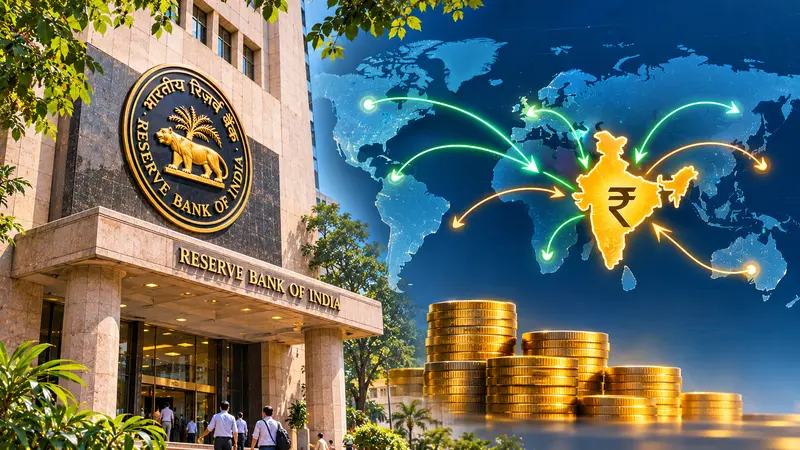
The Reserve Bank of India released the provisional results of its 2025-26 census on foreign liabilities and assets on 6 November 2026. The census, known as the FLA, is the most detailed official count of foreign money held in Indian companies and of Indian companies' investments abroad. This round covers 43,123 entities as at end-March 2026, of which 36,168 reported inward direct investment.
The topline looks healthy. A closer reading shows two things that the usual reports of FDI inflows miss: how much of the change comes from the rupee's fall, and how quickly Indian firms are putting money overseas.
The main numbers
All figures below are at market value as at end-March.
| Direct investment | 2025 | 2026 | Change |
|---|---|---|---|
| Inward, Rs crore | 65,17,379 | 70,71,945 | +8.5% |
| Inward, US$ million | 761,542 | 747,134 | −1.9% |
| Outward, Rs crore | 11,86,744 | 16,71,463 | +40.8% |
| Outward, US$ million | 138,669 | 176,586 | +27.3% |
| Inward to outward, in rupee terms | 5.5 times | 4.2 times | – |
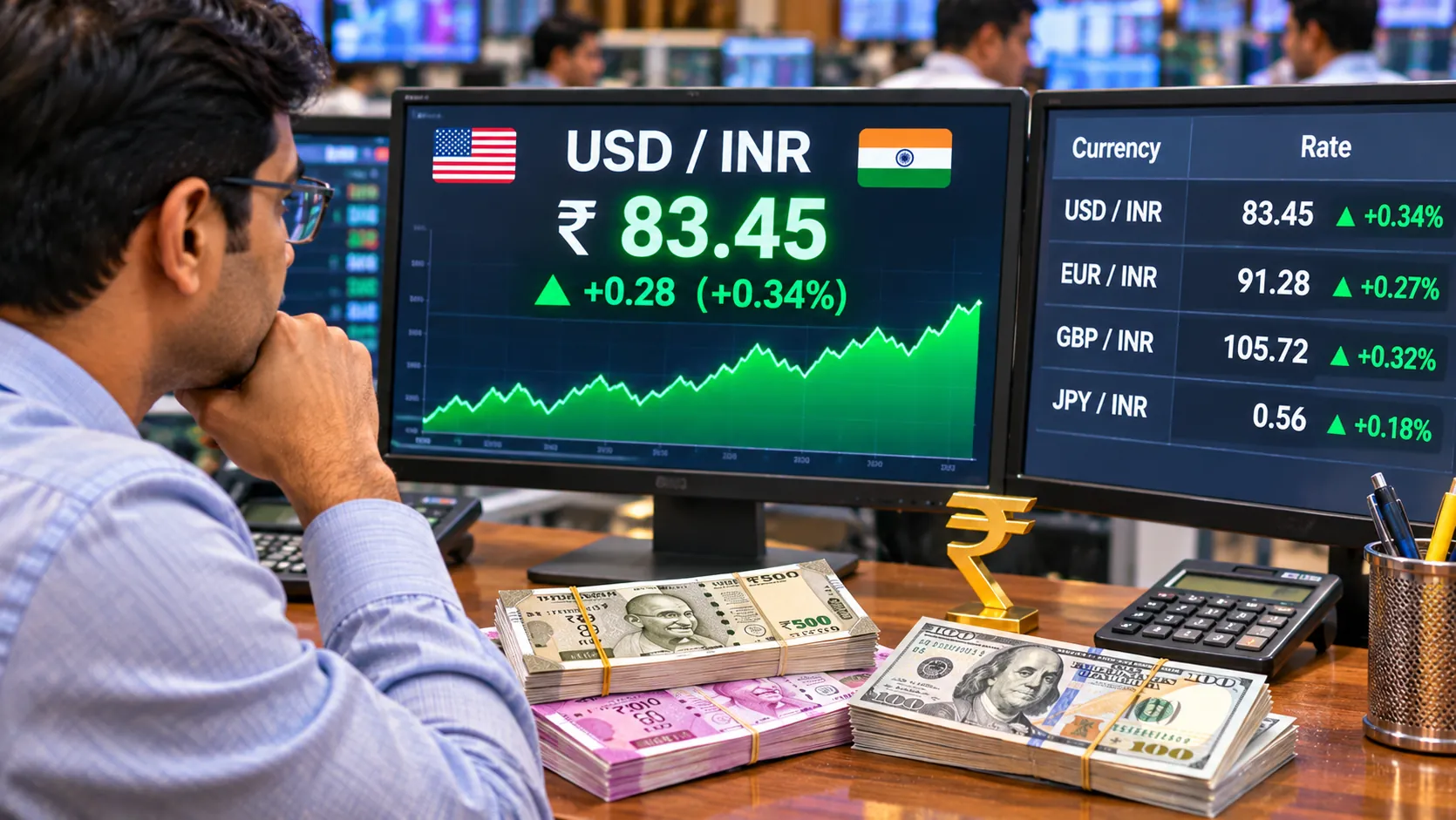
The first two rows tell opposite stories, and both are correct. In rupees, foreign-held stakes in Indian companies rose by 8.5%. In dollars, they fell by 1.9%. The figures imply a year-end exchange rate that moved from about 85.6 to about 94.7 rupees per dollar. A foreign investor who stayed put saw the rupee value of the stake grow and its dollar value shrink. The RBI notes that the census differs from balance of payments flows because it includes valuation changes from prices and exchange rates. So this table should not be read as money coming in or leaving. It is a measure of what the stock is worth.
Who holds what
The United States is the largest source of outstanding FDI, at 16.5%, followed by Mauritius at 14.5%, Singapore at 13.7% and the United Kingdom at 10.8%. The Netherlands holds 10.2% and Japan 9.0%. The largest rise among the top ten came from South Korea, whose stake climbed from about Rs 1.20 lakh crore to about Rs 2.17 lakh crore.
Readers should treat country rankings with some care. The census shows the immediate source of the holding, and Mauritius, Singapore and the Netherlands have long been used as locations for investment vehicles. The country on the form need not be where the final owner lives.
Most of this money sits in companies that are not listed. Around 97% of reporting entities were unlisted at end-March 2026, and they held 97.9% of FDI equity at face value. At market value, listed and unlisted firms had almost equal shares, which shows how much more the market pays for the listed ones. Unlisted companies held 96.6% of FDI debt. About 75% of companies with inward investment are subsidiaries of foreign parents.
By sector, manufacturing accounted for 50.1% of FDI equity at market value and services 45%. The census counts the whole stock, including decades of older plant and brand value, so it reads differently from a single year's inflows.
Why it matters
The most striking change is on the outward side. Indian firms' direct investment abroad rose 40.8% in rupees and 27.3% in dollars in a single year. That pulled the inward-to-outward ratio down from 5.5 to 4.2.
Singapore, the United Arab Emirates and the United States together received more than half. The Emirates is the eye-catching case: outward investment there went from about Rs 1.04 lakh crore to about Rs 2.71 lakh crore, and most of the rise is in debt, which jumped from Rs 17,644 crore to Rs 1,52,778 crore. In other words, Indian entities greatly increased their lending to related units in the UAE, not only their equity stakes. The census does not say why, and a small number of large transactions could account for it. It deserves further study.
There are two ways of reading this. The positive one is that Indian companies are maturing into global players, buying assets and building overseas operations, as firms from other large economies have done. The worrying one is that capital is choosing to go out at a time when the country needs it at home, and that a weaker rupee adds pressure. Critics of the first reading point out that India's own private investment has been uneven. However, the outward numbers remain small compared with inward ones, and a mature economy would be expected to invest both ways.
Other foreign liabilities also grew. Trade credit, loans, deposits and other payables to unrelated non-residents rose 11.9% in rupee terms to Rs 34.33 lakh crore, while similar assets rose 16.1% to Rs 17.26 lakh crore. Because the rupee fell, part of this rise is valuation too, and in dollars the liability grew only slightly. Loans are the largest item at Rs 16.47 lakh crore, and they matter because they must be repaid in foreign currency, which is one reason why the RBI watches them.
These are provisional figures from a survey of reporting entities, and they will be revised. They are best used for structure: who owns what, in which sectors and through which countries.
For a reader, the main lesson is simple. A headline figure for foreign investment in rupees can rise simply because the currency has fallen. When the rupee moves as much as it did in 2025-26, both currencies have to be checked before drawing a conclusion. The RBI's foreign exchange reserves, reported the same day at $717.06 billion for the week ended 30 October, are a separate measure and should not be confused with these holdings.
This article is for information and is not investment advice.
Sources
About the Author
A
Amita Sahani
Staff Writer
Amita Sahani writes for Wirony. Every story under this byline is reviewed and approved by an editor before it is published, and corrections are made openly.
A
5 min
What did you think?