/
DA hike before Diwali: when the rise for central staff is expected and what it adds to your pay
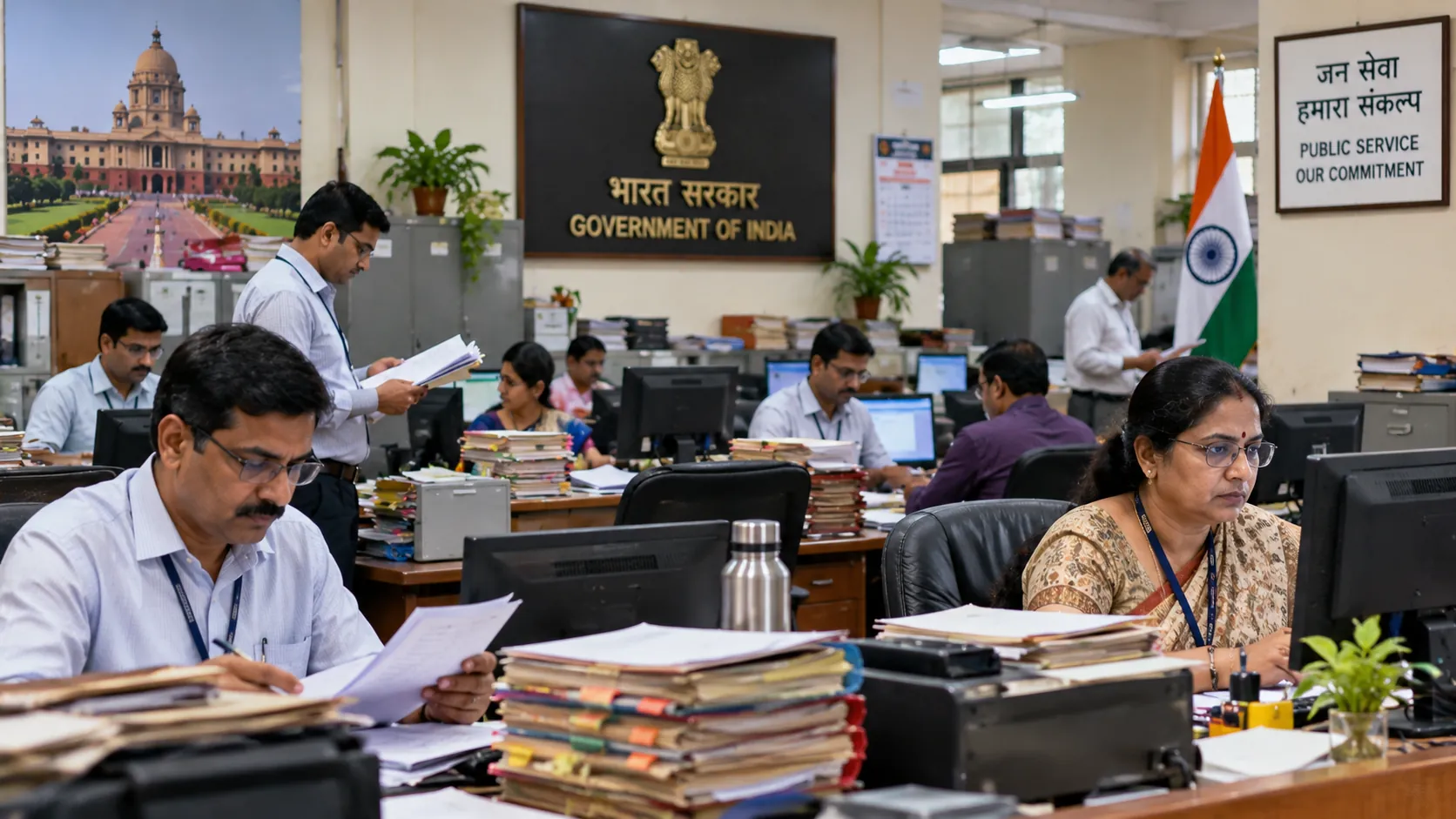
Central government employees and pensioners are waiting for the July 2026 dearness allowance revision. DA stands at 60 per cent, reports expect 63 or 64, and the cabinet has announced nothing yet. Here is how the rise is worked out and what it adds to a salary.
P
4 min

Searches for the dearness allowance hike are among the trends in India this week, and the reason is simple: central government employees and pensioners are waiting for the revision due from 1 July 2026, and no announcement has been made. The Union Cabinet met on 14 October and did not take up the decision. Hopes now rest on a meeting before Diwali, though that is an expectation, not a notice.
The allowance currently stands at 60 per cent of basic pay. The last increase was two percentage points, taking it from 58 per cent, and it was applied from the January 2026 round; the order came in April, with the difference paid back to January. The one before that was approved on 1 October 2025, when the cabinet raised the allowance from 55 per cent to 58 per cent in the run-up to Diwali.
How the number is reached
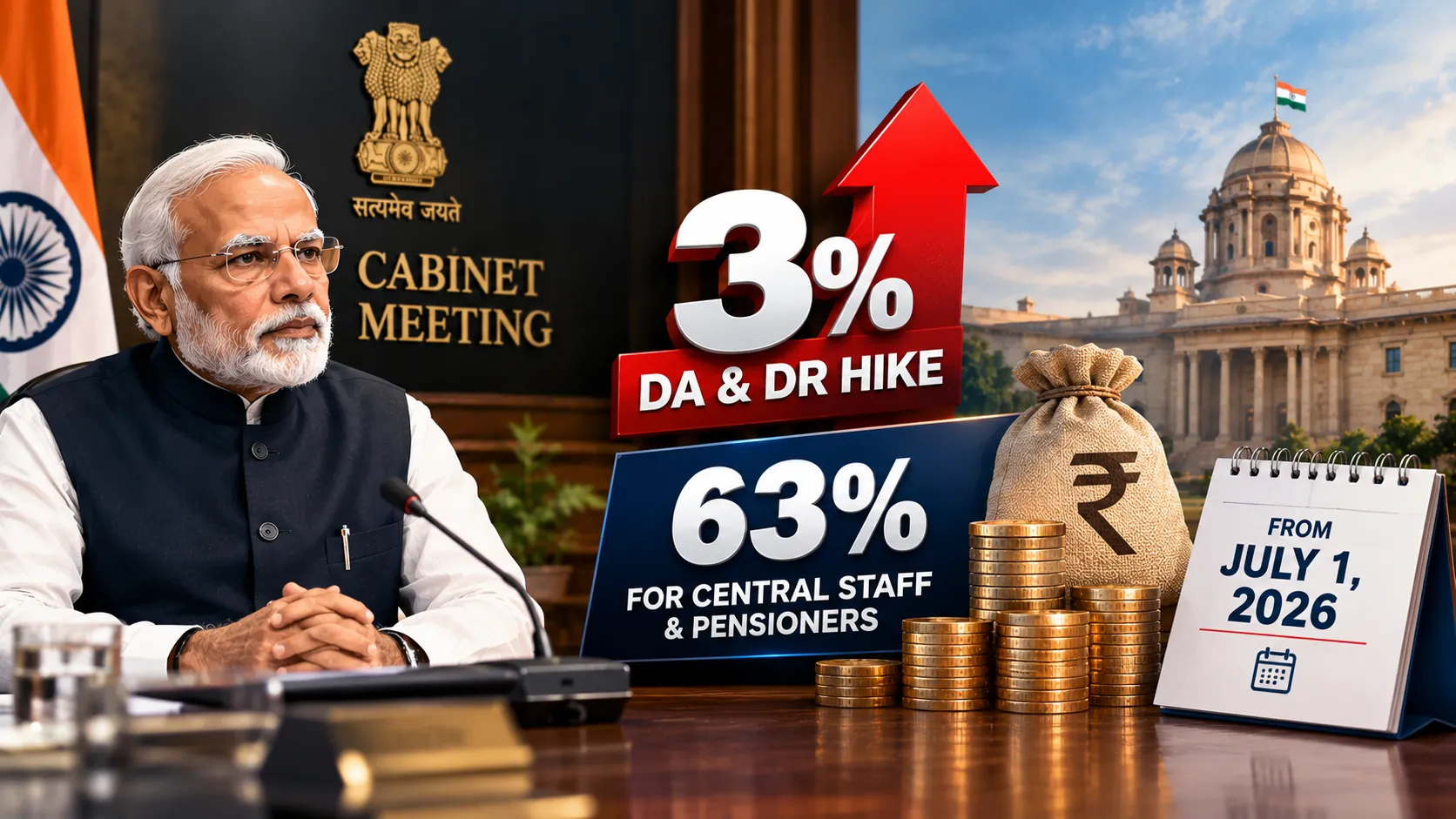
Dearness allowance is revised twice a year, with the first round counted from 1 January and the second from 1 July. The size of each rise is not a political decision in the first place. It follows the All India Consumer Price Index for Industrial Workers, the AICPI-IW, averaged over the preceding twelve months under the formula that came with the 7th Pay Commission. Reports that put the next hike at 3 to 4 percentage points are working backwards from that index, which is why they speak of 63 or 64 per cent. Several calculators that use all twelve monthly readings from July 2025 to June 2026 arrive at about 63.76 per cent. Because the allowance is declared in whole numbers, that points to 63 per cent, a rise of three points. The arithmetic in these calculators does not fully reconcile, though, and only the finance ministry's order is authoritative. The government has confirmed neither figure.
If the decision comes after the July start date, the increase is still counted from 1 July. Employees would then receive the difference for July, August, September and the months after, as arrears in a lump sum, which is why the date of the announcement changes the size of the cheque and not the monthly rate.
What it costs the exchequer
The earlier two-point rise, which took effect from 1 January 2026, covered about 50.46 lakh central government employees and 68.27 lakh pensioners and was put at Rs 6,791.24 crore a year. On the same basis each point is worth roughly Rs 3,400 crore, so a three-point rise would cost around Rs 10,000 crore a year. That is an estimate from the earlier figure, not a government number.
What it means in rupees
The allowance is a percentage of basic pay, so every extra point is worth one per cent of basic. The table below is an illustration of the arithmetic, not an official statement of anyone's pay.
| Basic pay (Rs a month) | Extra per month at +3 points | Extra per month at +4 points |
|---|---|---|
| 30,000 | 900 | 1,200 |
| 50,000 | 1,500 | 2,000 |
| 1,00,000 | 3,000 | 4,000 |
Pensioners receive the same rise as dearness relief on their basic pension. In both cases the money is counted from 1 July, so a four-month wait for the announcement would add four months of arrears on top of the new monthly rate. At 50,000 rupees of basic pay and a three-point rise, that is Rs 6,000 in arrears, plus Rs 1,500 more each month after.
The timing is partly habit. Cabinets have often cleared the second-half revision before Diwali, and last year's decision came on 1 October. This year Dhanteras falls on 6 November and opens the five-day festival, so the window is narrowing.
There is another reason for the interest. Prices have been uneasy: oil has been near $108 a barrel on the Iran war, and households feel it. The allowance exists to protect pay from that sort of erosion, though a rise of three or four points would not make up everything.
Three things would settle the matter. The first is a Cabinet briefing after one of its weekly meetings; the second is an official order from the finance ministry's department of expenditure, which carries the rate and the effective date; the third is the corresponding order for pensioners. Until those appear, any figure is an estimate. Employees should treat dates from social media and unofficial calculators as guesses, and the arrears as a certainty only once the order is out.
P
4 min
What did you think?