/
Daylight saving time ends for 2026 as clocks fall back at 2 a.m. Sunday
Daylight saving time ended early Sunday, Nov. 1, 2026, as clocks in most of the U.S. fell back one hour at 2 a.m. local time. Standard time now brings brighter mornings and earlier sunsets. The next switch is March 14, 2027.
R
3 min
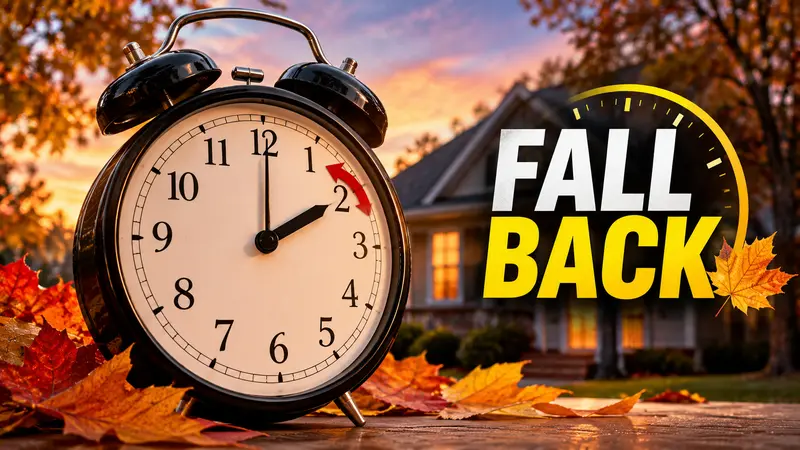
Daylight saving time for 2026 ended early today, with most of the United States turning clocks back by one hour at 2:00 a.m. local time on Nov. 1, 2026. The change returned communities to standard time and delivered an extra hour overnight for people whose schedules follow the clock.
For many households, the shift was barely noticed because phones, computers and other connected devices updated automatically. Analog clocks and some appliances still needed a manual reset, and the change also meant the familiar seasonal trade-off: brighter mornings, but earlier darkness in the late afternoon and evening.
When the clocks changed
The annual “fall back” happens at the same moment nationwide by local time: 2 a.m. becomes 1 a.m., creating two 1 a.m. hours on the clock. That quirk can matter for anyone working overnight shifts, catching an early flight, tracking time stamps, or simply trying to remember whether an event happened before or after the reset.
The timing also landed right after Halloween weekend this year, which meant many people woke up to an extra hour on the first Sunday of November.
While the change is uniform in how it is carried out, the lived experience varies by place. The return to standard time brings more morning light, but the sun also sets earlier, which can reshape evening commutes, school and sports schedules, and how late it feels reasonable to run errands outdoors.
Daylight saving time is the part of the year when most of the U.S. operates one hour ahead of standard time, typically from March into early November. The practical effect is to shift an hour of daylight from the morning into the evening during spring and summer, when days are longer.
Once the clocks revert in the fall, daylight arrives earlier in the morning. The cost is that it gets dark sooner later in the day, a change that becomes more noticeable as winter approaches.
More from Weather & EnvironmentExplore Weather & Environment

The twice-yearly switch is also a reminder that the clock is only one part of how people experience time. Children and pets, for instance, may still wake up when their bodies tell them it is time, not when the new clock display says so. Even adults who welcome the extra hour can find that routines feel slightly off for a day or two.
Health and sleep experts often note that the fall change tends to be easier to tolerate than the spring shift, because it adds an hour rather than taking one away. Still, the earlier nightfall can affect mood and daily rhythm for some people, especially those who spend less time outdoors once evenings shorten.
What happens next
The next time change is already on the calendar. Daylight saving time is set to return on March 14, 2027, when clocks will move forward by one hour at 2 a.m. local time.
The debate over whether the U.S. should keep changing clocks twice a year has continued for decades, and the issue surfaced again this weekend as people reset watches and wall clocks. A proposal known as the Sunshine Protection Act has been discussed as one route to make daylight saving time permanent, though reports indicated it is unlikely to pass this year.
Until any national policy shift is enacted, the pattern remains the same: a spring “forward” that shortens sleep by an hour, followed by a fall “back” that restores it. For now, Sunday’s reset marks the start of the standard-time stretch that runs through the darkest months of the year, when mornings brighten earlier and evenings close in sooner.
R
3 min
What did you think?