/
Deepinder Goyal's Temple wearable opens waitlist at a reported ₹85,000, with pre-orders from 1 November
Deepinder Goyal's health-tech startup Temple has opened an early-access waitlist for its head-worn device that measures blood flow in the brain. Applicants report a price of ₹85,000, which is not official, and pre-orders for the first made-to-order batch open on 1 November.
R
4 min
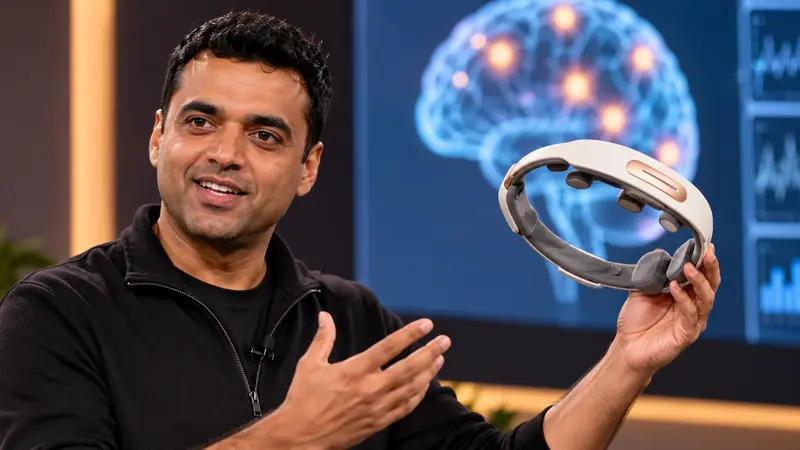
Deepinder Goyal's health-tech startup, Temple, has opened an early-access waitlist for its first product, a head-worn wearable that measures blood flow and oxygenation in the brain. Applicants who have joined the list report a price of ₹85,000, but the company has not announced an official price, and pre-orders for the first batch are expected to open on 1 November 2026.
The device is the product Goyal first showed in early 2026, when he appeared on a podcast wearing a small metallic, clip-like sensor on his head. Temple is designed to track cerebral blood flow and other neurological markers in real time, and the company has said the sensing relies on near-infrared light. It also uses a score it calls Entropy, which is meant to show how strained the brain is at a given moment. Near-infrared sensing works by shining light through the skin and measuring how much of it is absorbed by oxygenated and deoxygenated blood, which gives an estimate of how much blood is reaching the area under the sensor. Goyal calls the headline technology BrainFlow.
How the waitlist works
People who want early access apply through the company's website and are asked to explain their background, their work and what they expect from the device. Waitlist members are expected to get priority when the first units are offered.
The first batch is made to order, and each unit is built after the order is placed and shipped within about three months. That means a customer who orders in November could receive the device in early 2027, though the company has also said a limited launch edition could ship before the end of 2026. The number of units in the first batch and the exact delivery schedule have not been published. Pre-orders were first described as coming "very soon" in August, so the fixed date of 1 November comes after a few months of waiting.
The price question
The figure of ₹85,000 comes from people who applied, not from a company announcement, and it should be treated as provisional. Earlier reports had put the expected price at ₹75,000 to ₹80,000 for premium buyers, and Goyal has indicated that it could be around $1,000. Other estimates range up to about ₹1 lakh. The company is expected to confirm the price when pre-orders open.
A device that reads the brain also raises a data question. Readings of blood flow and strain in the brain are sensitive personal information, and a buyer is entitled to know how the company stores them, who can see them and whether they are shared. India's data protection law, the Digital Personal Data Protection Act, covers personal data of this kind. Whether Temple sells the device as a wellness product or as a medical one is a second question, because the claims that can be made for each are different.
At any of those figures, Temple is priced above most consumer wearables sold in India and is aimed at buyers who already spend heavily on health and performance.
The company behind it
Temple raised $54 million in February at a valuation of about $190 million. The investors include Peak XV Partners, Steadview Capital, Dharana Capital and Info Edge Ventures, along with more than 80 individuals. Goyal started the venture after stepping down as chief executive of Eternal, the company behind Zomato. More recent reports say Temple is preparing another funding round at a valuation of about $500 million, and that it carried out a partial buyback of employee stock options at a valuation of $375 million. If the next round happens at that level, the valuation would be more than two and a half times the February figure in under a year, before the company has sold a single unit.
More from TechnologyExplore Technology

The device has also been redesigned since it was first shown. Goyal has said the current version is less than half the size of the early prototype, and he has teased six colours for the launch.
Temple is entering a crowded market in which companies such as Whoop, Oura and Garmin have spent years refining devices that track sleep, recovery and activity. What sets Temple apart is that it claims to measure blood flow in the brain, which is a different thing from heart rate or sleep stages.
Whether that measurement is useful to an ordinary buyer is the question the first batch will have to answer. Before paying, buyers should look for the published price, the delivery terms and refund conditions, and any independent evidence that the readings mean what the company says they mean. Those details are expected from 1 November.
R
4 min
What did you think?