/
Supreme Court collegium recommends four High Court chief justices, Justice Tapabrata Chakraborty for Telangana
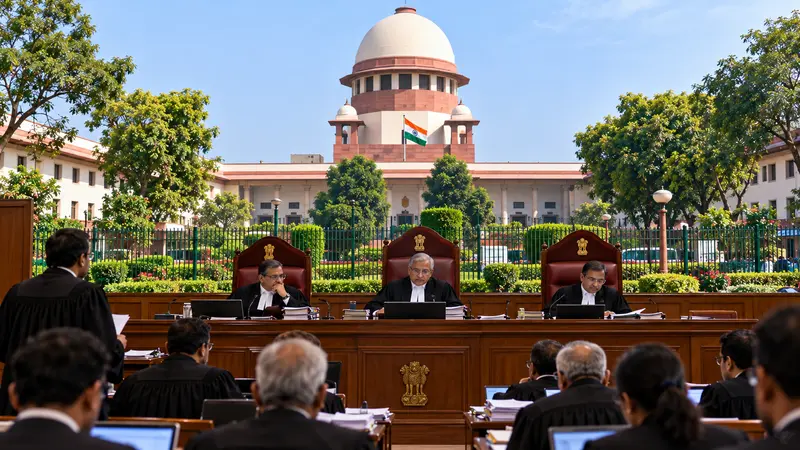
The Supreme Court collegium has recommended Justice Tapabrata Chakraborty of Calcutta as chief justice of Telangana, Justice P. Sam Koshy for Delhi, Justice Manash Ranjan Pathak for Gujarat and Justice Sudhir Singh for Uttarakhand. The Centre must process the names before they are notified.
R
4 min
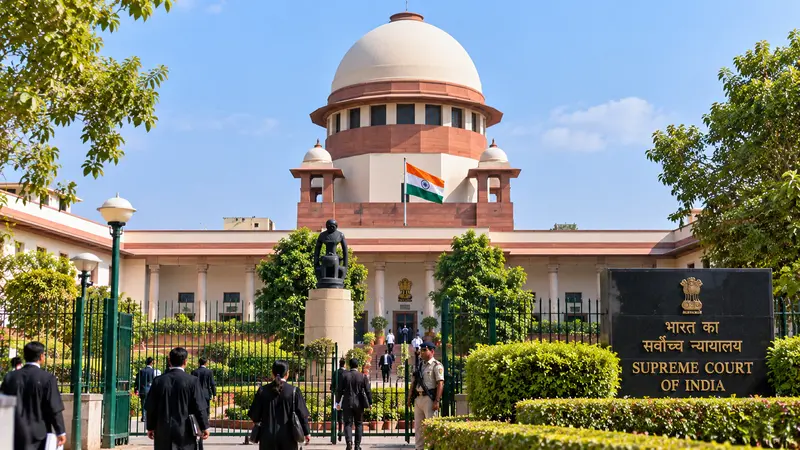
The Supreme Court collegium has recommended four judges for appointment as chief justices of High Courts. At a meeting on Monday, 26 October, it recommended Justice Tapabrata Chakraborty of the Calcutta High Court as Chief Justice of the Telangana High Court, Justice P. Sam Koshy as Chief Justice of the Delhi High Court, Justice Manash Ranjan Pathak as Chief Justice of the Gujarat High Court and Justice Sudhir Singh as Chief Justice of the Uttarakhand High Court. The recommendations are not final until the Centre processes them and the appointments are notified.
The four recommendations
The reports describe the proposals in slightly different ways, and one account lists the Delhi and Gujarat posts in a way that mixes up the two names. The version given by most of the reports, and the one used here, is as follows.
| Judge | Recommended for |
|---|---|
| Justice Tapabrata Chakraborty (Calcutta High Court) | Chief Justice, Telangana High Court |
| Justice P. Sam Koshy | Chief Justice, Delhi High Court |
| Justice Manash Ranjan Pathak (Gujarat High Court) | Chief Justice, Gujarat High Court |
| Justice Sudhir Singh (Patna High Court) | Chief Justice, Uttarakhand High Court |
If the Union government accepts the recommendations, permanent chief justices would replace the acting arrangements that are now in place in Delhi, Gujarat and Telangana. Koshy has been serving in the Telangana High Court, where he is reported to be the acting chief justice, and his move to Delhi would leave the Telangana post to Chakraborty.
Who Justice Chakraborty is
One report says that Chakraborty practised mainly in civil and constitutional matters before he became a judge. He was elevated as an additional judge of the Calcutta High Court on 30 October 2013, which makes him one of that court's senior judges. His selection brings an outside judge to head the Telangana court, which is the usual practice in the appointment of chief justices, since the collegium prefers to send a senior judge from another High Court.

A chief justice of a High Court is appointed by the President, on the recommendation of the Supreme Court collegium, which consists of the Chief Justice of India and the senior-most judges. After the collegium sends its recommendation, the government processes it, which includes a check of the candidate and the issue of a notification. The government can ask the collegium to reconsider a name, but if the collegium repeats its recommendation, it is generally taken as binding.
The delay is the part that people watch. Notifications of recommended names have in some cases been issued within days and in others have taken months, and acting chief justices serve in the meantime. Under the Constitution, the President can appoint a judge of the court as acting chief justice when the office is vacant, and that is what has been done in the courts concerned.
The collegium's order is expected to be followed by a notification from the Union Law Ministry once the Centre has cleared the names. Until then, the judges named stay in their present courts and the acting arrangements continue. In the High Courts concerned, lawyers and litigants will be watching how soon the notification comes, since the appointment of judges to fill vacancies in the courts often waits for a permanent chief justice.
A chief justice runs a High Court, assigns benches and decides the roster, and heads the administration of the court. An acting arrangement works for a short time but limits the authority of the person in charge, particularly on long-term decisions such as the recommendation of new judges for the court, which is the work of a collegium of the High Court under its chief justice.
The recommendation also comes a day after a former Supreme Court judge, Sanjay Kishan Kaul, wrote in a memoir about how appointment decisions are made, and the public interest in the way the collegium works is high. The collegium's order is public, and it gives the reasons for each choice, which is a change from the days when such decisions were not explained.
For the courts concerned, the next step is the Centre's response. If it accepts the four names together, the four courts will have a settled leadership before the winter, and a quick notification would also be a sign of a smooth working relationship between the government and the judiciary on appointments.
R
4 min
What did you think?