/
India-Japan 2+2 talks in Tokyo: Rajnath Singh and Jaishankar meet Koizumi and Motegi
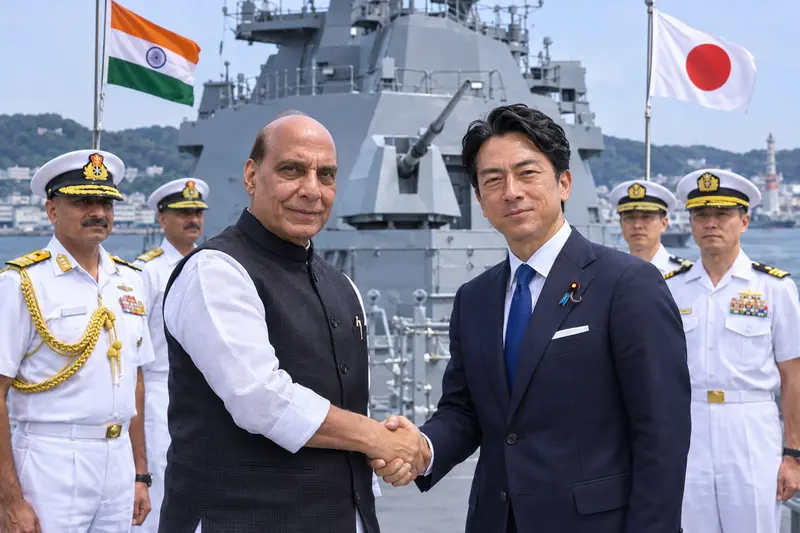
Defence Minister Rajnath Singh and External Affairs Minister S Jaishankar hold the fourth India-Japan 2+2 dialogue in Tokyo on 18 November with Shinjiro Koizumi and Toshimitsu Motegi. The agenda covers defence equipment, maritime security and joint exercises; no agreement is reported yet.
A
4 min
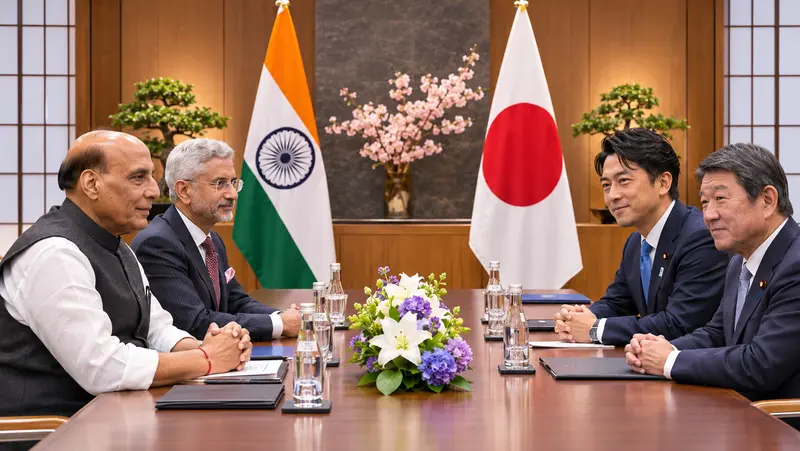
The fourth India-Japan Foreign and Defence Ministers' Dialogue, known as the 2+2, is being held in Tokyo on Wednesday, 18 November 2026. India is represented by Defence Minister Rajnath Singh and External Affairs Minister S Jaishankar. Japan is represented by Defence Minister Shinjiro Koizumi and Foreign Minister Toshimitsu Motegi. No joint statement or agreement had been reported when this article was written.
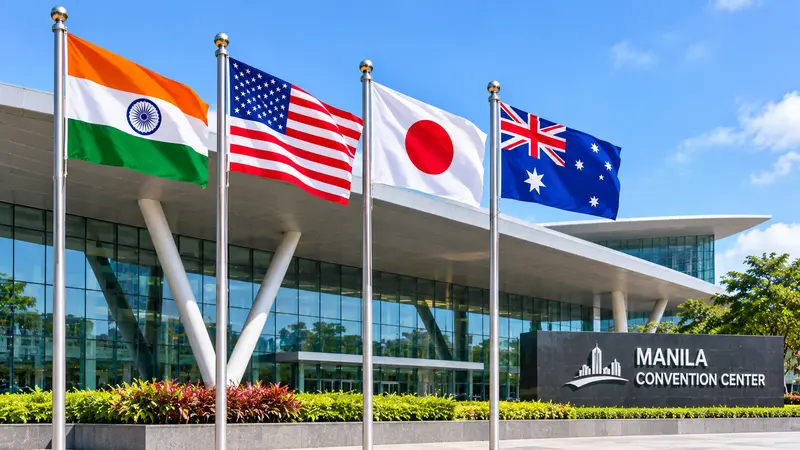
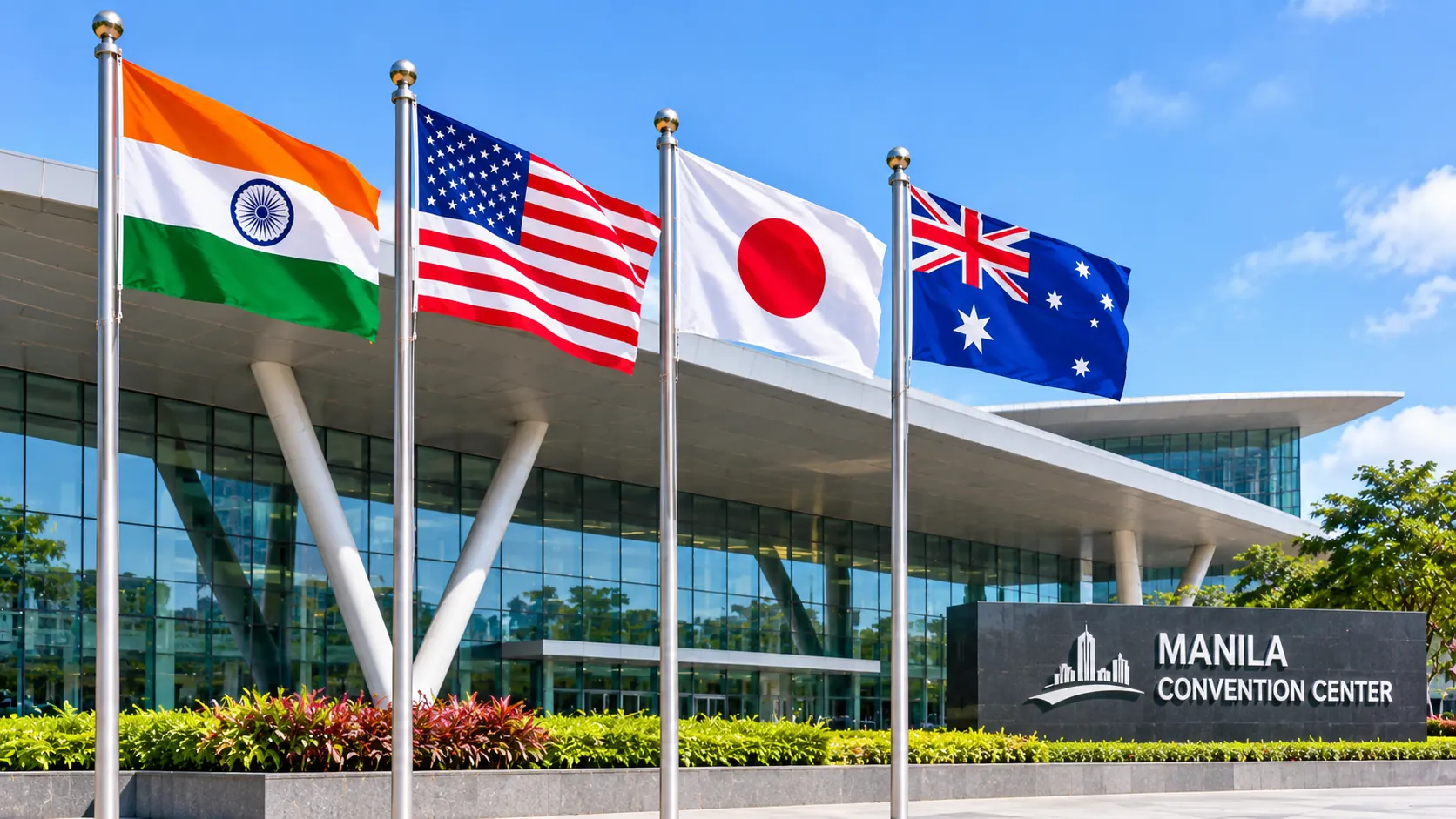
Mr Singh arrived in Tokyo on Wednesday for a two-day visit and was received by India's Ambassador to Japan, Nagma Mallick. The talks come a day after the Quad leaders met in Manila, where Japan's Prime Minister Sanae Takaichi and India's Prime Minister Narendra Modi were both present.
What the ministers are meeting to do
A 2+2 is a format in which the foreign and defence ministers of two countries sit together, so that diplomacy and military planning are discussed in one room. India has such a dialogue with only a few partners, and Japan is one of them. The Ministry of Defence says the dialogue will review the "full spectrum" of bilateral strategic and defence cooperation and exchange assessments of regional and global developments. Both sides are expected to restate their commitment to a free, open, inclusive and rule-based Indo-Pacific.
Mr Singh described the aim of the visit in a post on X, saying India and Japan share a "Special Strategic and Global Partnership" and that the visit would "explore new avenues to deepen collaboration in technology, maritime security, and regional stability". The Ministry of Defence's own statement says the visit should "chart the roadmap for enhanced operational and industrial synergy".
| Item | Detail |
|---|---|
| Dialogue | Fourth India-Japan 2+2 ministerial dialogue |
| Place and date | Tokyo, Wednesday 18 November 2026 |
| India | Rajnath Singh (Defence), S Jaishankar (External Affairs) |
| Japan | Shinjiro Koizumi (Defence), Toshimitsu Motegi (Foreign Affairs) |
| Sideline meeting | Singh and Koizumi bilateral, their third in 2026 |
| Outcomes reported so far | None |
Mr Singh and Mr Koizumi are due to hold a separate bilateral meeting. It will be their third this year: the first was in New Delhi in August, and the second on the margins of the ADMM-Plus, the defence ministers' meeting of ASEAN and its partners, in Cebu in October. The Ministry of Defence lists four topics for it. They are cooperation on defence equipment and technology, maritime security, larger and more complex joint exercises across all three services, and deeper industrial partnerships.
Some of the machinery for this already exists. India and Japan signed an Acquisition and Cross-Servicing Agreement in 2020, which lets their forces use each other's supplies and services, and their navies train together in the JIMEX exercise. Joint drills between the two armies and air forces have followed. Those facts are background and are not part of the Ministry's statement for this visit. What is new this week is the push to scale up the exercises and to link the two countries' defence industries.
The partnership behind the dialogue
India and Japan raised their relationship to a Special Strategic and Global Partnership in 2014, and the 2+2 format was added in 2019, when the first meeting took place in New Delhi. The format matters because it puts the two governments' defence and foreign policy teams in one room, so a decision on, for example, joint exercises can be taken together with its diplomatic consequences. Japan has only a handful of 2+2 partners, and India is among them.
The Quad meeting in Manila put India, Japan, the United States and Australia in one room on Tuesday, and the Tokyo talks give the India-Japan side of that relationship a separate hearing. Both countries have a stake in the security of sea lanes in the Indo-Pacific, and both have worked to reduce dependence on single suppliers for critical technology. A defence-industry partnership is one way to do that, since co-development lets each side share costs and spread production.
The ministers' agenda is broad, and a 2+2 normally ends with a joint statement or a set of agreed outcomes, such as an agreement on equipment or a plan for exercises. Whether this one does is not yet known. The Ministry of Defence's statements speak of a "roadmap", which suggests a framework, but they do not say what will be signed.
What to look for in the outcome
Three things will show how much the dialogue achieves. The first is whether the two sides announce a specific co-development project or only a promise to study one. The second is the scale of the planned exercises, since the Ministry's own words are "larger and more complex". The third is the language on the Indo-Pacific. Past joint statements have used the phrase "free and open" without naming particular disputes, and any change in that wording will be read closely.
This article will be updated against the Ministry of External Affairs and Ministry of Defence releases once they are issued. Until then the facts above are those the two governments have stated: who is attending, what the agenda is, and that the outcomes are still to come.
About the Author
A
Amita Sahani
Staff Writer
Amita Sahani writes for Wirony. Every story under this byline is reviewed and approved by an editor before it is published, and corrections are made openly.
A
4 min
What did you think?