/
Amit Shah says India is Naxal-free: official data back most of it, but 33 incidents and 38 districts remain
Amit Shah said in Dehradun on 6 November that the country is now Naxal-free. Home Ministry data show affected districts fell from 126 to zero by April 2026, but also 33 incidents and 11 deaths in 2026 up to 29 July, and 38 districts still under special watch. He also set 2029 for a drug-free India.
S
5 min
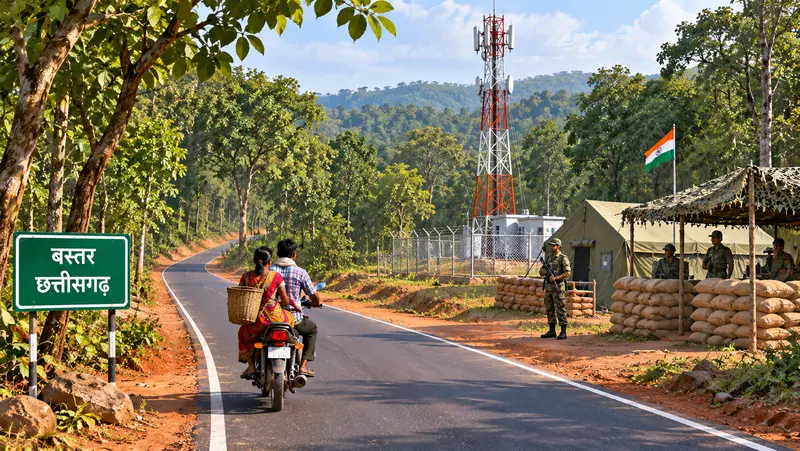
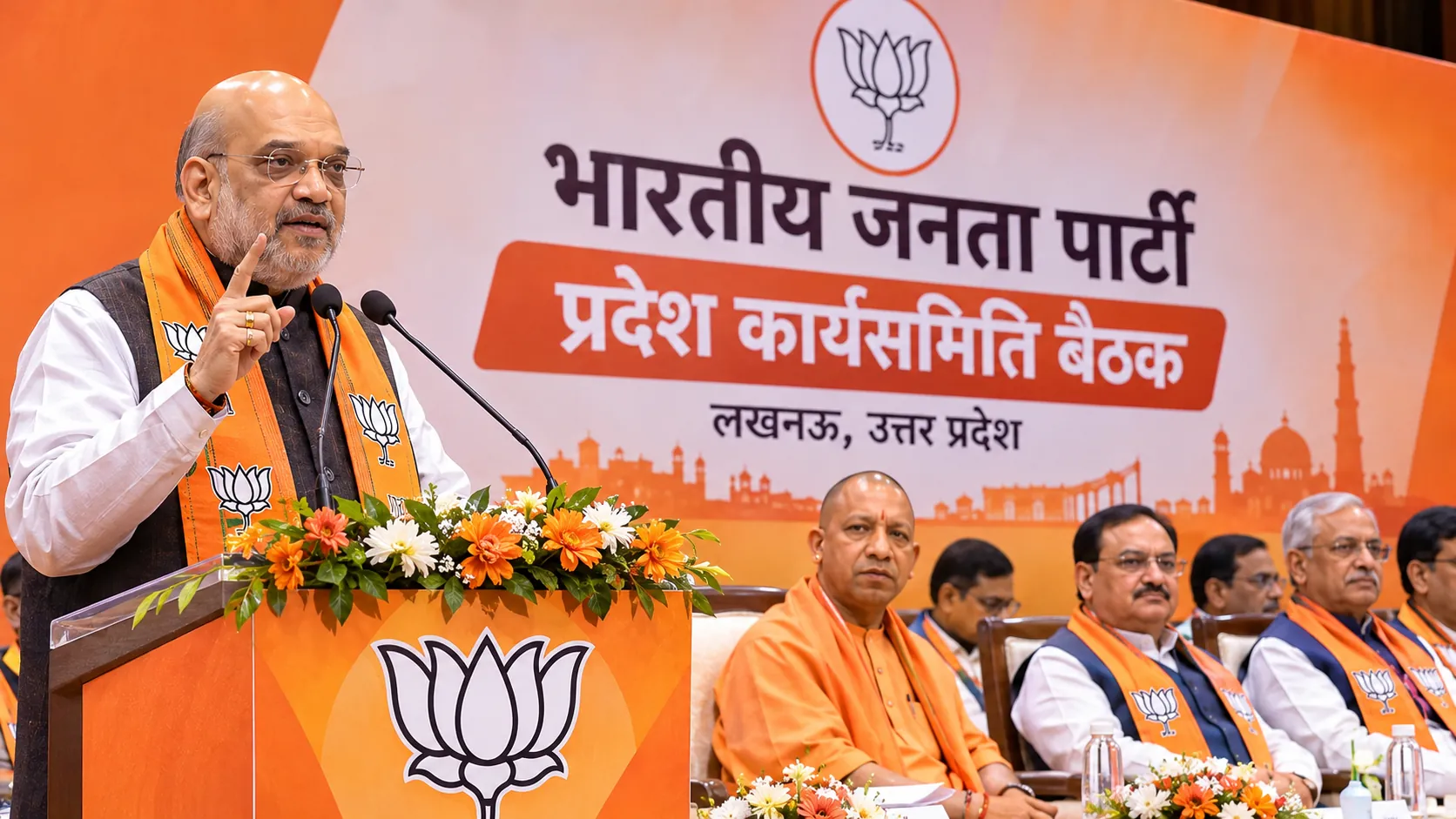
Union Home Minister Amit Shah said on 6 November 2026 that the country is now Naxal-free, a matter of joy for all, and that police of several states and paramilitary forces had ended what he called a five-decade-old menace. He was speaking in Dehradun while presenting the President's Colour to the Uttarakhand Police, the 16th force to receive the honour. He went on to name the next target: making India drug-free by the end of 2029.
It is a very large claim, about one of the longest internal conflicts in the country's history. It is also one that can be checked against the Home Ministry's own figures. On those numbers the claim holds up in most respects, with some important qualifications about what "free" means.
What the official record shows
The government's formal statement is more careful than the speech. A Home Ministry note of 29 July 2026 says that the country became free from Left Wing Extremism and that, at present, no district is categorised as LWE affected. A government backgrounder uses the phrase "effectively free" and dates the milestone to 31 March 2026.
| Measure | Figure |
|---|---|
| Affected districts, 2014 | 126 |
| April 2018 | 90 |
| July 2021 | 70 |
| April 2024 | 38 |
| December 2025 | 8 |
| March/April 2026 | Zero |
| Incidents: peak 2010 | 1,936 |
| Incidents: 2014 | 870 |
| Incidents: 2026 to 29 July | 33 |
| Fatalities: peak 2010 | 1,005 |
| Fatalities: 2014 | 310 |
| Fatalities: 2026 to 29 July | 11 |
By any standard, that is a collapse of the insurgency. The peak of 1,936 incidents in a year has fallen to a few dozen. In 2025 alone, 2,337 cadres laid down their arms, the backgrounder says. The state has built 663 fortified police stations, up from 66 before 2014, and set up 408 new camps of the central armed police in seven years. In Bastar, once the movement's stronghold, more than 3,240 kilometres of road and 889 mobile towers have been added.
That combination of pressure and presence is what the government credits. Security forces took territory, roads and phones followed, and a rehabilitation package offering Rs 5 lakh for senior cadres and Rs 2.5 lakh for others, with vocational training and a stipend, gave fighters an exit.
What the word "free" leaves out
Three qualifications appear in the government's own documents.
First, violence had not fallen to zero by the last official count. The figures show 33 incidents and 11 deaths in 2026, up to 29 July. Some of those may fall before the March milestone, but the published data do not divide them. No later count has been released in the sources available.
Second, the district count of zero is a classification. The Home Ministry still lists 37 districts as "Legacy and Thrust" districts, no longer affected but needing continued security and development support for some time, and one district as a "District of Concern". The note says that surveillance and development must continue to prevent any relapse. So 38 districts remain under special attention, which is the same number as were counted as affected in April 2024.
Third, it takes more than a list to end such a movement. Critics, including some rights groups and tribal organisations, argue that the conditions which fed Naxalism, such as disputes over land and forests, mining, and poor services in Adivasi areas, have not disappeared, and that heavy security deployment has brought its own grievances. Earlier declines, in the years after 2010, were followed by lethal attacks. However, the present decline is far deeper, the top leadership has been heavily reduced and thousands have surrendered, so the comparison with those years only goes so far.
A smaller detail is worth correcting. Mr Shah spoke of a five-decade menace. The government's own papers trace the movement to Naxalbari in 1967 and speak of nearly six decades.
Why it matters
If the gains hold, the benefit is immense for some of India's poorest districts. Between 2004 and 2014 alone, official records list 17,542 violent incidents, 1,913 security force deaths and 5,019 civilian deaths. Children in Bastar can now grow up in places where roads, schools, banks and elections are ordinary, and that is a real change.
The harder phase is what comes next. A security victory creates a chance, and the state has often failed to use such chances in the past. Land rights, forest rights, the terms of mining in tribal areas and the treatment of surrendered cadres will shape whether calm lasts. The Centre's decision to keep support flowing to 38 districts suggests that it recognises this, although the funding and timeline for that support have not been fully set out.
The drug-free pledge is a much more difficult promise. An insurgency has a shape, a leadership and a geography. Illegal drug markets have none of these, and no large country has eliminated them. Readers may reasonably treat 2029 as a statement of intent and not a forecast.
Three things would make the Naxal claim stronger: a published count of incidents for the full year, an independent assessment of conditions in the former strongholds, and evidence that security camps are being replaced by civil services. For now, the fair summary of the record is that India has defeated the organised insurgency. Whether that means the end of Naxalism, as Mr Shah said, is something the next few years will show.
Sources
About the Author
S
Subhash Gupta
Desk Editor
Subhash Gupta is a writer at Wirony, contributing articles that are reviewed and verified by the editorial team before publication. The publication prioritises accuracy, editorial…
S
5 min
What did you think?