/
Cyclone Arnab: Andhra begins evacuating people at risk, shuts beaches and coastal roads before landfall
Andhra Pradesh has identified about 5.7 lakh people as vulnerable to Cyclone Arnab and began evacuations on Monday evening. Beaches are shut, coastal road traffic stops from Tuesday afternoon, and 1,763 shelters are ready. Landfall is expected between Bapatla and Visakhapatnam on Wednesday forenoon.
S
4 min
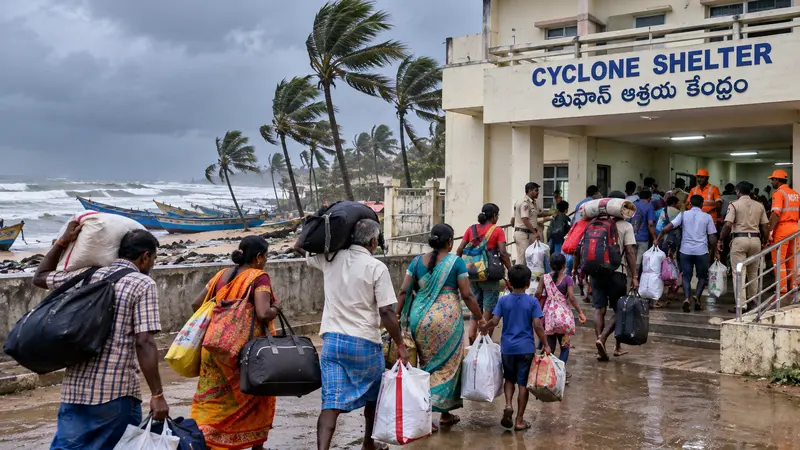
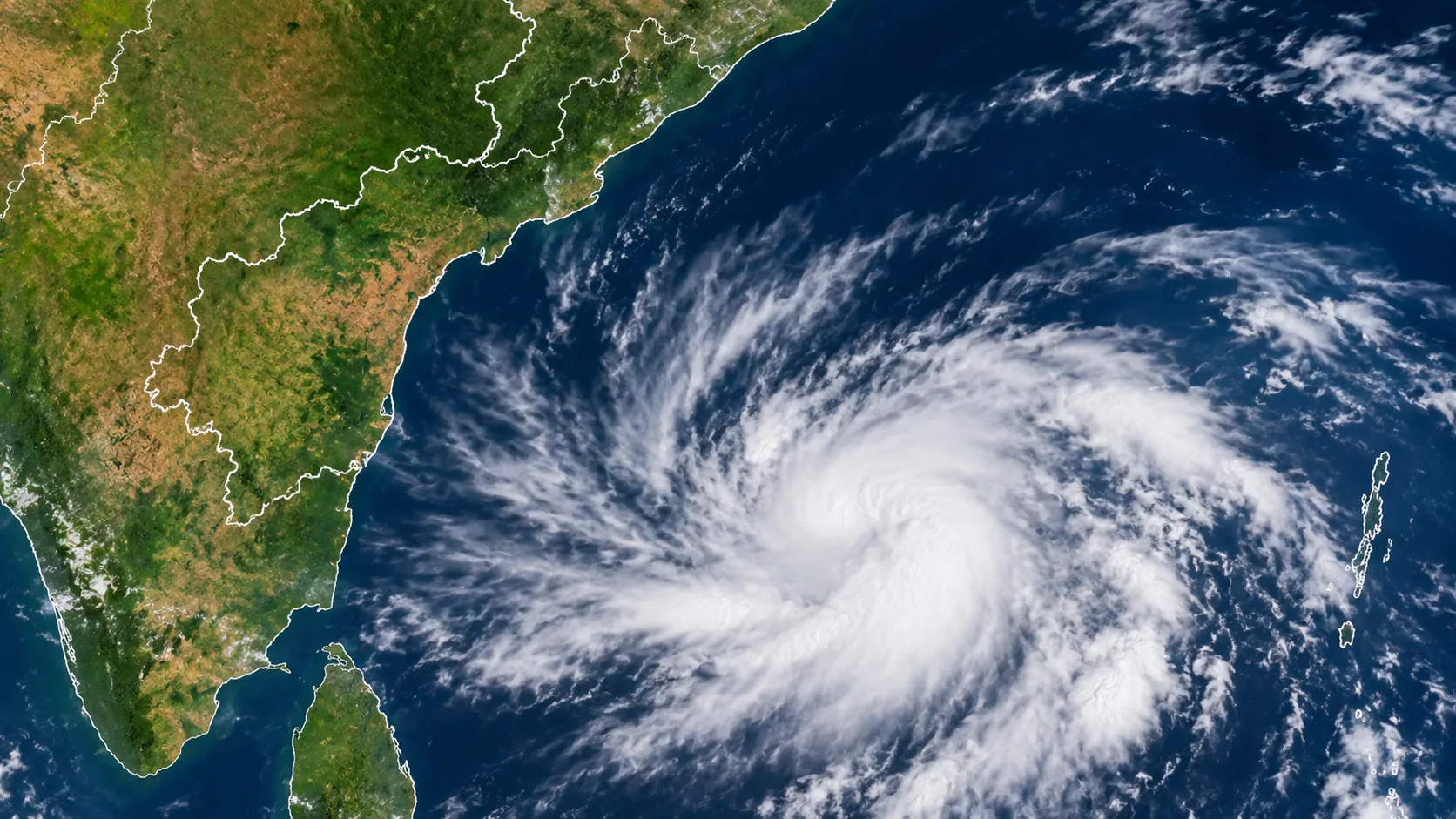
Andhra Pradesh has begun moving people out of the path of Cyclone Arnab. The state has identified about 5.7 lakh people as vulnerable and started evacuations on Monday evening, according to a senior state disaster management official. The cyclone is forecast to cross the Andhra Pradesh and Yanam coasts between Bapatla and Visakhapatnam on the forenoon of Wednesday, 28 October, with sustained winds of 115 to 125 kmph and gusts of up to 140 kmph.
What the state has put in place
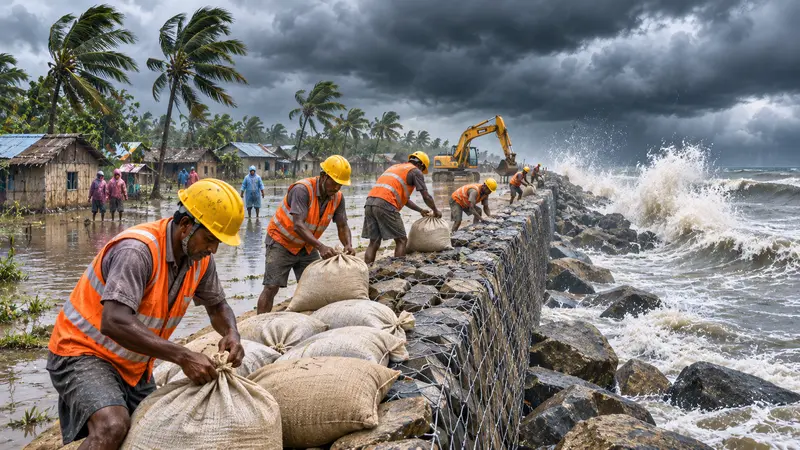
The state has identified 1,763 cyclone shelters. The cyclone is expected to affect 16 districts, covering 2,460 revenue villages and 92 urban areas, and 2,613 emergency water tankers have been kept ready for use wherever they are needed. Beaches have been closed to the public. Coastal road traffic is to be halted from Tuesday afternoon, and boats that were at sea have been ordered to return to the shore.
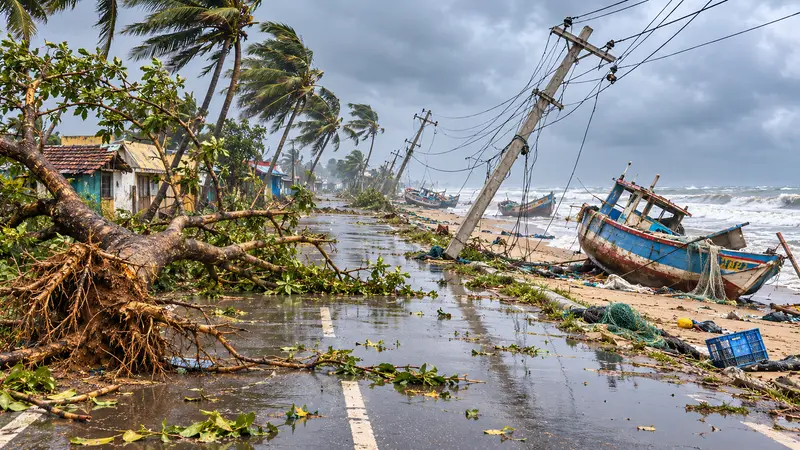
Chief Minister N. Chandrababu Naidu has reviewed the preparations and told officials to ensure the safety of the public. The power utilities have been told to keep field staff on duty round the clock and to keep poles and materials ready for quick repairs, since high winds bring down lines.
The India Meteorological Department says the system was a deep depression on Monday and is expected to become a very severe cyclonic storm by Tuesday, moving to the north-west. On Tuesday, a red alert for extremely heavy rain is in force for Kakinada, Konaseema, East Godavari, West Godavari and Eluru districts and for Yanam, with orange and yellow alerts for other coastal districts. On Wednesday, the red alert widens to about ten districts, including Visakhapatnam, Krishna and Guntur. Heavy to very heavy rain is forecast over coastal Andhra Pradesh from 27 to 29 October.
In Odisha, red and orange alerts have been issued for heavy to extremely heavy rain, and 225 fire service teams and National Disaster Response Force personnel have been deployed. The impact there is expected to continue through 29 October and recede from 30 October. West Bengal will not be directly hit but is expected to get scattered rain and thunderstorms.


What evacuation means in practice
An evacuation of this size is mostly of people who live in low-lying coastal villages, in fishing hamlets and in kutcha houses that cannot withstand the wind and the surge of water. They are moved to the cyclone shelters, which are strong buildings, often schools and community halls, and they are given food and water. Elderly people, pregnant women, children and patients are moved first.
The state's experience in earlier cyclones shows that the number of people who actually reach shelters is usually lower than the number identified, because some people refuse to leave their homes or livestock. Officials therefore combine persuasion with deadlines, and the closure of roads and beaches helps to keep people out of danger.
For people in the districts under alert, the advice is simple.
- Follow the instructions of the district collector and go to a shelter when asked to.
- Stay away from the sea, beaches and river mouths, and do not go out to look at the waves.
- Keep mobile phones charged, and keep drinking water, dry food, essential medicines and documents in a waterproof bag.
- Avoid travelling on coastal roads, and do not shelter under trees, hoardings or weak structures.
- Check with the railways and airlines before travelling, since schedules on the east coast may change at short notice.
Boats that were at sea have been ordered back, and fishermen are expected to stay ashore until the warning is lifted. In such emergencies, state governments also typically ask hospitals in the districts under red alert to keep medicines, oxygen and generators ready, and to move women close to delivery to hospital in advance, though the reports available do not describe these steps for Andhra Pradesh.
The next two days will decide how the preparations hold up. The most dangerous period is likely to be the hours around landfall on Wednesday forenoon, with the storm surge on the coast and the rain that follows inland. The IMD's forecast could still shift in the track and in the hour of landfall, and the state will adjust its alerts accordingly. After landfall, the focus moves to restoring power, clearing roads and checking on people in shelters, a process that can take several days in a storm of this strength.
S
4 min
What did you think?