/
West Bengal unveils Investment Policy 2026 with land banks and a single window: can it close the gap?
Chief Minister Suvendu Adhikari on 5 November unveiled West Bengal's Investment Promotion Policy 2026, with a single window, land banks and incentives for hiring women and transgender persons. The state is outside India's top five for factory output. Incentive rates are unpublished.
A
4 min
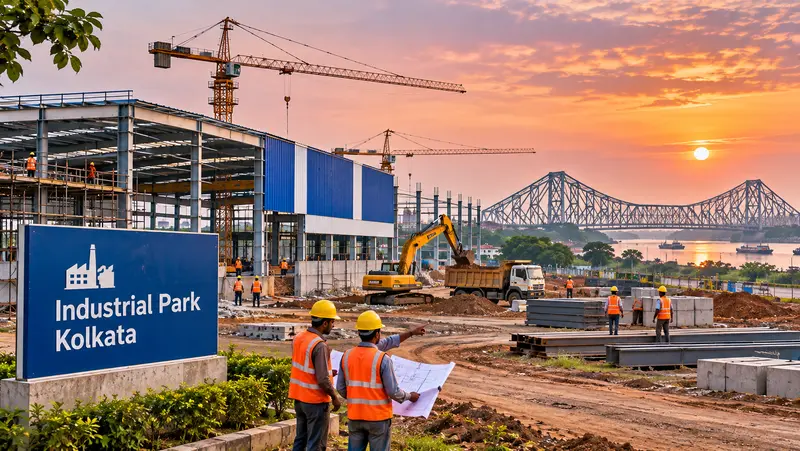
West Bengal Chief Minister Suvendu Adhikari on 5 November 2026 unveiled the state's Investment Promotion Policy, 2026, aimed at attracting investment, accelerating industrial growth and generating jobs. He said the policy would position West Bengal as a major investment destination and strengthen its industrial ecosystem, according to the state broadcaster's report of the announcement.
The plan rests on three familiar ideas: faster approvals, available land and incentives tied to employment. For a state that was once a leading industrial centre, the question is whether those are enough.
What the policy says
The policy promises simplified procedures, faster clearances and a streamlined approval mechanism. A single-window online clearance system would handle applications, approvals, financial assistance and grievance redressal within stipulated timelines.
Its key provisions, as reported, are these:
- Land. The government plans land banks through direct purchase, land pooling and the use of unused industrial land.
- Jobs. Incentives to promote employment, with particular emphasis on recruiting women and transgender persons.
- Small firms. Strengthening micro, small and medium enterprises is a stated objective.
- Backward regions. Incentives for industries in economically less-developed parts of the state.
- Research. Eligible units will receive financial assistance for research and development, and collaboration between industry and academia is to be encouraged.
The priority sectors are semiconductors, electronics manufacturing, electric vehicles, green hydrogen, defence production, textiles, food processing, biotechnology and pharmaceuticals.
The full policy text was not available on an official site at the time of writing. So the numbers that an investor would most want to see, such as subsidy rates, thresholds for eligibility, the length of support and the clearance timelines, are not yet known.
Why it matters
The official data give a useful baseline. The Ministry of Statistics' Annual Survey of Industries 2024-25, released on 4 November, shows that Maharashtra, Gujarat, Tamil Nadu, Karnataka and Uttar Pradesh together hold more than 54% of India's manufacturing gross value added. West Bengal is not among the top five. Food products, textiles, basic metals, motor vehicles and wearing apparel provide more than 41% of factory employment, and two of those, textiles and food processing, are on the state's priority list. That suggests a reasonable strategy: chase new sectors while building on labour-intensive ones where it has a base.
There is also a resource angle that the policy summary does not mention. In the critical mineral auctions launched on the same day in Goa, West Bengal has three blocks on offer, for graphite, rare earths and rare metal, along with an exploration block for rare earths. If processing could be located in the state, that would fit with its electronics and electric vehicle ambitions.
Land, however, is the issue on which the policy will be judged. Bengal's modern industrial story has been shaped by the bitter dispute over acquisition at Singur and Nandigram in the 2000s, which ended a major car project and reshaped the state's politics. Mr Adhikari himself rose to prominence in the Nandigram movement. So the mention of direct purchase and land pooling is significant: both avoid the forced acquisition that caused that conflict, but both are slow in a state of small landholdings. Assembling a large plot from many owners can take years, and a single holdout can block a project.
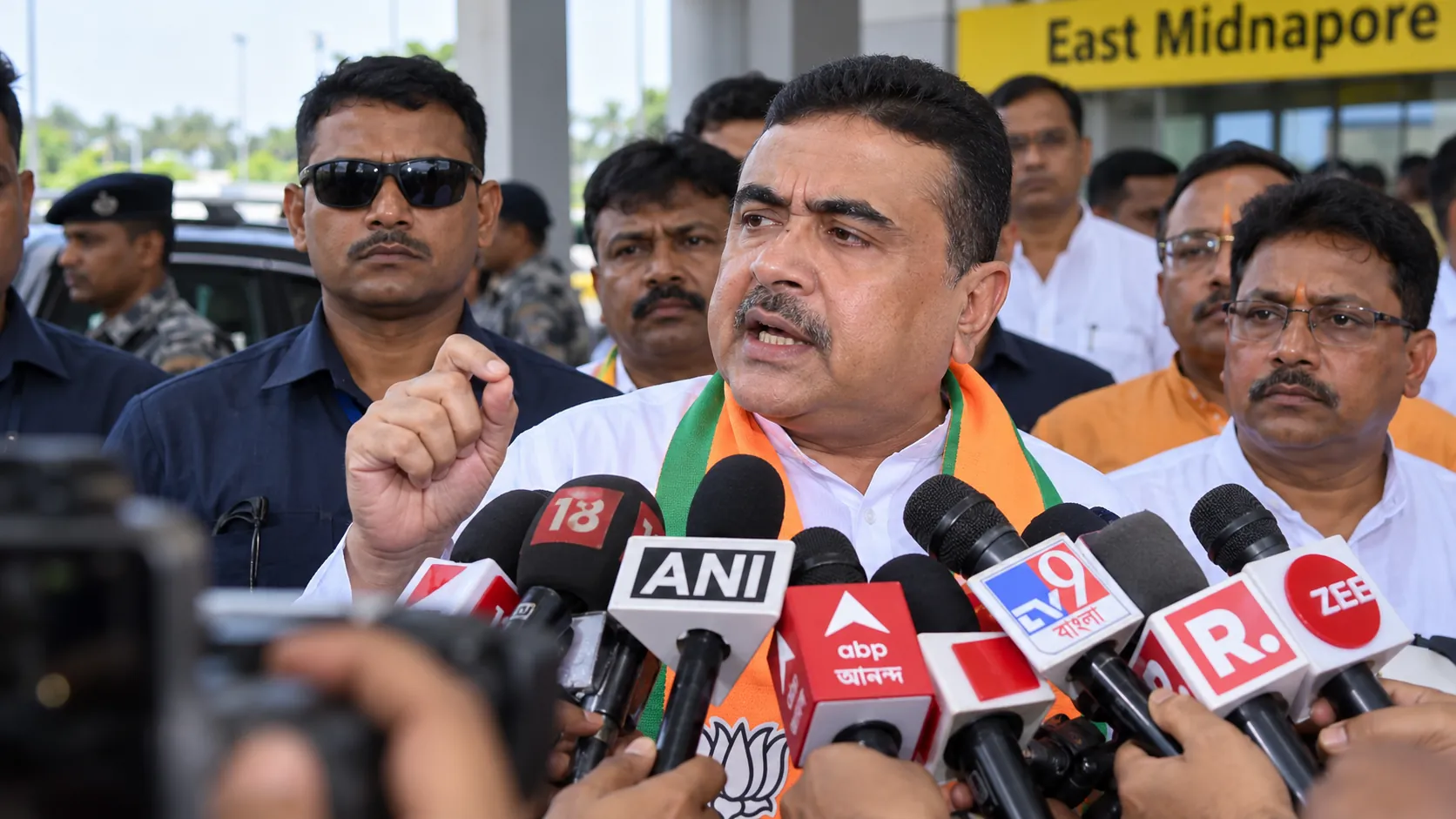
Using unused industrial land may be the quickest option, since it avoids a fresh dispute. How much such land exists, and how clear its titles are, will matter a great deal.
States across India now offer similar packages. Single windows, land banks and capital subsidies have become standard, and investors look past them to power reliability, labour relations, logistics and how officials behave after the ribbon is cut. Critics of incentive competition argue that it transfers public money to companies that might have come anyway. However, a state that has been losing ground can hardly afford to sit out.
The emphasis on women and transgender workers is less common and deserves attention. If it comes with real money, it could matter in textiles and electronics assembly, where women are a large share of the workforce. If it is a line in a document, it will not.
Semiconductors and green hydrogen sound attractive, but they need water, stable power and skilled workers on a scale that takes time to build. Bengal has strong universities and a large talent pool, much of which has moved to Bengaluru, Hyderabad and Pune. Whether the policy can keep some of it at home may be the real measure of success.
What to watch
Three markers will show whether the policy has teeth. The first is publication of the detailed rules, including incentive rates and clearance deadlines. The second is the launch of the single-window portal, and whether approvals are actually issued within the promised time. The third is the first major project announced under the policy, along with where its land comes from.
Investors will read those signals closely. So will residents of the districts where the land banks are planned.
This article is for information and is not investment advice.
Sources
About the Author
A
Amita Sahani
Staff Writer
Amita Sahani writes for Wirony. Every story under this byline is reviewed and approved by an editor before it is published, and corrections are made openly.
A
4 min
What did you think?