/
SEBI cuts no-proof rupee derivatives limit to USD 5 million, matching RBI's 95% tightening: who is affected
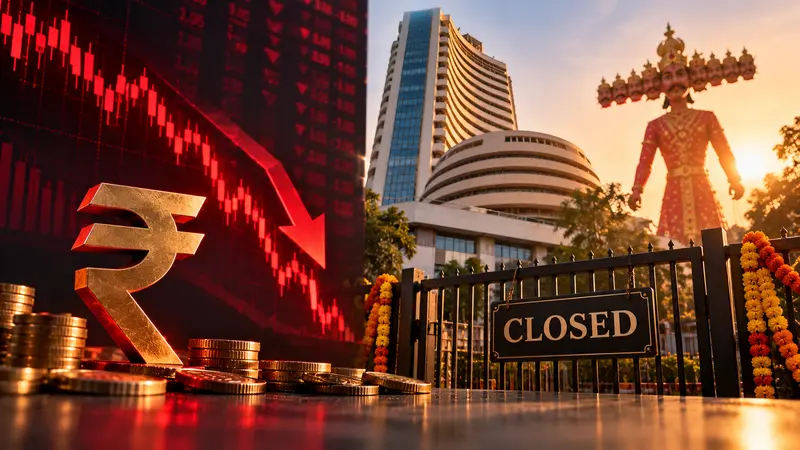
A SEBI circular of 5 November lets domestic clients and FPIs hold rupee currency derivatives without underlying exposure only up to USD 5 million across exchanges. It applies RBI's 10 October rules, which cut the USD 100 million limit, banned rebooking of cancelled deals and added a 20% reserve.
P
5 min

The Securities and Exchange Board of India on 5 November 2026 cut the size of rupee currency derivative positions that can be taken on stock exchanges without proving a real underlying exposure. Circular HO/(561)2026-MRD-POD2/I/25177/2026 says domestic clients and foreign portfolio investors may go long or short up to a single limit of USD 5 million equivalent of notional value, outstanding at any point, across all currency pairs involving the rupee and combined across all recognised exchanges.
The change brings the exchanges in line with the Reserve Bank of India, which set the same figure on 10 October. Its circular replaced an earlier limit of USD 100 million. That is a cut of 95%, and it is the clearest sign this year of how closely the authorities are watching speculative pressure on the rupee.
What the new rules say
SEBI's circular amends Clause 5.3.3 of its Master Circular for Stock Exchanges and Clearing Corporations. The main points are these.
| Who | Position | Rule from the circular |
|---|---|---|
| Domestic clients and FPIs | Long or short, up to USD 5 million | No proof of underlying exposure |
| FPIs | Short, all FCY-INR contracts | Must not exceed USD 5 million |
| FPIs | Long, above USD 5 million | Must hold underlying exposure in Indian debt or equity, including mutual fund units |
| Domestic clients | Above USD 5 million | Conditions of RBI's Master Direction and Circular No. 25 |
An underlying exposure is a real commercial or investment position, such as an import bill, an export receivable, a foreign currency loan or a portfolio of Indian securities. A derivative taken against one is a hedge. A derivative taken without one is, in effect, a view on where the rupee is heading.
Exchanges and clearing corporations must now put systems in place, amend their bye-laws, tell brokers and clearing members, and report implementation to SEBI.
What RBI did first
SEBI's move follows two RBI circulars issued on 10 October, and those carry more of the weight.
Circular No. 25 applies to banks that act as Authorised Dealers. It stops them from allowing a user to rebook any rupee foreign exchange derivative contract, deliverable or non-deliverable, once it has been cancelled. Rollovers at maturity remain allowed. The USD 100 million limit that had applied both to hedging contracted exposures through banks and to exchange positions was cut to USD 5 million. Users hedging a contracted exposure must also give an undertaking that the same exposure has not been hedged with another bank, and if it has been hedged in parts, must state the amounts. Banks must keep documents for at least two years. The stated reason is "evolving market conditions".
Circular No. 26 goes further. Banks must maintain a Foreign Exchange Risk Reserve on rupee derivative contracts above USD 2 million undertaken with users to hedge current account transactions, where the user is buying foreign currency against rupees. The reserve equals 20% of the rupee notional amount of each contract, held in cash with the RBI until the contract ends and reported daily. The RBI says this is to ensure the orderly functioning of the foreign exchange market. Trying to get around the threshold by splitting transactions counts as a violation.
The rebooking ban is aimed at a specific habit. A user could cancel a hedge when the rate moved favourably, take the gain and book again later, which turns a hedge into a trading position. The reserve puts a cost on one-way demand for dollars by importers hedging their bills, because the bank must lock up cash and will presumably pass on some of that cost.
Why it matters
The rupee closed at 94.47 to the US dollar on 5 November. Neither regulator has said that it wants to defend a particular level, and the circulars do not mention a target. But the direction is clear. The rules make it harder to build large positions against the rupee without a commercial reason, and they raise the cost of some dollar hedges.
Three groups feel it most.

Large traders and proprietary desks that used the old limit to take directional positions on the exchanges now have a far smaller allowance. Anything above USD 5 million needs an exposure to back it.
Foreign portfolio investors can still hedge, but the shape of their permission is uneven. Shorts on rupee pairs are capped at USD 5 million. Longs beyond that need actual holdings in Indian debt or equity. Hedging a portfolio remains possible, while a pure currency view of size does not.
Mid-sized importers and exporters are the group to watch. Many used the no-documentation limit because it was quick. Those with genuine exposures can still hedge, but above USD 5 million they will have more paperwork, and those buying dollars through banks above USD 2 million may face a higher price because of the reserve.
Small retail traders are largely untouched, since USD 5 million is far beyond their positions.
There is a real argument against such limits. Critics say that restricting derivatives can thin out liquidity on exchanges, widen spreads and push activity to offshore non-deliverable markets beyond the reach of Indian regulators. They also point out that a rule designed to stop speculation can make life harder for honest hedgers, who are exactly the users the market exists for.
However, the RBI's text reaches some of that concern by covering non-deliverable contracts offered by Authorised Dealers, and the regulators have kept the hedging route open for anyone with a real exposure. The test will be in trading volumes and spreads on the exchanges in the coming weeks.
Brokers should note that SEBI has left other terms in the Master Circular unchanged. For a company, the practical step is to map every derivative position to a documented exposure, count positions across all exchanges together and review hedging policies before the next rollover.
This article is for information and is not investment advice.
Sources
About the Author
P
Prateek Rawat
Staff Writer
Prateek Rawat is a contributor to Wirony. All articles published under this byline undergo editorial review and approval before publication, with any necessary corrections handled…
P
5 min
What did you think?