/
NATO's Rutte vows space defence after German media report a Russian nuclear satellite
NATO's Mark Rutte said on 23 November that the alliance will defend every inch of its territory, including space, after German media reported Russia may launch a nuclear-armed satellite within weeks. Berlin takes the reports seriously but has not confirmed them. Russia calls them propaganda.
R
4 min
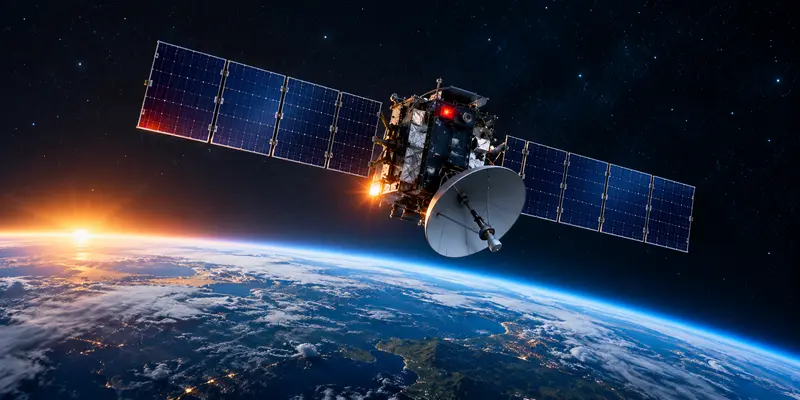
NATO Secretary General Mark Rutte said on Monday, 23 November 2026, that the alliance will "defend every inch of NATO territory", including in space, after German media reported that Russia is preparing to launch a satellite armed with a nuclear weapon. Rutte spoke in Berlin beside Chancellor Friedrich Merz, who said the reports are not new but remain no less shocking. Neither confirmed them, and Russia says they are propaganda.
A joint investigation by two German public broadcasters, NDR and WDR, and the newspaper Süddeutsche Zeitung, citing unnamed sources in the Federal Intelligence Service and the Bundeswehr, said Russia has built a satellite called Sputnik-S that carries a nuclear warhead. The satellite is said to be stored in the Moscow region and could be launched within weeks. Accounts of the timing differ: "within weeks", "within 60 days" of intelligence shared in early November, or before the end of the year. German space command and the Bundeswehr are said to consider a December launch plausible.
According to those reports, a nuclear detonation in orbit could disable many satellites, including commercial ones. The head of US Space Command, General Stephen Whiting, has warned that about a third of satellites in low Earth orbit could fail within hours or days, with more failures over the following months, according to one account. None of this has been confirmed by an official source.
What Rutte and Merz said
Rutte said: "We will always make sure that we defend every inch of NATO territory," and that this "includes making sure that we are safe when it comes to the space element." He said NATO has a range of response options, not all of which are visible to the public, and that it constantly assesses its deterrence and defence. He did not confirm the reported preparations, give a timetable or announce a decision on invoking the treaty's mutual defence clause.
Merz said: "Reports that Russia is planning to introduce nuclear weaponry into space are not new," and added that they "remain no less shocking" and "reveal the level of escalation Russia is evidently prepared to pursue." The German government spokesman said the reports were being taken very seriously but did not confirm them, and warned against excessive nervousness. The Federal Intelligence Service declined to comment. The head of the European Space Agency, Josef Aschbacher, called nuclear weapons in space "the ultimate nightmare scenario".
| Item | Detail |
|---|---|
| Report | NDR, WDR and Süddeutsche Zeitung, from unnamed intelligence and military sources |
| Claimed weapon | Satellite "Sputnik-S" with a nuclear warhead, stored near Moscow |
| Launch timing | Within weeks, within 60 days, or by year-end, depending on the account |
| Rutte | NATO will defend every inch of its territory, including space |
| Russia | Embassy in Berlin: "propaganda campaign"; Kremlin: not worth taking seriously |
| Confirmed by an official source | No |
The Russian embassy in Berlin said it had no knowledge of such plans, called the allegations part of a propaganda campaign and said Russia's space activity serves exclusively peaceful purposes. Kremlin spokesman Dmitry Peskov said he had not seen the latest stories and that reports citing "unknown sources" are hardly worth taking seriously.
The rules
The 1967 Outer Space Treaty, which has more than 110 parties including the United States and Russia, bars placing nuclear weapons or other weapons of mass destruction in orbit around the Earth, on the Moon or on other celestial bodies. NATO recognised space as an operational domain in 2019, and its leaders agreed at the 2021 Brussels summit that attacks to, from or within space could trigger the mutual defence clause, with the North Atlantic Council deciding case by case. NATO's policy is that it has no intention of placing weapons in space.
The United States has for several years warned that Moscow is developing a nuclear weapon for space that could produce an electromagnetic pulse, and Russia tested an anti-satellite missile in 2021. Satellites carry communications, navigation, weather data and banking timing signals, so an attack on many at once would affect civilian life as well as armies. A nuclear device in orbit would also spread radiation that would damage satellites of every country, including Russia's own and China's.
What satellites do
Satellites carry far more than military traffic. They provide navigation signals, weather data, television and internet links, and the timing signals that banks and power grids rely on. That is why the threat of a weapon that could damage many of them at once is treated as a danger to civilian life as well as to armies, and why NATO has put space in the same category as land, sea, air and cyberspace.
Merz said European leaders would discuss the developments at a meeting in Brussels later this week. No NATO meeting on the subject has been announced in the reports read, and no one has said whether the United States has confirmed the German intelligence. Whether a launch happens will be visible to the world's satellite trackers. NATO and the UN Office for Outer Space Affairs are the official sources for the alliance's position and the treaty.
About the Author
R
Reyaansh Agarawal
Staff Writer
Reyaansh Agarawal contributes to Wirony, covering stories that are carefully reviewed and approved by the editorial team before publication. Wirony is committed to maintaining tran…
R
4 min
What did you think?