/
Russell Brand sentenced to 10 years and 6 months: the judge's ruling count by count
Mr Justice Bennathan sentenced Russell Brand on 9 November to 10 years and 6 months: nine years for one rape, then concurrent terms for three sexual assaults on four women between 2004 and 2009. He serves two-thirds, then licence, and notification requirements for life.
R
4 min
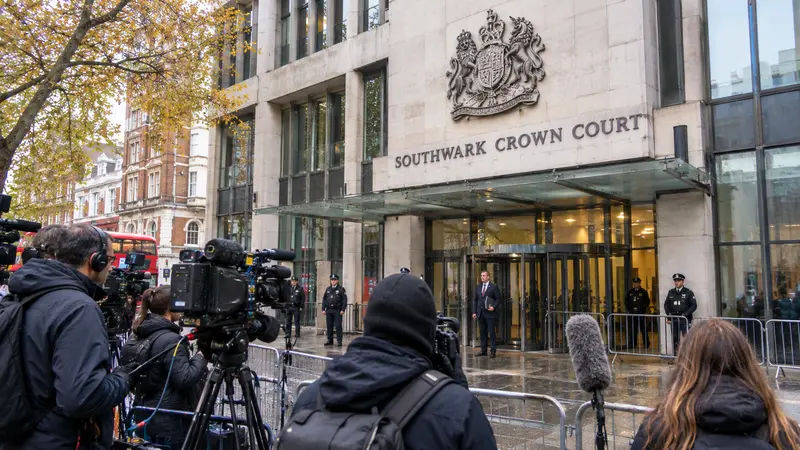
Mr Justice Bennathan sentenced Russell Brand at Southwark Crown Court on Monday, 9 November 2026, to a total of 10 years and 6 months in prison for one rape and three sexual assaults against four women, committed between 2004 and 2009. Brand, 51, will serve two-thirds of the term before release on licence and will be subject to the sex offender notification requirements for life. A jury had convicted him last week after a four-week trial, and he had denied the charges. This report relies on the judge's published sentencing remarks and on statements from the Crown Prosecution Service and the Metropolitan Police, and leaves out the graphic detail given in court.
The law bars the naming of the complainants, and the judge reminded everyone reading his remarks that the ban covers details from which they could be identified. He referred to them only as the victims of the numbered counts.
The sentence, count by count
The judge passed separate sentences on four counts and then combined them.
| Count | Offence | Year | Sentence |
|---|---|---|---|
| 3 | Sexual assault | 2004 | 9 months |
| 5 | Sexual assault | 2004 | 18 months (reduced from two years for totality) |
| 6 | Rape | 2009 | 9 years |
| 7 | Sexual assault | 2009 | 8 months |
The sentences on counts 3, 5 and 7 run at the same time as one another, which gives 18 months for the three sexual assaults, and that period is consecutive to the nine years for the rape. The total is 10 years and 6 months. The few days Brand has already spent in custody count towards it. He will serve two-thirds and will be released on licence, and he can be recalled to custody if he breaches its terms.
How the judge reached 10 years and 6 months
Mr Justice Bennathan said he had to follow the Sentencing Council guidelines unless it would be contrary to the interests of justice. The relevant ones were the guidelines for rape and sexual assault, for historical sexual offences, and for totality, which requires the overall result to be just and proportionate. He said that meant he should not make all four sentences consecutive, and he reduced the term on count 5 for that reason, but that making all of them concurrent would not do justice to offending against several women over five years.
He placed the sexual assaults on counts 5 and 7 in category 2B of the guidelines and the assault on count 3 in category 3B. On count 3 he went above the range for the category, saying the distress to the victim was significantly greater than is normal in such a case. On the rape he found the harm placed it in category 2B and found two further serious aggravating factors, which together raised the sentence to two years above the starting point before mitigation.
He did not accept every aggravating factor that the prosecution proposed. He said he could not be sure that two associates knew what Brand planned on count 7, that being famous is not an abuse of trust as the guidelines define it, and that the women were no more or less vulnerable than any adult making ordinary choices about a party or a visit to someone's home. He added that this "in no way shape or form" lessened Brand's responsibility. He said fame could count only for the added harm of the victims seeing him in public, and that he must not punish Brand more because he is famous.
On mitigation he took account of Brand's lack of significant previous convictions, the 17 years since the last offence, and his work helping people with addictions, including by paying for treatment. He noted that prison would take Brand's children's father from them. Because the guidelines give such factors little weight for serious offences, he reduced the rape sentence by one year only. He said that he disregarded allegations made in a television documentary and the allegations on which the jury was not sure and acquitted. He ordered no pre-sentence report and found no sound basis to conclude that Brand poses a future risk.
The prosecution, the police and what happens next
David Roberts, a senior crown prosecutor in the CPS London South Rape and Serious Sexual Offences Unit, said that "fame, status and the passage of time do not change the fundamental issue of consent". He said four women who did not know each other had shown extraordinary courage, that the sentence cannot undo the harm, and that he hoped it gave some measure of justice. He encouraged anyone who has experienced sexual assault to come forward.
Detective Superintendent Andy Furphy of the Metropolitan Police said the sentence marks a significant milestone in the investigation, which was never about Brand's profile or celebrity. He appealed to other victims to come forward and be listened to, and the force gave a contact address and the reference 2321/04NOV26. Support is available from Rape Crisis on its 24-hour line, 0808 500 2222. The judge paid tribute to the four women and commended the police for taking great care of those who testified.
Neither the CPS nor the Met statement mentions an appeal or further charges, and none was reported when this was written.
Sources
About the Author
R
Reyaansh Agarawal
Staff Writer
Reyaansh Agarawal contributes to Wirony, covering stories that are carefully reviewed and approved by the editorial team before publication. Wirony is committed to maintaining tran…
R
4 min
What did you think?