/
UK inflation rises to 3.6% in October, a one-year high, as diesel hits a record 199.5p
UK consumer price inflation rose to 3.6% in the 12 months to October from 3.5%, the ONS said on 18 November. Motor fuel was 33.2% dearer and diesel hit a record 199.5p, while core inflation held at 2.8%. Markets still expect a Bank of England rise on 17 December.
P
4 min
UK consumer price inflation rose to 3.6 per cent in the 12 months to October 2026, up from 3.5 per cent in September and the highest rate in a year, the Office for National Statistics (ONS) said on Wednesday, 18 November. It is the fourth monthly rise in a row, following a low of 2.6 per cent in June. The figure matched economists' forecasts of 3.6 per cent in a Reuters poll, and was just under the Bank of England's own forecast of 3.7 per cent.
The rise was driven mainly by fuel. ONS chief economist Grant Fitzner said fuel prices were "once again a major contributor" to the increase, and that higher costs for raw materials and factory-gate goods were "driven by higher crude oil and petrol prices".
The numbers behind the headline
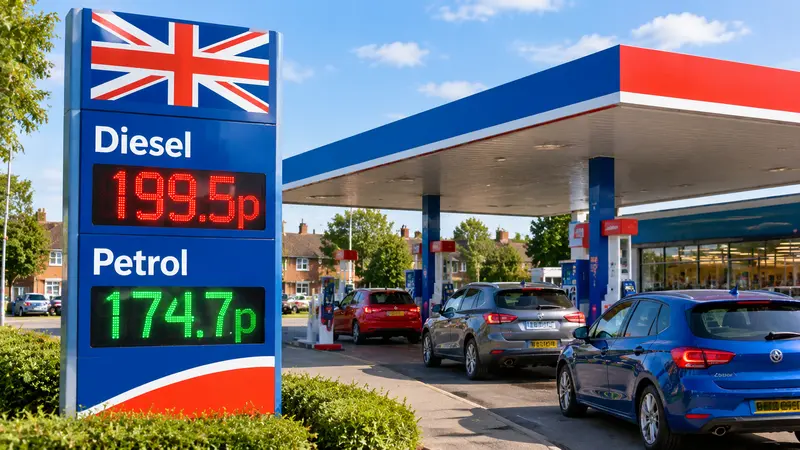
Motor fuel prices were 33.2 per cent higher than a year earlier, up from 29.8 per cent in September. Petrol reached 174.7 pence a litre, its highest since August 2022, and diesel hit a record 199.5 pence a litre in a series that goes back to January 1996. Transport inflation rose to 7.5 per cent from 6.6 per cent.
| Measure | October | Previous |
|---|---|---|
| CPI inflation | 3.6% | 3.5% (September) |
| CPIH, including housing costs | 3.7% | 3.6% |
| Core inflation (excluding energy, food and other volatile items) | 2.8% | 2.8% |
| Services inflation | 3.7% | 3.7% |
| Motor fuel, year on year | 33.2% | 29.8% |
| Transport | 7.5% | 6.6% |
| Goods carrying excise duty | 4.5% | 2.5% |
| Education | 5.0% | 3.9% |
Duty changes pushed the prices of goods that carry excise duty up 4.5 per cent from 2.5 per cent, and education costs rose to 5 per cent from 3.9 per cent. Restaurant and hotel prices fell 0.4 per cent from the previous month, the only notable drag. Core inflation held at 2.8 per cent, and services inflation held at 3.7 per cent, below the 3.8 per cent that economists had expected.
Household energy bills are about to rise again. The Bank of England expects inflation to approach 5 per cent in the second quarter of 2027 before it falls gradually. The Bank links its forecasts to energy prices lifted by the war involving Iran.
The Bank of England and interest rates
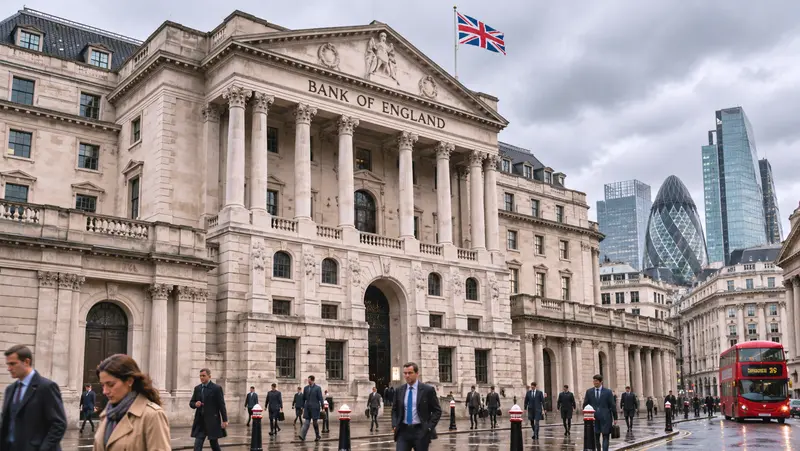
The Bank raised Bank Rate by 0.25 percentage points to 4 per cent on 5 November, its first increase since August 2023. Its next decision is at noon on 17 December, and the next inflation figures, for November, are due on 16 December. The Bank's chief economist, Huw Pill, has said that the outlook is risky enough to justify a December rise, and that more moves in early 2027 may be needed.
Economists disagree about December. One said the softer headline made a rise less likely, and another that a December rise looks hard to avoid, and one outlet puts the odds closer to 50 per cent. Sterling slipped modestly against the dollar after the figures, and UK government bond futures rose as rate expectations eased.
The October reading came in exactly where economists had expected. The Reuters poll was 3.6 per cent, and the Bank of England had forecast 3.7 per cent, as had Pantheon Macroeconomics, while Deutsche Bank had expected 3.8 per cent. Inflation has risen by one percentage point in four months, from 2.6 per cent in June to 3.6 per cent in October, and CPIH, the measure that includes the cost of owning a home, rose to 3.7 per cent from 3.6 per cent.

The detail shows that fuel, not wages or services, is behind the rise. Services inflation stayed at 3.7 per cent, below the 3.8 per cent that was expected, and core inflation, which leaves out energy, food and other volatile items, stayed at 2.8 per cent. That mix is the reason some economists think the Bank may pause in December, while others point to the January energy increase as the reason it cannot.
What it means for households
A rate rise to 4.25 per cent would push mortgage rates higher just as fixed rates had begun to ease. Average two-year fixed rates were 5.93 per cent and five-year fixed rates 5.95 per cent on 16 November, according to Moneyfacts. Households face higher fuel bills now and higher energy bills from January, which means real incomes will be squeezed even if the Bank pauses.
For readers outside the UK, the figure matters because it shows how the Gulf war is feeding through to prices in a major economy, and because UK rates affect sterling, which many Indian students, workers and companies deal in. Readers should check the ONS and the Bank of England for the official data.
This article is for information only and is not investment or financial advice.
About the Author
P
Prateek Rawat
Staff Writer
Prateek Rawat is a contributor to Wirony. All articles published under this byline undergo editorial review and approval before publication, with any necessary corrections handled…
P
4 min
What did you think?