/
Supreme Court notices a third challenge to lifelong immunity for election commissioners; hearing 18 December
A bench led by CJI Surya Kant issued notice on RJD MP Manoj Jha's petition against Section 16 of the 2023 Act, which bars courts from hearing cases against past and present election commissioners for official acts. It is tagged with ADR's and Lok Prahari's pleas; no stay has been granted.
S
5 min
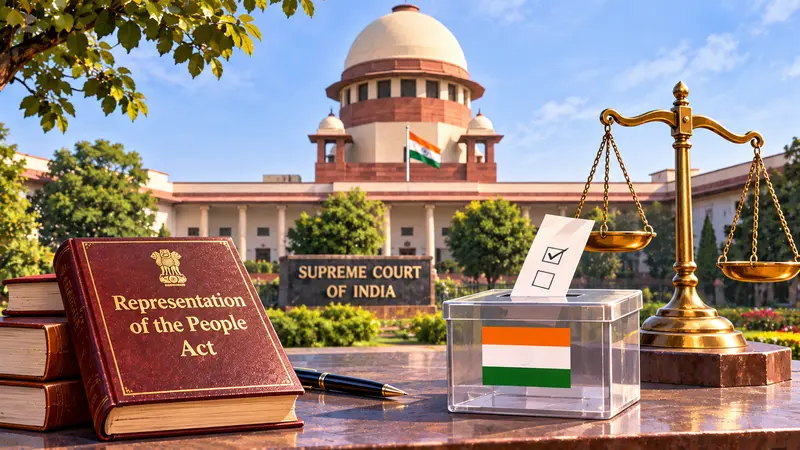
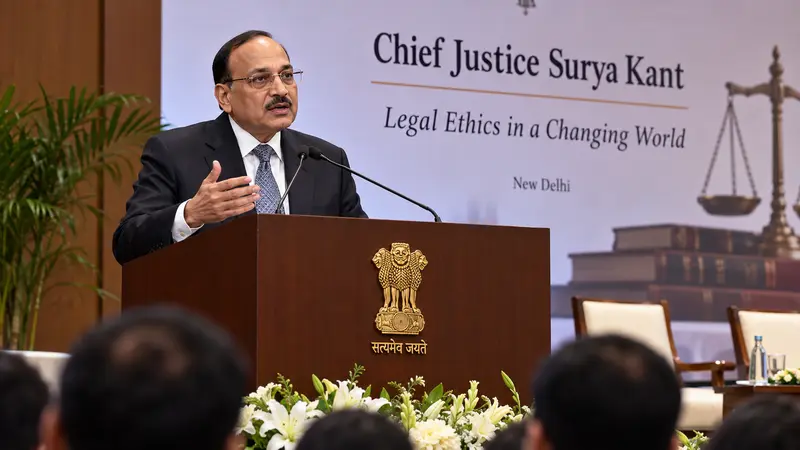
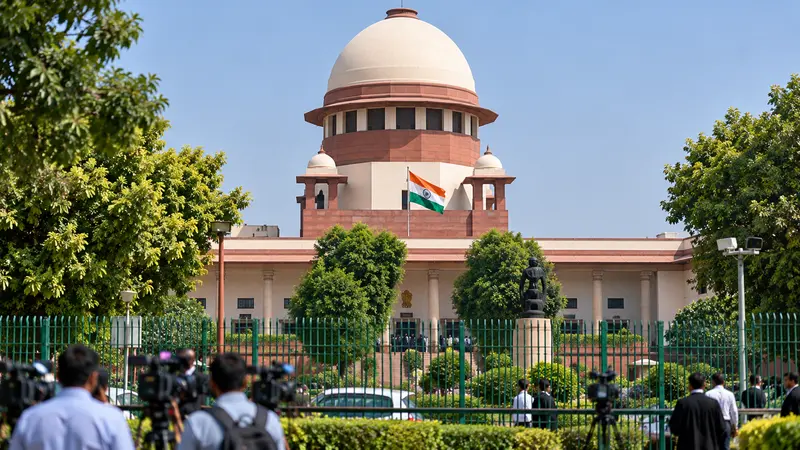
The Supreme Court on Wednesday 4 November issued notice to the Centre and the Election Commission of India on a fresh petition challenging the legal immunity given to the Chief Election Commissioner and the other Election Commissioners. A bench of Chief Justice Surya Kant and Justice Joymalya Bagchi agreed to tag the petition, filed by Rashtriya Janata Dal MP Manoj Jha, with two similar pleas already pending. All the petitions are expected to be heard together on 18 December. Justice Bagchi remarked on the number of petitions on the provision: "How many similar petitions are coming! There is no end to it."
Mr Jha's petition is the only one of the three filed by a member of Parliament. The other two are by the Association for Democratic Reforms and by Lok Prahari, a civil society organisation. The court has not stayed the provision.
What Section 16 says
The provision is Section 16 of the Chief Election Commissioner and Other Election Commissioners (Appointment, Conditions of Service and Term of Office) Act, 2023. It says that no court shall entertain or continue any civil or criminal proceedings against a person who is or was the Chief Election Commissioner or an Election Commissioner for any act, or any words spoken, in the discharge or purported discharge of official duty. The wording applies despite anything in any other law, and it covers former holders of the office as well as current ones.
The section was not in the original Bill. It was added as a new clause through an official amendment circulated on 11 December 2023. The petitioners say it was not debated in the Rajya Sabha, where motions to send the Bill to a select committee were negatived, and that the Lok Sabha passed the Bill on 21 December 2023 without amendment while many Opposition members were suspended. The Act itself replaced the interim arrangement laid down by the Supreme Court in Anoop Baranwal v. Union of India on 2 March 2023, under which a committee of the Prime Minister, the Leader of the Opposition and the Chief Justice would advise the President on appointments until Parliament made a law. The 2023 Act put a Union Cabinet minister in the place of the Chief Justice.
The case against the provision
ADR, whose petition the court noticed on 13 October 2026, argues that Section 16 violates Articles 14 and 21 and the basic structure of the Constitution. Its main points are three. The protection is lifelong and blanket, and it has no rational link to the independence of the office, because the Constitution had secured that independence since 1950. It treats election commissioners differently from others: ADR says the President, state governors and judges do not enjoy comparable immunity once they leave office. And it removes accountability, since proceedings that had been pending against present and past commissioners ended when the section took effect, which ADR asks the court to revive. ADR relies on the Supreme Court's decision in Subramanian Swamy v. CBI, which struck down a statutory immunity that treated classes of senior officials differently.
Critics, among them the activist Anjali Bharadwaj, argue that the immunity is wider than the one judges have under the Judges (Protection) Act, 1985. The Lok Prahari petition, on which notice was issued in January 2026 with a stay refused, makes a similar challenge.
The case for it, and the stakes
Section 16 does not shut every door. It bars civil and criminal proceedings against the person, which is different from reviewing the Commission's decisions. A voter, a party or a petitioner can still challenge an order of the Commission, such as a revision of the rolls, in the Supreme Court or a High Court under Articles 32 and 226. What the section removes is a suit for damages, or a criminal complaint, against the individual commissioner for acts done in office. The Constitution also already protects the office in another way: under Article 324(5) the Chief Election Commissioner can be removed only in the manner and on the grounds of a Supreme Court judge, and the other commissioners only on the Chief Election Commissioner's recommendation. The wording of Section 16 echoes the Judges (Protection) Act, 1985, which is why the comparison with judges runs through the petitions.
The Centre has not yet filed its answer, and the arguments usually made for such a provision are easy to state. An institution that runs elections must be free of harassment by litigants who lost, and officials who take thousands of decisions under time pressure need protection for acts done in good faith. Similar protections exist elsewhere in Indian law: judges have the 1985 Act, the President and governors have Article 361 while in office, and public servants need sanction before prosecution for official acts. However, those protections are either shorter in time, attached to a procedure such as prior sanction, or written into the Constitution, which is the point on which the petitioners say Section 16 differs.
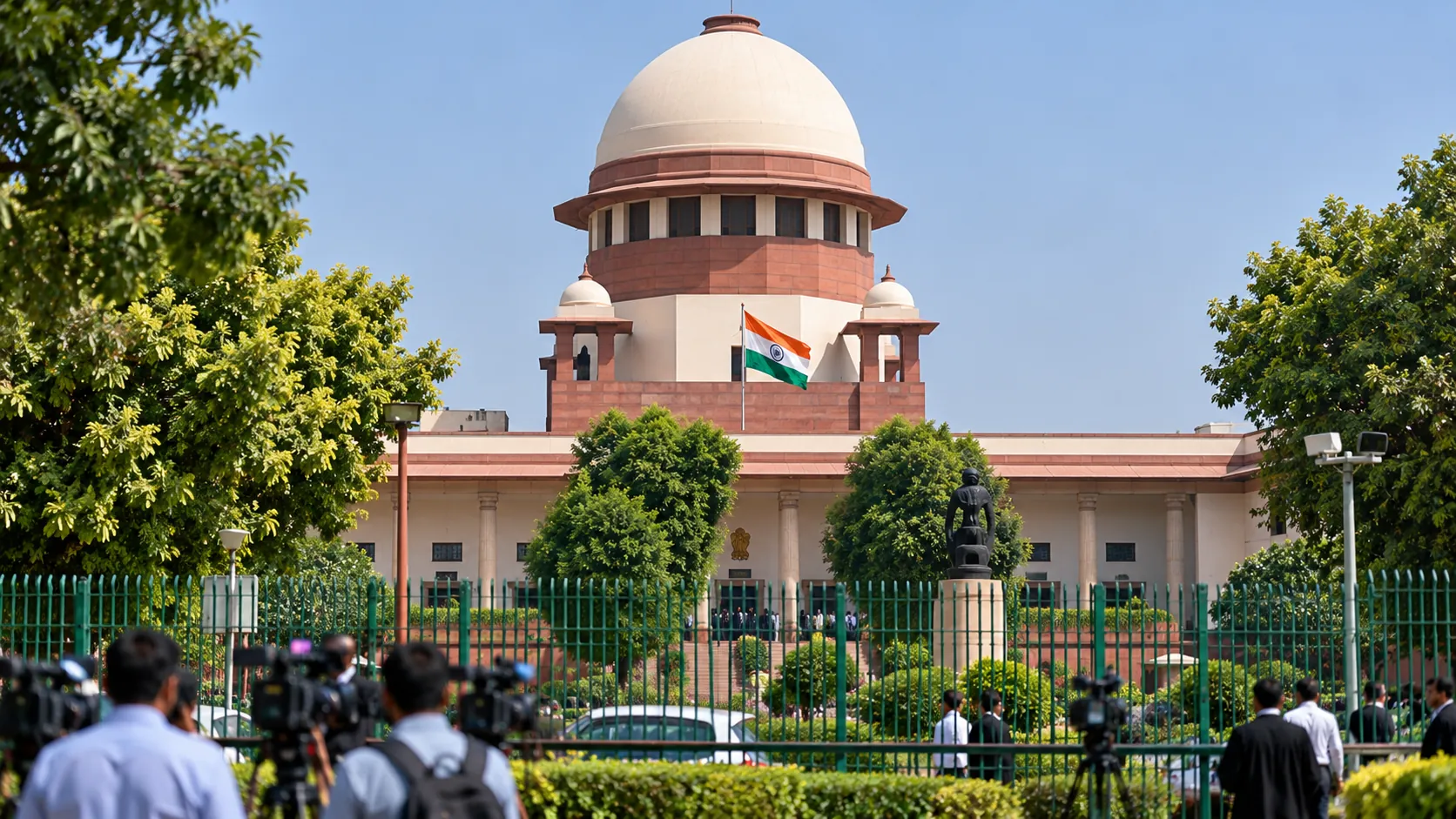
The constitutional question therefore is not whether any protection is permissible. It is whether a statute may bar every court from entertaining any case, for ever, against holders of one constitutional office, without a sanction or an exception for bad faith. The court has several options. It can strike the section down. It can read it down so that it covers only acts done in good faith in the discharge of duty, and leaves room for action in cases of corruption or malice. Or it can uphold it. Reading down is the middle course the court often takes when a provision has a legitimate aim but is drafted too widely.
The case comes at a charged moment. The Commission's special intensive revision of the electoral rolls is itself being argued in the Supreme Court, and protests in Delhi against the Chief Election Commissioner were before the same bench on 3 November. Whatever the merits of those disputes, the question of whether the people who run the Commission can be taken to court for what they do in office has become live.
The hearing on 18 December will bring together the three petitions. Until then, Section 16 remains the law, and the Centre's reply, due before that date, will show how it defends a protection that has no equal for any other constitutional office.
Sources
- SC issues notice to Centre, EC on plea challenging immunity for CEC, election commissioners (All India Radio)2026-01-13
- The Chief Election Commissioner and Other Election Commissioners (Appointment, Conditions of Service and Term of Office) Act, 2023 (India Code)2023-12-28
- The Gazette of India, Extraordinary: the CEC and Other Election Commissioners Act, 20232023-12-28
About the Author
S
Subhash Gupta
Desk Editor
Subhash Gupta is a writer at Wirony, contributing articles that are reviewed and verified by the editorial team before publication. The publication prioritises accuracy, editorial…
S
5 min
What did you think?