/
Rubio lands in Mumbai for Jaishankar talks with a trade deal 'very close' and a row over why not Delhi
The US Secretary of State meets S. Jaishankar at the Taj Mahal Palace on Tuesday afternoon, days after Washington waived tariffs over India's Russian oil purchases. A trade deal is said to be nearly done; the opposition is angry that the meeting is not in the capital.
P
5 min
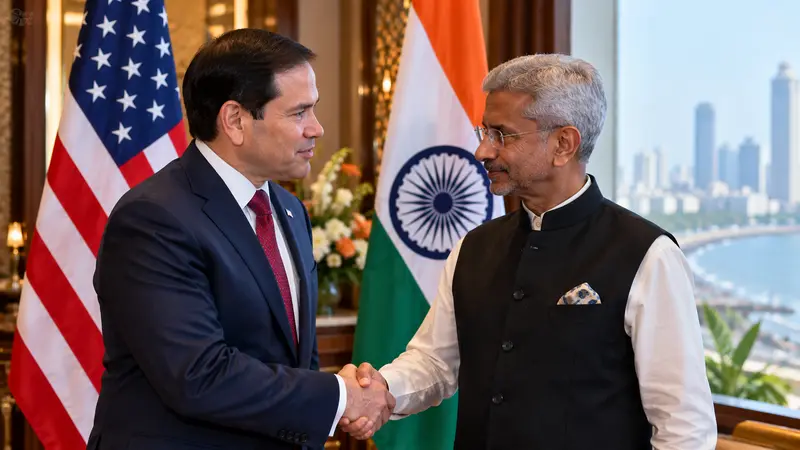
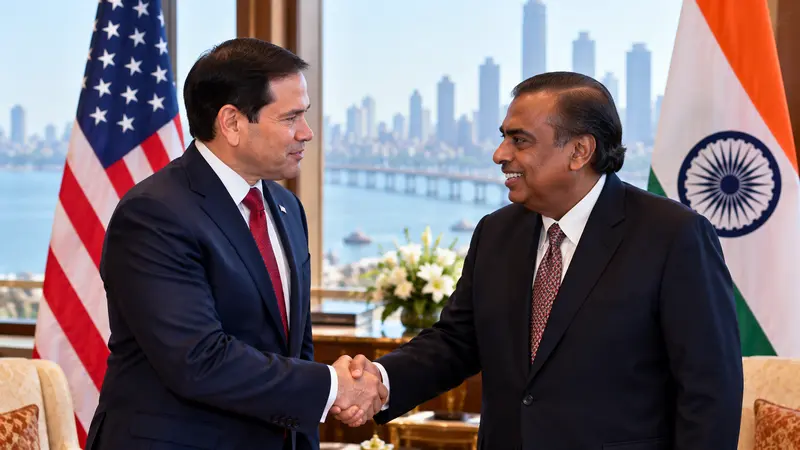
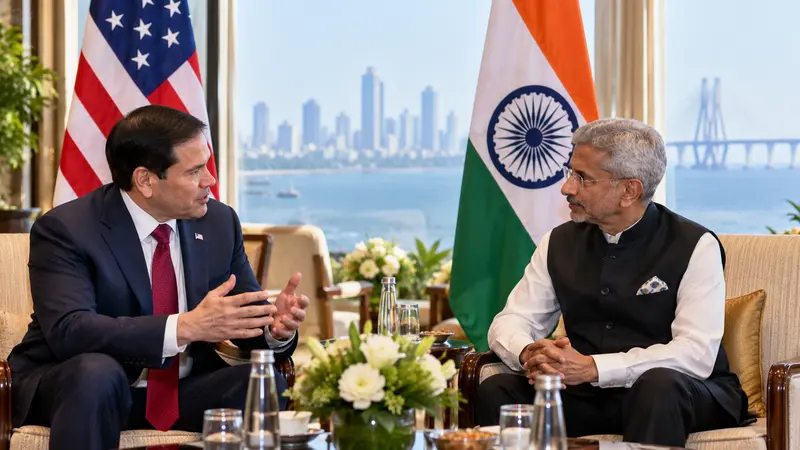
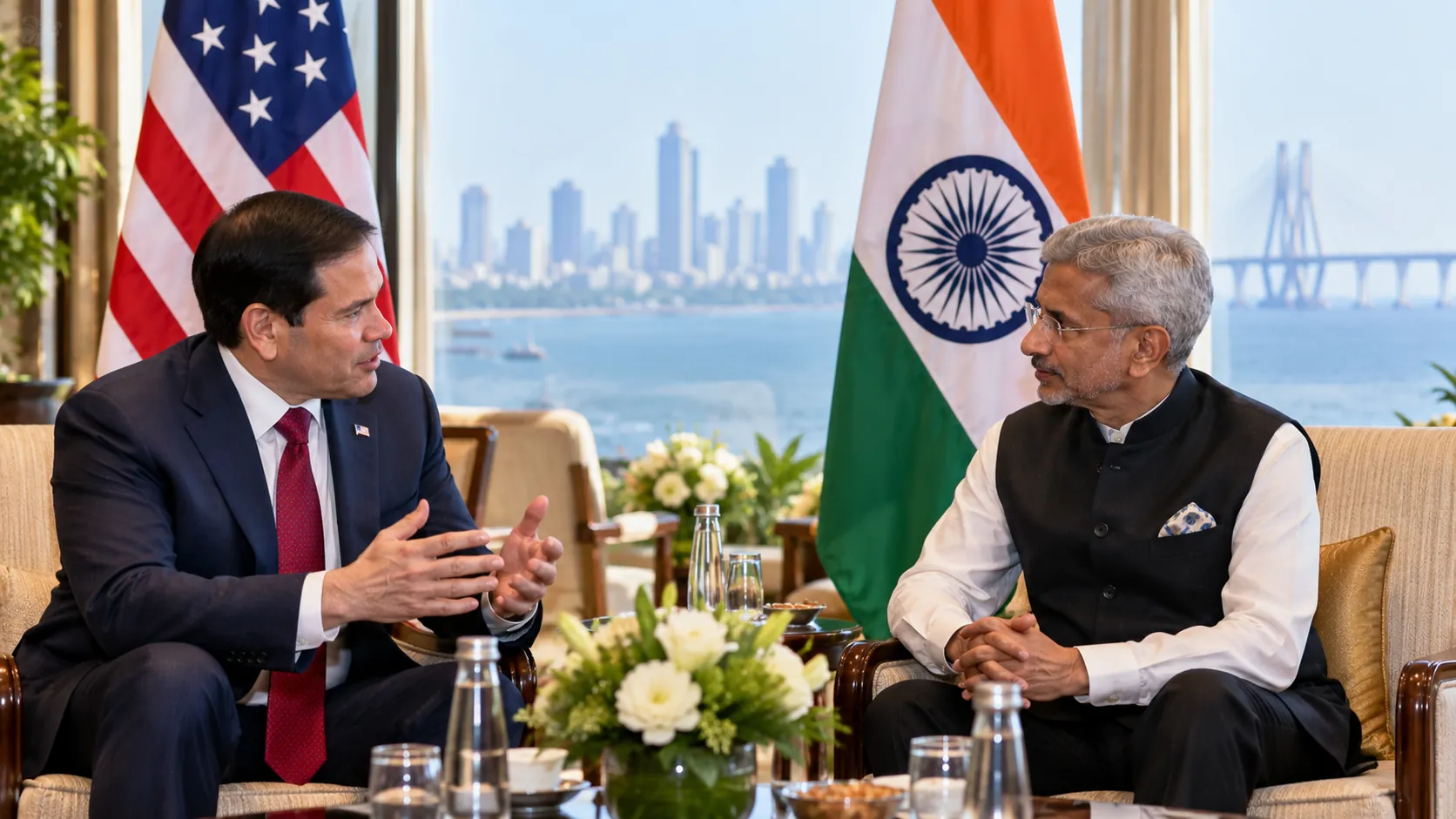
United States Secretary of State Marco Rubio arrives in Mumbai on Tuesday afternoon for talks with External Affairs Minister S. Jaishankar, with a trade agreement the two governments describe as nearly finished and a political argument over the venue running ahead of him.
Rubio is due to land at 2:15 pm from Samarkand, where he met Central Asian leaders. He will first lay a wreath at the memorial inside the Taj Mahal Palace hotel to the victims of the 26/11 attacks, then sit down with Jaishankar in the same building at 3:50 pm. In the evening he attends a reception at the Jio World Convention Centre marking 250 years of American independence. On Wednesday he flies to Jamnagar to see the Reliance Industries refinery, the largest single-site refinery in the world, and to be received by the Ambani family. Mukesh Ambani, Gautam Adani and Tata Sons chairman N. Chandrasekaran are among the business leaders on his list.
The deal on the table
"We're trying to finalise a trade deal with India right now. We're very close to doing that," Rubio said in Uzbekistan before flying in. Officials on both sides have raised the possibility of signing during the visit.
The road here has been rough. In August last year, after talks broke down, Washington put a 50 percent tariff on most Indian goods. A framework agreed in February brought the rate down to 18 per cent, and negotiations then slowed again; Finance Minister Nirmala Sitharaman said this month that they had plateaued. Commerce Minister Piyush Goyal says the first tranche of an agreement is in its final stages, and that India will not sign until its exporters have an edge over Bangladesh, Vietnam and Indonesia. Two-way trade grew almost 12 per cent last year to nearly $240 billion.
What a first tranche would contain has not been published. The February framework is understood to cover goods first, with services, digital trade and the harder questions on agriculture left for later rounds, and Indian negotiators have made clear they will not accept a rate that leaves their garment and leather exporters paying more than competitors in Dhaka or Hanoi.
The agenda for Tuesday, as the Ministry of External Affairs set it out, runs beyond trade: energy, defence, critical and emerging technologies, the situation in West Asia and the wider Indo-Pacific. Visas are a sore point of their own. Last week the US Labor Secretary suspended eight companies, Infosys, Tata Consultancy Services, Wipro and HCL among them, from a labour certification scheme used for employee green cards.
Russian oil, and a waiver with a clock on it
The largest obstacle moved on Friday. A law President Donald Trump signed in September allows tariffs of up to 100 percent on goods from the five biggest importers of Russian oil, and India is second on that list after China. On Friday Trump waived the law's substantive provisions, a decision criticised by members of both parties in Congress as a gift to Moscow. The administration now has a 60-day review period to decide what tariffs, if any, to impose.
Rubio has said the push to finish the trade deal was one reason for the waiver. He has also been unusually plain about India's position. "Every country has a complex set of factors that they have to take into account," he said on Monday. "Geography is real. For some countries, it's very difficult to acquire energy from alternative sources." India imports more than 85 per cent of the crude it uses and still buys millions of barrels of Russian oil a day, although Rubio noted it has widened its sources. The United States itself struck a deal last week to import Russian diesel to bring down fuel prices before its November elections.
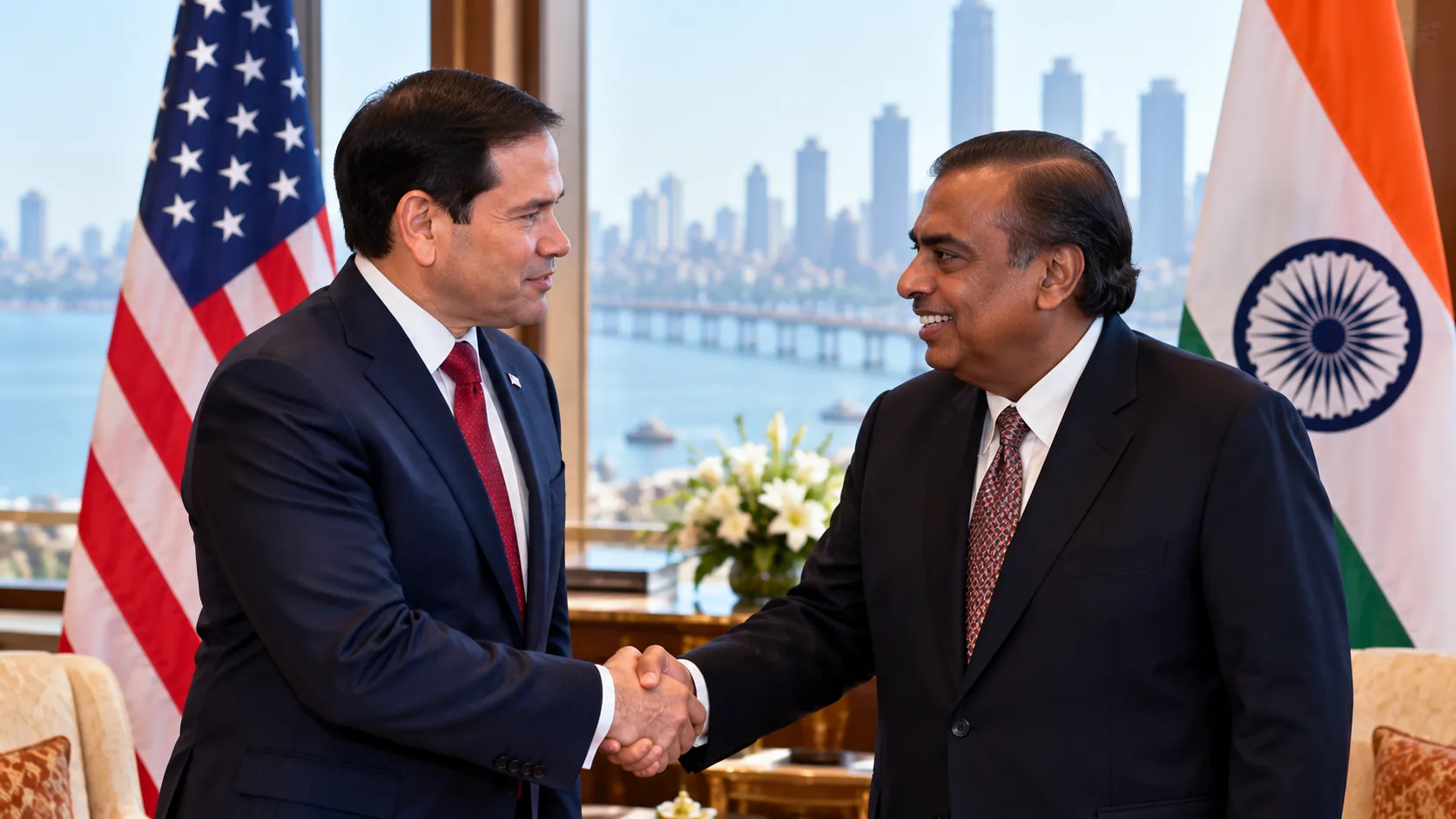
Reliance sits at the centre of that conversation. It is the biggest buyer of Venezuelan crude after the United States, which has urged India to take more, and it is building a refinery in Texas, the first new one in the country in half a century, announced in March as part of a $300 billion package.
Why Mumbai and not Delhi
Rubio was in New Delhi in May for a meeting of Quad foreign ministers. This time he is not going to the capital, and no official reason has been given. What turned that into a row was the US ambassador, Sergio Gor, telling a forum last week that Washington "expected" Jaishankar and other ministers to travel to Mumbai to see him.
The opposition pounced. Rahul Gandhi, leader of the opposition in the Lok Sabha, wrote that Rubio had "summoned his employee to Mumbai". Congress MP Pawan Khera called it a new low for a foreign government to summon India's external affairs minister on Indian soil. Jairam Ramesh called the ambassador's remark "quite extraordinary". The ministry at first declined to confirm the trip, saying it would be announced "at the appropriate time", and then published the itinerary and the agenda.
The mood behind the sparring is measurable. Indian public opinion of the United States has fallen to a record low, Sameer Lalwani of the Carnegie Endowment wrote this month, and "perceptions of the political relationship have deteriorated faster than its strategic foundations".
That is the ground Rubio walks onto at the Taj. A signature on a trade deal would change the story at once. Without one, the day's lasting image may be the one the opposition has already chosen: the foreign minister of India travelling to meet a guest who chose not to come to Delhi.
Sources
P
5 min
What did you think?