/
Legislative Council polls: 28 seats in four states voted on 23 October, counting on 27 October
Voting for 28 seats in the Legislative Councils of Uttar Pradesh, Bihar, Maharashtra and Karnataka was held on 23 October, and counting is on 27 October. Complaints about roll errors in Uttar Pradesh and a cash-distribution arrest have marked the polls.
A
4 min
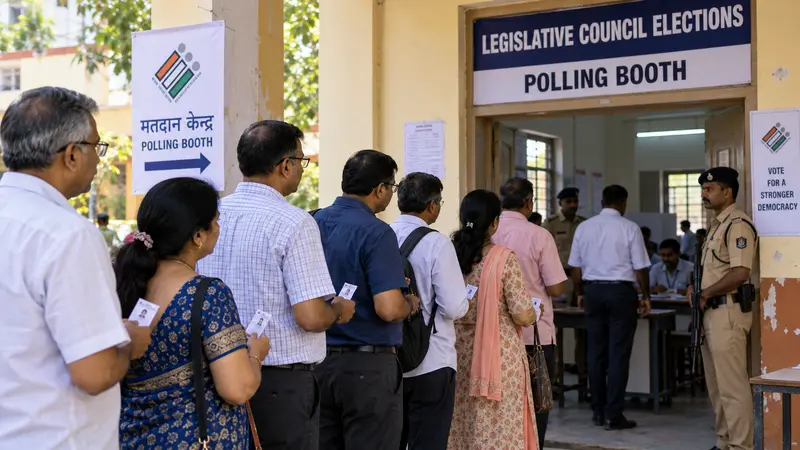
Voting for 28 seats in the Legislative Councils of Uttar Pradesh, Bihar, Maharashtra and Karnataka was held on Friday, 23 October, and the votes will be counted on 27 October. These are indirect elections for the upper houses of the state legislatures, in which the voters are not the general public but specific groups such as graduates, teachers and elected representatives of local bodies.
Where the polls have drawn attention
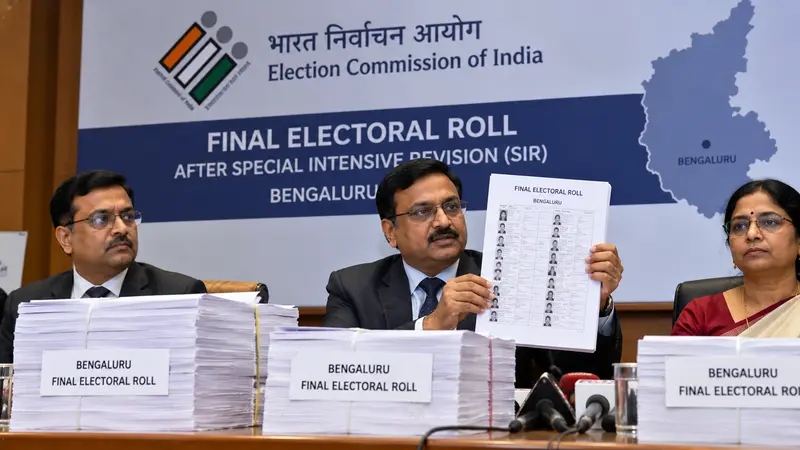
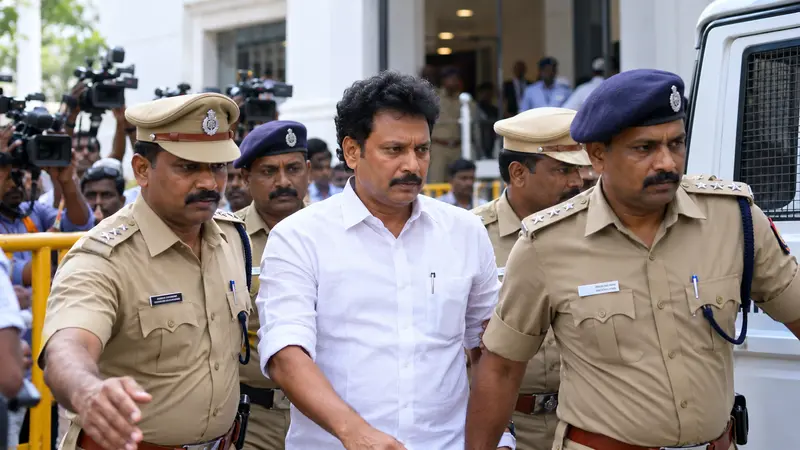
The polls have not been smooth everywhere. In Uttar Pradesh, a software glitch in the electoral rolls reportedly turned some names into Hindi sentences. The Chief Electoral Officer ordered an inquiry after 158 irregular entries were reported across 11 council constituencies. In the Gorakhpur-Faizabad teachers' constituency, four people were arrested for distributing cash before the election.
In Bihar, Jan Suraaj, the party founded by Prashant Kishor, is challenging the ruling NDA in the Council elections. In Karnataka, voting was reported in the West Graduates constituency. The breakdown of the 28 seats by state and constituency has not been published in the reports available so far, and the party-wise strength of each Council before the vote has also not been given.
How a Legislative Council works
Only six states have a Legislative Council: Uttar Pradesh, Bihar, Maharashtra, Karnataka, Telangana and Andhra Pradesh. The Council is a second chamber, similar to the Rajya Sabha at the Centre. Members serve six-year terms, and one-third of them retire every two years. A candidate must be at least 30 years old. The size of a Council cannot be more than one-third of the Assembly's strength, and it cannot be less than 40.
The members come from different groups. One-third are elected by local authorities such as municipalities and district boards. One-twelfth are elected by graduates who have held their degree for at least three years, and one-twelfth by teachers who have taught for at least three years in eligible institutions. Another third are elected by the MLAs, and the Governor nominates the rest from among people with special knowledge or experience in fields such as literature, science, art, the co-operative movement and social service.
The councils are of different sizes. Uttar Pradesh has the biggest, with 100 members, followed by Maharashtra with 78, and Bihar and Karnataka with 75 each. Telangana's Council has 40 members and Andhra Pradesh's has 58.
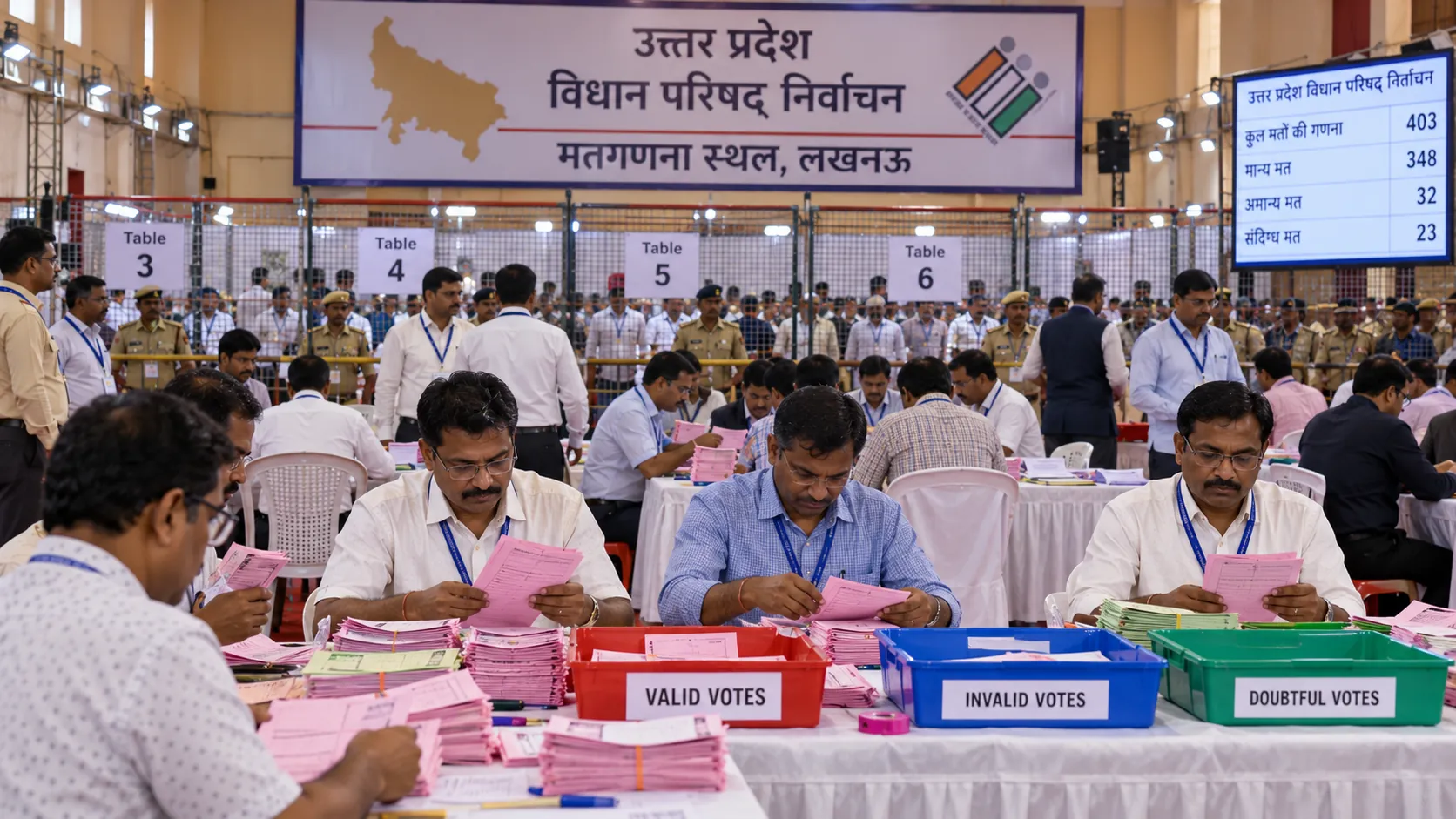
Votes are counted by proportional representation using the single transferable vote. Electors rank the candidates in order of preference, and counting proceeds in rounds, in which the lowest candidate is eliminated and the votes are passed on until the seats are filled. That is why results in these elections can take a day or more even when the number of voters is small. A candidate must reach a quota, which is the total number of valid votes divided by one more than the number of seats, plus one. A voter has to mark preferences in numerals with the pen that is supplied, and a ballot marked in any other way is rejected, so the count of invalid votes is often a story in itself in graduate and teacher constituencies.
A Council has far less power than an Assembly. It cannot reject the Assembly's recommendations on a Money Bill, and where the two Houses disagree on an ordinary Bill, the Assembly's view can ultimately win. A Council cannot be dissolved, though it can be created or abolished. Under Article 169, the Assembly has to pass a resolution by a majority of its total membership and a two-thirds majority of those present and voting, and Parliament must then pass a law.
The history shows how political the question can be. West Bengal and Punjab abolished their Councils in 1969. Andhra Pradesh set up its Council in 1958, abolished it in 1985 and restored it in 2007.
The Council seats rarely decide who governs a state, but they are watched as a reading of the mood among teachers, graduates and local-body members, groups that are often called opinion makers. A party that wins several graduate and teacher seats can claim the support of educated and organised voters. A party that loses them is often asked whether its message has weakened.
The inquiry in Uttar Pradesh and the cash arrest in Gorakhpur-Faizabad will be watched along with the counting, because they bear on whether the polls were run fairly.
A
4 min
What did you think?