/
India tells UN Pakistan must vacate occupied Jammu and Kashmir, and presses for Security Council reform
At the United Nations, an Indian diplomat told Pakistan to vacate the territory it occupies in Jammu and Kashmir and to focus on its own citizens. India has also said that Security Council reform cannot be fixed by adding only non-permanent seats.
P
4 min
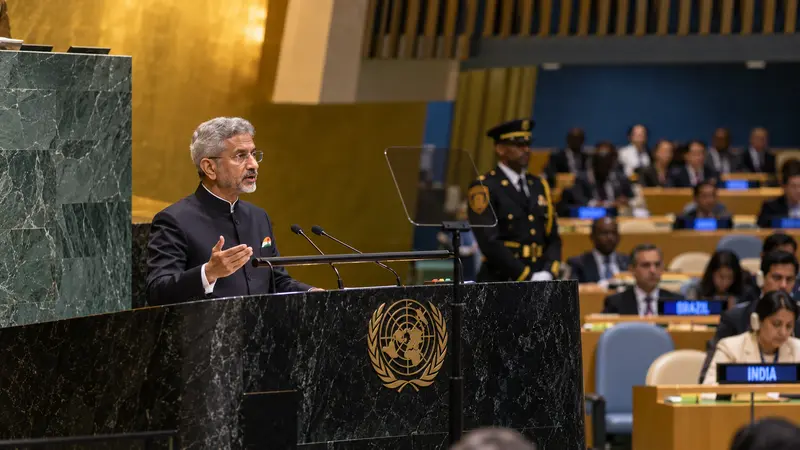
India has told the United Nations that Pakistan must vacate the territory it holds in Jammu and Kashmir and should pay attention to its own citizens instead of taking what India called military directives. The remarks were made by India's First Secretary at its UN mission, Raghoo Puri, in reply to Pakistan, and they came shortly after India restated its demand for a wider reform of the Security Council.
India accused Pakistan of misusing the forum to spread propaganda about Jammu and Kashmir. This is a right of reply, a short statement a delegation is allowed to make when another country has spoken about it. Under the General Assembly's rules, the first reply is limited to 10 minutes and a second one to five, and replies are heard at the end of a meeting, which is why they often come late in the evening in New York. Because the General Assembly's committees meet every autumn, the same exchange has been repeated several times this month.
An October of exchanges
Earlier in October, Pakistan's First Secretary, Sarfraz Ahmed Gohar, rejected India's description of Kashmir as a matter internal to India in the Third Committee on 3 October. He said the final status of the territory should be decided in line with UN Security Council resolutions and the wishes of the Kashmiri people.
On 9 October, India used the Fourth Committee to say that Jammu and Kashmir is, and will always remain, an integral and inalienable part of India, and accused Pakistan of peddling lies. The same day, at the First Committee, India said it would not bow to nuclear blackmail and warned against treating nuclear weapons as instruments of statecraft. Pakistan's Prime Minister had also raised Kashmir in his address to the General Assembly, and an Indian diplomat answered him in a right of reply.
Each time the sequence is much the same. Pakistan refers to the Security Council's resolutions and India rejects any outside role. India raises cross-border terrorism and Pakistan says India is hiding behind it. Neither side expects the other to change its position, and the statements are made largely for the record and for audiences at home.
The pattern goes back well before October. In March, at a Security Council debate on peacekeeping, India's Permanent Representative, Parvathaneni Harish, said that Pakistan continues to illegally occupy the territory of Jammu and Kashmir and must vacate it. In June, during the General Assembly's debate on the Council's annual report, he called a reference to Kashmir by Pakistan's envoy an unwarranted remark on a matter strictly internal to India, and said the Council seat Pakistan holds is not a forum for biased and false narratives.
The Security Council reform argument
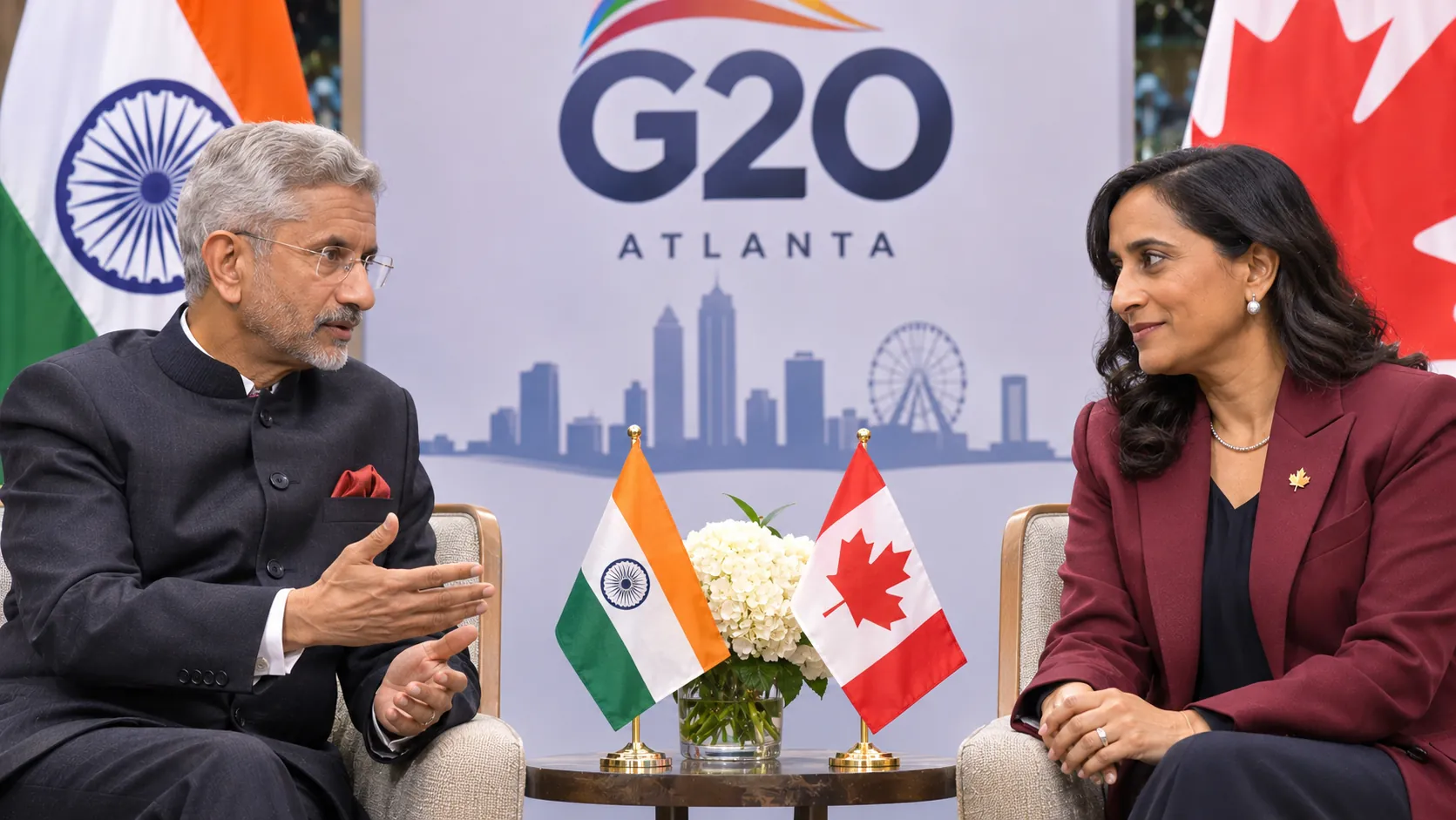
India has used the same session to press its case on the Council itself. Its position is that the Council's structure still reflects the world of 1945, and that adding only non-permanent seats cannot cure its loss of legitimacy. The only major enlargement so far, in the 1960s, raised the Council from 11 to 15 members by adding non-permanent seats, and did not change who holds a veto.
The Council has five permanent members, which are China, France, Russia, the United Kingdom and the United States, and 10 non-permanent members who serve two-year terms. India's group of four, the G4 of India, Brazil, Germany and Japan, proposes expanding it to 25 or 26 members, with 11 permanent seats and 14 or 15 non-permanent ones. India last served as a non-permanent member in 2021 and 2022.
In its latest statement, India said it hopes the 81st session of the General Assembly will be the point at which the long-running negotiations finally produce a negotiating text, a timeline and a destination. The talks, known as intergovernmental negotiations, have run for years without a text that all sides will accept.
Delhi often links the two. Pakistan has held a non-permanent seat on the Council, and India has pointed out in earlier debates that the seat is a responsibility and not a platform for what it calls biased narratives. It also argues that Pakistan's opposition to new permanent members comes from hostility towards India and puts it at odds with much of the membership.
What to watch is whether the reform talks move from statements to a text. Without that, the October speeches on Kashmir and on the Council will return again next year.
P
4 min
What did you think?