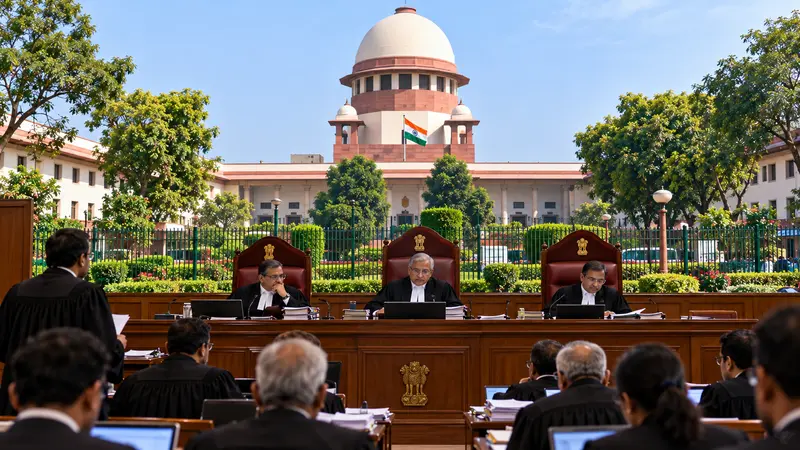
/
Criticism is legitimate but must be fair and restrained, CJI Surya Kant says in legal ethics lecture
Chief Justice Surya Kant said differences of opinion and criticism are legitimate but must be voiced with fairness, restraint and respect for institutional integrity. Speaking on legal ethics at the Supreme Court's monthly lecture, he said the justice system's dignity depends on the Bar's conduct.
R
4 min
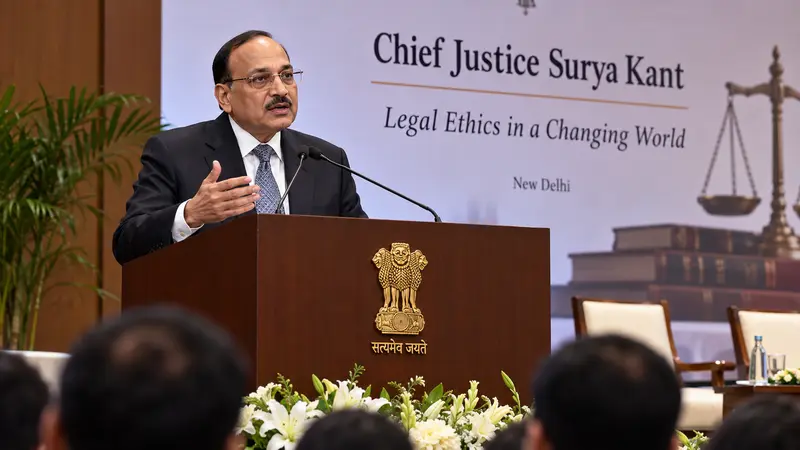
Chief Justice of India Surya Kant said on Wednesday, 28 October, that differences of opinion and criticism are legitimate, but that they must be expressed with fairness, restraint and respect for institutional integrity. He was delivering the second lecture in the Supreme Court's monthly series on Law, Justice and Legal Education, on the subject of the importance of ethics in the legal profession. Most of his talk was addressed to lawyers, and his remark on criticism came as part of his argument about how members of the Bar should conduct themselves.
What he said on criticism
The Chief Justice said that in an era of public visibility and commercial interests, professional ethics should guide personal expression so that it does not undermine trust in the justice system. The dignity of the justice system, he said, depends on how members of the Bar conduct themselves both inside and outside the courtroom. The reports of the lecture do not mention social media, and use the general term public visibility.
Ethics and success
He said that professional success is often judged by the quality of arguments or the outcomes secured, but that the manner in which success is achieved is a more fundamental measure. Legal knowledge provides the tools of the profession, he said, while ethics determines how those tools should be used.
Trust between the Bench and the Bar
The administration of justice depends on trust between the Bench and the Bar. Advocates are expected to present the relevant facts, to identify the applicable law and to test arguments with intellectual honesty. The adversarial system draws its strength from contests that are conducted within ethical limits, and when the assurance that they will be weakens, the effects reach beyond the single case and affect public confidence in the justice system.
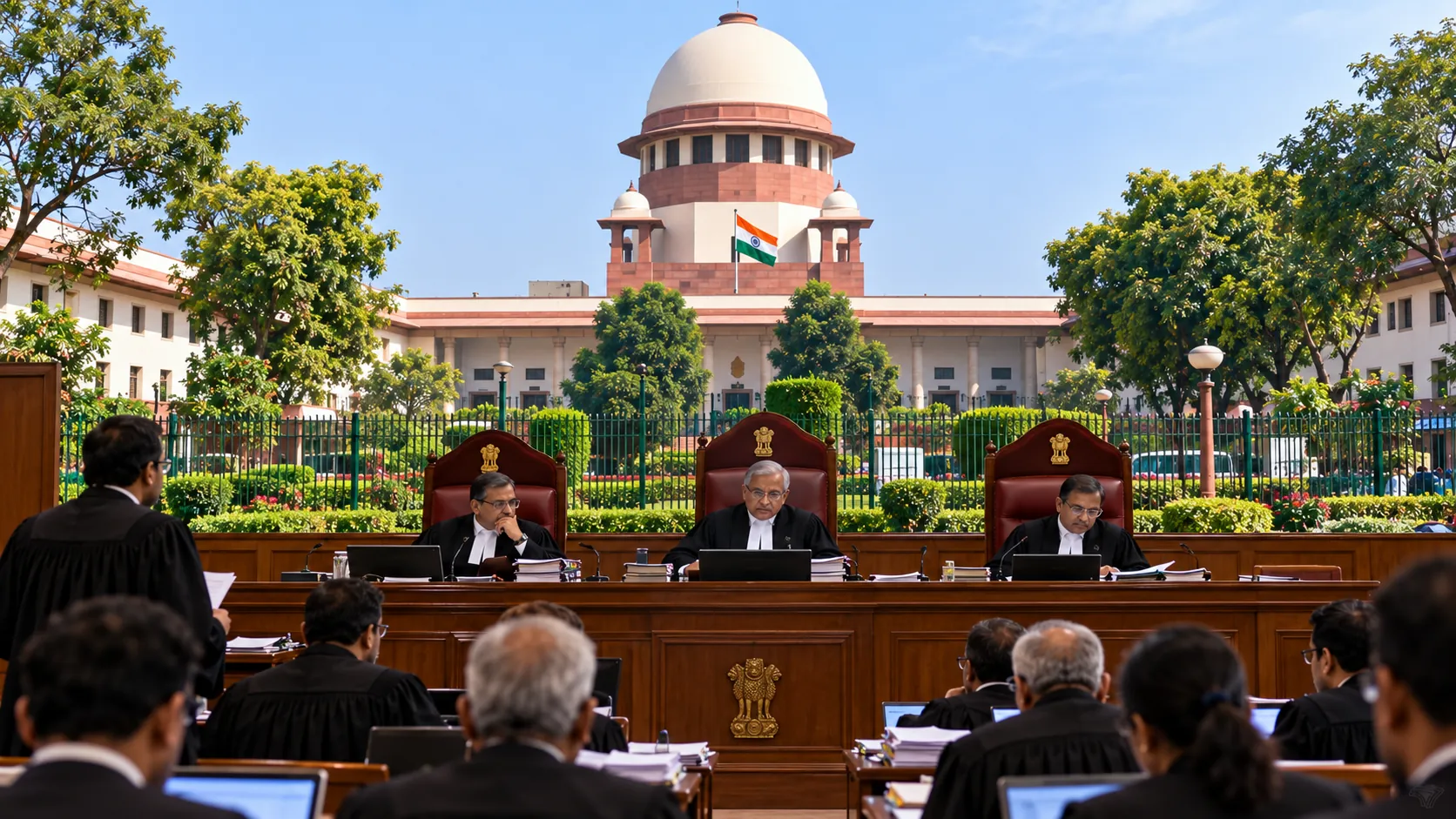
Lawyers, he said, carry responsibilities alongside the privileges of the profession. Since a lawyer is often a person's first contact with the justice system, the Chief Justice named honesty in advice, diligence in representation, fair fees and sensitivity towards vulnerable litigants as core duties.
He said that ethics should be taught from the earliest stages of legal education, and that legal ethics cannot be confined to memorising the rules of conduct. Students should develop the judgment to handle situations in which professional obligations conflict, to weigh competing responsibilities and to understand the consequences of their choices. Ethical conduct, he said, must not be treated as an obligation to be recalled only when a complaint arises. It should guide the daily decisions of the Bar, the Bench and legal educators, and the credibility of the profession depends on trust earned through consistent integrity and accountability.
| Theme | Point made |
|---|---|
| Criticism | Legitimate, but with fairness, restraint and respect for institutions |
| Success | The manner of achieving it matters more than the result |
| Bench and Bar | Courts rely on lawyers to present facts and law honestly |
| Education | Ethics should be taught as judgment, not memorised as rules |
The chief guest was Professor Venkata Rao, the Vice-Chancellor of the India International University of Legal Education and Research in Goa. Attorney General R. Venkataramani and the president of the Supreme Court Bar Association, Pradeep Kumar Rai, also addressed the gathering.
The Chief Justice has spoken on criticism of the judiciary before. At the sixth Ram Jethmalani Memorial Lecture, he argued that the judiciary is not and cannot be averse to criticism, and that critique is vital for self-correction and accountability. In July, after a litigant was forcibly removed from the Supreme Court for allegedly hurling abuses and throwing his case file during a hearing, he declined to comment on the episode itself and stressed that the dignity of constitutional institutions must be respected. In May, remarks of his comparing unemployed youth to cockroaches and parasites drew criticism for their language.
On Tuesday, while hearing the batch of petitions on the Election Commission and the revision of electoral rolls, he warned a lawyer against making irrelevant arguments and said that crossing the line would have consequences.
The lecture was addressed to the legal profession, but it speaks to a wider question, which is where the line falls between criticism that holds an institution to account and conduct that damages trust in it. The Chief Justice has said on other occasions that scrutiny is useful, and his remarks this week place the emphasis on the manner in which it is done.
R
4 min
What did you think?