/
FSSAI sanctions prosecution of Bisleri after a packaged water sample is found unsafe
India's food regulator FSSAI said on 22 November that a sample of Bisleri packaged drinking water was declared unsafe by the referral lab for polynuclear aromatic hydrocarbons, and it has sanctioned prosecution. Bisleri's first test had found bromate above the limit. The company has not commented.
S
4 min
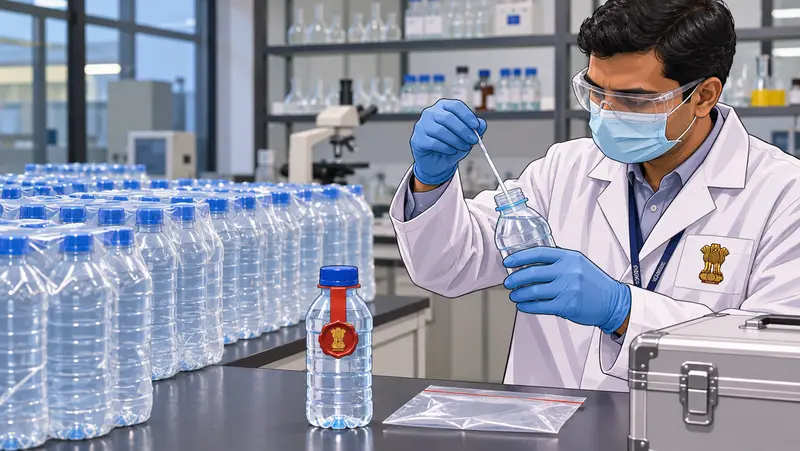
India's food regulator, the Food Safety and Standards Authority of India (FSSAI), said on Sunday, 22 November 2026, that it has sanctioned the prosecution of Bisleri after a sample of its packaged drinking water was declared unsafe by a referral laboratory. The regulator said the sample failed on polynuclear aromatic hydrocarbons (PAHs). Bisleri has not issued a statement. Nothing in this report is a finding about the water now on sale: the plant, the batch and the date of the sample are not public, and the company has the right to contest the case in court.
The FSSAI said that a sample of "Packaged Drinking Water (other than Mineral Water)" was taken from Bisleri's premises. The first analysis found the sample non-compliant with the limit for bromate and declared it unsafe. Bisleri appealed against that result, as the law allows, and the sample was sent to a referral laboratory. The referral laboratory declared it unsafe for polynuclear aromatic hydrocarbons. On that report the FSSAI sanctioned prosecution under the Food Safety and Standards Act, 2006.
The regulator has not disclosed the measured values, the permitted limits, the plant or batch the sample came from, or the date on which it was taken. Those details will come out in the complaint that is filed in court.
What bromate and PAHs are
Bromate can form in drinking water when ozone is used to disinfect water that contains bromide, and standards limit it to very small quantities. The International Agency for Research on Cancer classifies bromate as possibly carcinogenic to humans. Polynuclear aromatic hydrocarbons are a large family of compounds formed by the incomplete burning of organic matter, and some of them are known carcinogens. They can reach water from contaminated sources, and their presence in packaged water would be a matter for the plant's treatment and testing.
A single failed sample does not show how much of a product on sale is affected, and the regulator has not said that any batch has been recalled.
| Step | What was reported |
|---|---|
| Sample | Packaged drinking water, taken from the company's premises |
| First analysis | Non-compliant on bromate; declared unsafe |
| Appeal | Company appealed; sample sent to referral laboratory |
| Referral laboratory | Declared unsafe for polynuclear aromatic hydrocarbons |
| Action | Prosecution sanctioned under the FSS Act, 2006 |
| Company's response | None issued so far |
Under the Food Safety and Standards Act, selling food that is declared unsafe is an offence, and the penalty depends on the harm caused. When a company is prosecuted, officers who were in charge of its business can also be held responsible if the offence took place with their knowledge. A sanction to prosecute is the permission to file a case before a court, and it is not a conviction. The case will be heard in court, where the company can challenge the sampling, the testing and the report.
Other actions announced the same day
The FSSAI said that action was also taken against four other firms: Vasant Masala Pvt Ltd, Tit-Bit Foods India Pvt Ltd, Mimansa Industries and Asha Confectionery. Asha Confectionery has been told to withdraw its pre-packed chocolate-filled cookies from the market. The regulator also suspended the licences of Urmi Lifesciences LLP and Gaur Ayurvedic Store. It did not say, in the material available, what each of the other firms was found to have done wrong.
Packaged drinking water is a food under the Food Safety and Standards Act and is covered by quality standards for chemical and microbiological contaminants. The FSSAI classed packaged drinking water as a high-risk food category in 2024, which means that its makers are subject to regular inspection and third-party audits. The Act also gives a company that disputes a laboratory result the right to appeal, normally within 30 days, so that the sample can be tested again at a referral laboratory. That is the route that was followed in this case.
What consumers should know
The FSSAI has not asked consumers to stop buying or drinking packaged water, and it has not announced a recall of the brand. People who want to be careful can check the licence number and the date of manufacture on the label, avoid bottles that are damaged or unsealed, and report a complaint about a food product to the FSSAI through its complaint channels. Nothing here is medical advice, and anyone who has felt unwell after drinking a product should see a doctor.
The next step is the filing of the complaint in court, at which point the details of the sample and the report should become public. Bisleri may defend the case, and the court will decide whether the sample was drawn and tested properly and whether the offence is made out. Until the company speaks and the complaint is filed, many questions about the case cannot be answered.
The Food Safety and Standards Authority of India is the official source for the action, and the Ministry of Health and Family Welfare administers the Act.
About the Author
S
Subhash Gupta
Desk Editor
Subhash Gupta is a writer at Wirony, contributing articles that are reviewed and verified by the editorial team before publication. The publication prioritises accuracy, editorial…
S
4 min
What did you think?