Sanjay Dutt clarifies ‘no peace in India’ remark, says talk-show exchange was scripted
Sanjay Dutt issued a clarification on 5 Oct 2026 after backlash over his remark that he no longer feels the same “peace” in India. He said the talk-show exchange was scripted, meant to be humorous, and not intended to offend anyone.
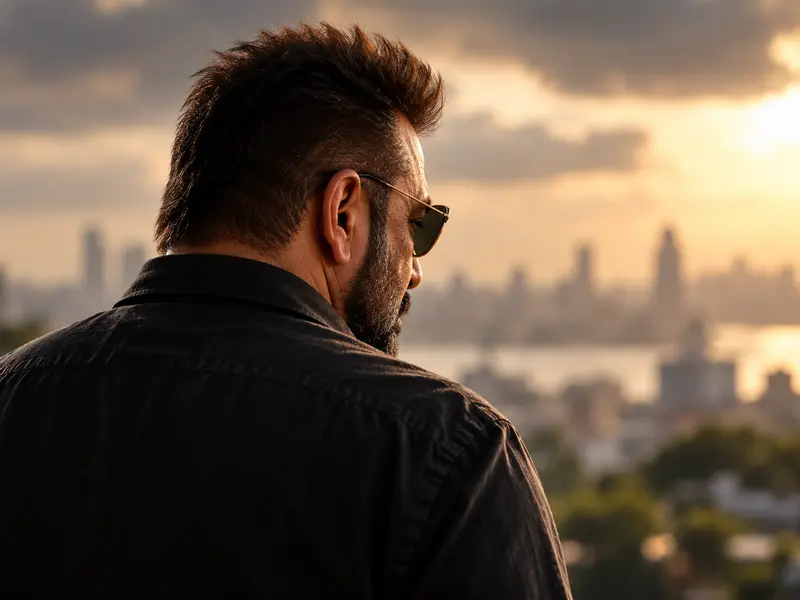
Sanjay Dutt moved to contain a social media backlash on Monday, 5 October 2026, issuing a clarification after a remark on a talk show in which he said he no longer feels the same “peace” in India.
In his statement, the actor said his comments were never meant to hurt or disrespect anyone and were made as part of a scripted, light-hearted exchange. The clarification came after clips from the appearance were widely shared online and drew criticism.
Dutt wrote on X that he wanted to “clarify” his intent. “I would like to clarify that it was never my intention to hurt, offend, or disrespect the sentiments of any individual, community, or institution,” he said. He added that what viewers saw was “a scripted conversation” designed to be humorous.
The actor also linked the tone of the segment to his popular screen persona, saying the spirit of the exchange was similar to the humour and satire associated with his Munna Bhai character.
The remark and the show segment
The controversy traces back to Dutt’s recent appearance on Shekhar Suman’s talk show, Shekhar Tonite, where he made a comment about the country’s atmosphere. In the episode, Dutt said, “अब भारत में पहले जैसी शांति महसूस नहीं होती” (“Now, I don’t feel the same peace in India as before”), a line that quickly became the focus of online debate.
Reports about the episode also describe a follow-up segment in which Dutt was asked to imagine himself addressing the nation as prime minister for five minutes. In that portion, he delivered a satirical monologue in his Munna Bhai style, a performance that some viewers treated as political commentary rather than comedy.
As the clips circulated, the reaction sharpened. Users criticised him for the “peace” remark and for the monologue, with some accusing him of disrespecting institutions. The criticism was amplified by the way short excerpts were reposted without the larger context of the conversation.
In his clarification, Dutt said his words were being read differently from how they were intended. He described the exchange as written for humour and said the underlying idea was in line with the kind of satire and messaging audiences associate with Munna Bhai, including the “Gandhigiri” flavour of comedy that stresses love, unity and social harmony.
Dutt’s statement sought to draw a line between a comic setup and real-world political positions. He said he did not intend to insult or show disrespect toward “any individual, community, or institution,” and emphasised that the conversation was scripted.
The actor’s decision to address the issue quickly underlined how fast entertainment content can turn into a political flashpoint online. In this case, the dispute was driven less by a formal complaint than by the speed and scale of social media reaction, where context is often lost as clips are cut down and recirculated.
While Dutt did not withdraw the original words in the excerpts described in reports, he framed them as part of a humorous, pre-planned exchange rather than a statement of intent to comment on public order or governance.
Why it drew attention
Dutt remains one of Hindi cinema’s most recognisable stars, with a career spanning decades and more than 135 films across Hindi and other Indian-language industries. He is known for intense, morally complicated roles as well as broad comedy, and his Munna Bhai character in particular has had a lasting cultural footprint.
That visibility is part of why even a throwaway line on a talk show can travel far beyond an entertainment audience. The “peace” remark, even when delivered in a casual setting, touched a sensitive nerve and quickly became a proxy argument about the country’s mood and politics.
The Munna Bhai reference also mattered. For many viewers, the character represents a specific kind of social satire, built around punchlines and a moral message, and Dutt’s clarification leaned on that association to explain his intent. He suggested the segment’s aim was to keep the conversation light and comic, not to provoke.
What happens next is likely to depend on whether the online debate cools after his statement. For now, Dutt has put his position on record: he says the exchange was scripted, and he did not mean to offend anyone.
What did you think?