Nana Patekar dies at 75 after cardiac arrest at Goa home, declared dead at 5:20 AM
Veteran actor Nana Patekar died on Thursday after a cardiac arrest at his Dona Paula, Goa, residence. He was 75 and was declared dead at 5:20 AM after about 45 minutes of CPR. A medico-legal case has been registered and a post-mortem will be conducted.
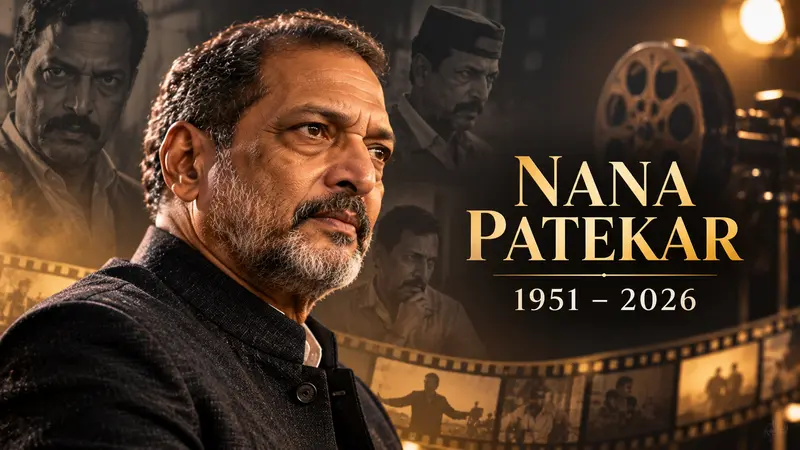
Veteran actor and filmmaker Nana Patekar died early Thursday after suffering a severe cardiac arrest at his residence in Dona Paula, Goa. He was 75.
Hospital authorities said Patekar was found unconscious at home and was rushed for emergency treatment, but could not be revived. Doctors administered CPR for about 45 minutes. He was declared dead at 5:20 AM.
A medico-legal case has been registered and a post-mortem examination will be conducted, hospital officials said.
Patekar, born Vishwanath Patekar, was among the most recognisable faces of Hindi and Marathi cinema, known for an intense screen presence, clipped delivery and a willingness to play complicated, often abrasive characters. Over a career that stretched across decades, he moved easily between hard-edged drama and broad comedy, leaving behind performances that became cultural shorthand in both languages.
Final hours in Goa
Patekar lived in Dona Paula, near Panaji. Medical staff said he was brought to hospital after he was discovered unresponsive at his apartment. Despite sustained resuscitation efforts, he showed no response.
Doctors said the emergency team continued CPR for roughly 45 minutes before he was declared dead in the early hours of the morning. The timing of the declaration, at 5:20 AM, was confirmed by hospital authorities.
Officials said the death will be followed by standard procedures, including a post-mortem. The registration of a medico-legal case was described as part of the process.
News of the actor’s death spread quickly through the film industry and among fans, prompting an outpouring of grief, shock and tributes across the country.
Born on January 1, 1951, in Murud-Janjira, Maharashtra, Patekar entered films as an actor who did not fit easy categories. He made his Hindi film debut with Gaman in 1978, and over time built a reputation for performances that were marked by physical economy and emotional intensity.
His rise gathered pace with films that leaned on atmosphere and character rather than star polish. Roles in Parinda (1989) and later Krantiveer (1994) turned him into a household name, with audiences quoting his dialogue for years. In the 2000s, he found a second wind with parts that carried a mix of grit and weariness, including the police-officer drama Ab Tak Chhappan (2004).
He also delivered a late-career high point in the Marathi film Natsamrat (2016), a performance that drew praise for its theatrical heft and emotional control.
Yet Patekar’s popularity was not limited to stern, brooding roles. He showed a sharp comic timing as the gangster Uday Shetty in Welcome (2007), a part that broadened his audience and became one of his most replayed performances. He later appeared in Welcome Back (2015).
Across his filmography, Patekar was often cast as a man under pressure: a citizen pushed to rage, an officer battling compromise, a patriarch losing control, or a criminal with a code. Directors relied on his ability to make anger look like thought, and silence look like argument.
Honours followed. He won three National Film Awards and was awarded the Padma Shri in 2013 for contributions to cinema and the arts. He also holds a rare distinction at the Filmfare Awards, having won across the Best Actor, Best Supporting Actor and Best Villain categories.
Work beyond the camera
Away from sets, Patekar’s public life included service in the Territorial Army. He retired as an Honorary Lieutenant Colonel and participated in the 1999 Kargil War, an association that remained part of his public identity.
In 2015, he co-founded the Naam Foundation, which provided financial aid and drought relief to distressed farmers and families in Maharashtra. The initiative became one of his best-known efforts outside acting, tying his celebrity to on-ground fundraising and support work.
For many colleagues, Patekar’s appeal lay in his refusal to smooth off edges, whether in performance or in public. He could be severe on screen, playful when the part demanded it, and unpredictable in his choices, moving between Hindi and Marathi projects without treating either as secondary.
Details of funeral arrangements were not announced in the information available early Thursday. Authorities said formalities including the post-mortem would follow.
What did you think?