/
Tata Power v Kleros: why Singapore's court upheld the US$490 million award, and what an appeal must overcome
Singapore's commercial court dismissed all three Tata Power challenges on 26 August to a US$490.32 million arbitration award. Tata Power said it would appeal within 28 days. Simple interest alone is now about US$155 million.
S
5 min
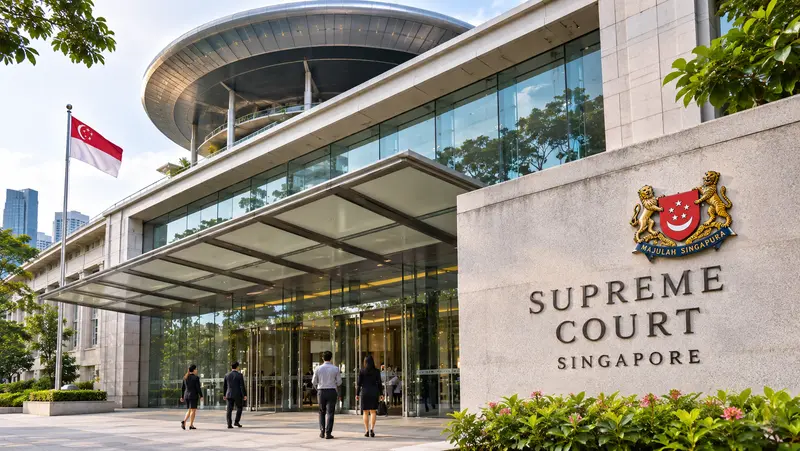
The Singapore International Commercial Court, a division of Singapore's High Court, dismissed all three of Tata Power's applications to set aside an arbitration award worth US$490.32 million in favour of Kleros Capital Partners Ltd, in a judgment delivered on 26 August 2026. Tata Power told the BSE and the NSE the same day that it would appeal to the Singapore Court of Appeal within the 28 days allowed. The filing does not say whether the appeal has since been lodged, and by simple interest alone the award has grown by about US$155 million since the dispute began.
What the court decided
The judgment, reported as [2026] SGHC(I) 15, was delivered by S Mohan J for a three-judge bench that also included Anthony Besanko IJ and Anthony Meagher IJ. It covers Originating Applications 13, 24 and 25 of 2025. The hearing ran from 16 to 18 March 2026, with further written submissions on 28 May.
The court found that Tata's applications were all without merit, and that there was no breach of natural justice or of the agreed arbitral procedure. It also held that the circumstances Tata relied on did not give rise to any reasonable suspicion or apprehension of apparent bias on the part of any member of the majority. The applications were dismissed with costs, and the parties were told to file written submissions on costs within two weeks.
The award at the centre
Kleros began its arbitration against Tata Power on 30 November 2020 at the Singapore International Arbitration Centre, under the SIAC Rules 2016. The tribunal had three members: Prof Lawrence Boo (presiding), A K Ganguli SA and Stuart Isaacs KC.
| Award | Date | What it decided |
|---|---|---|
| Liability Award | 26 September 2023 | Unanimous, and not challenged: Tata misused confidential information, circumvented Kleros and breached its duty of good faith |
| Quantum Award | 1 July 2025 | By majority, US$490,320,000 for a lost opportunity, plus legal costs of S$8,289,020.64 |
| Final Award | 27 August 2025 | Arbitration costs of S$2,954,788.29 and further costs of S$98,154.39, with interest |
The majority, Prof Boo and Mr Isaacs, found a 60% loss of chance on a project valued at US$1,021,500,000, which produced the damages figure, and added simple interest at 5.33% a year from 30 November 2020. Mr Ganguli dissented. He would have awarded negotiating damages of US$13.5 million with the same rate of interest from the same date, and would have had each side bear its own costs.
By a simple calculation, 5.33% on US$490.32 million for the 2,169 days from 30 November 2020 to 8 November 2026 comes to about US$155 million, bringing the total with interest to about US$646 million before costs. That is arithmetic on the award's terms, not a figure from the court or the company.
Tata Power's grounds, and the court's answers
Tata challenged the awards on three main grounds.
?wzxhzdk:0?
On natural justice, it argued that the majority did not deal with causation, remoteness and mitigation. On causation, the court held that the argument, which turned on a no-breach scenario, was a new ground first raised in written submissions and was out of time. In any case it found the complaint without merit, because the majority's reasoning, though not clearly expressed, showed it had addressed causation. On remoteness, it said the award dealt with the issue across its reasoning, including a finding that Tata's arguments were much too wide, and that the complaint was an attempt to re-argue the merits. On mitigation, it said the majority treated the principle as legally irrelevant but still analysed the substance and rejected both of Tata's arguments.
On apparent bias, Tata pointed to appointments and relationships that it said should have been disclosed. The court rejected each. Prof Boo's appointment in an investment-treaty annulment in February 2022 was unrelated, because no party, counsel or funder in the Kleros arbitration made it. His relationship with a member of a litigation funder's investment committee, through shared chambers and university roles, did not show a material close relationship, and the court accepted his denial of any communication about the funder. Mr Isaacs's appointment at the London Court of International Arbitration in March 2024 came after the notice of arbitration and the Liability Award.
A third ground, that the tribunal went beyond its scope in assessing the loss, was abandoned, and Tata did not pursue its challenge to the arbitrators as a separate application. An earlier challenge to the appointment of two arbitrators had already been dismissed by the SIAC Court on 5 June 2025.
In its 26 August filing, Tata Power said the court had held there was no breach of natural justice or the fair hearing rule by the majority in arriving at the final award. It said it has 28 days from that date to appeal to the Court of Appeal, and that it would file within the period. The window closed on 23 September.
The disclosure does not record whether the notice of appeal was filed. An appeal would have to deal with two things the judgment stresses. The challenge is not a rehearing of the merits, and a ground first raised in written submissions was held to be out of time.
Sources
About the Author
S
Subhash Gupta
Desk Editor
Subhash Gupta is a writer at Wirony, contributing articles that are reviewed and verified by the editorial team before publication. The publication prioritises accuracy, editorial…
S
5 min
What did you think?