/
Karnataka CM Shivakumar warns Bengaluru IT firms of action if Kannadigas are denied jobs after viral video
Karnataka Chief Minister D.K. Shivakumar says the government will act against any private firm found sidelining Kannadigas in recruitment, after a viral video alleged that Bengaluru IT firms reject resumes listing Kannada as the mother tongue. No company is named and no penalty specified.
R
4 min
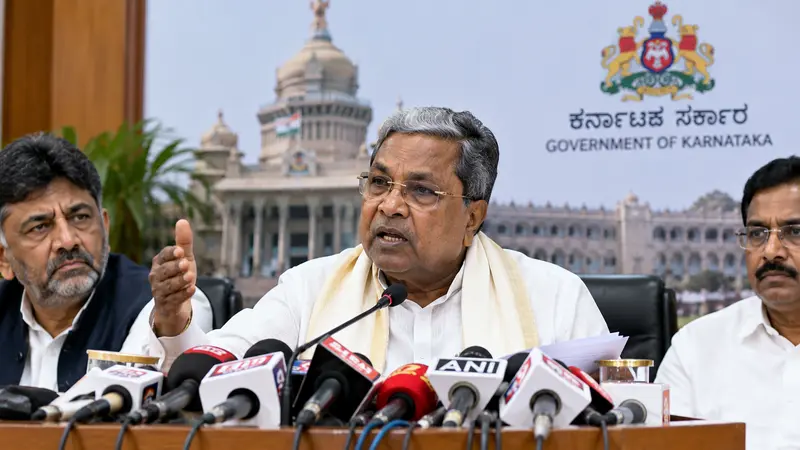
Karnataka Chief Minister D.K. Shivakumar has warned private companies, mainly the information technology firms of Bengaluru, that the state will act against any that deliberately sideline Kannadigas in recruitment. He made the statement in a post on X on Sunday, 25 October, a day after a video went viral in which a young woman alleged that the city's IT companies reject candidates who list Kannada as their mother tongue.
What the chief minister said
Shivakumar said that it was disheartening to hear complaints that Kannadigas were being denied job opportunities in Bengaluru's IT companies. His government, he said, takes the sidelining of native Kannada speakers seriously, and it will take appropriate action if a private institution is found to be deliberately keeping them out. He said that the state would not allow the rights, dignity and opportunities of Kannadigas to be disregarded, and he said that in Karnataka, the Kannadiga is sovereign.
The post did not say what penalties or measures the government has in mind, and the reports do not name any company or any specific case.
The viral video
The video was posted on 24 October. In it, a young woman alleged that IT firms in Bengaluru prefer candidates from other states, such as Andhra Pradesh and Tamil Nadu, and that companies reject resumes that mention Kannada. She said there were no campus recruitment drives in Bengaluru colleges and that firms hire people from elsewhere at lower salaries, and she asked for a solution.
The claims are from one video and have not been tested. Social media responses were mixed, with several users supporting the chief minister and others questioning whether the allegations apply to the industry as a whole.

The stalled bill
The background is a long-running attempt to reserve jobs for locals. In July 2024, the Karnataka Cabinet approved a bill that proposed reservations for local candidates in private-sector jobs: about 50 per cent in management posts, 75 per cent in non-management roles and 100 per cent in Group C and D posts. The then Chief Minister, Siddaramaiah, put it on hold after industry raised objections. In June this year, Shivakumar's government spoke of measures that include filling 56,000 vacant government posts and giving preference to Kannadigas in private-sector employment.
Industry leaders have long argued against quotas in a sector that recruits from across the country and the world. Mohandas Pai, the chairperson of Aarin Capital and a former finance chief of Infosys, criticised the government's approach and said that the state should first fix education, especially higher education in north-eastern Karnataka. He pointed to low enrolment, weak soft skills and a heavy reliance on guest faculty, which he put at 60 to 70 per cent, in government colleges. He suggested that the government hire permanent teachers and fund research. In the past, the biotechnology entrepreneur Kiran Mazumdar-Shaw has argued that highly skilled hiring should be exempt from any local-jobs policy.
A law that reserves private-sector jobs for locals runs into constitutional questions. It has to be reconciled with the right to equality in public employment and with the freedom to carry on a trade or business, and states that have tried it have met resistance. Haryana's law reserving jobs for locals in private firms was struck down by the Punjab and Haryana High Court in 2023, and Karnataka's own bill was stopped before it reached the Assembly. A warning backed by an administrative order or by hiring incentives would face fewer legal problems than a quota.
There are three possible results. The first is that nothing changes beyond the statement, as has happened after earlier warnings. The second is that the government revives a version of the local-jobs bill, with exemptions for skilled posts, which would lead to another confrontation with industry. The third is a softer route in which the government works with companies and universities on training and campus hiring, which would deal with the complaint about the absence of campus drives.
Whatever the choice, a warning from the chief minister puts companies on notice that questions on hiring in Bengaluru will be asked in public. The tech sector in the city employs lakhs of people from every state, and its leaders do not want that reputation harmed by a dispute over language. The question that no one has yet answered with data is how many Kannadigas are in fact rejected by the firms, and whether the problem is one of discrimination, of skills or of the way jobs are advertised.
R
4 min
What did you think?