/
Bahrain intercepts Iranian drones in second attack in three days
Bahrain's military said it intercepted Iranian attacks on 15 November, the second in three days, as the IRGC claimed six drones hit a US radar. CENTCOM says two drones were shot down on 13 November with no damage.
A
5 min
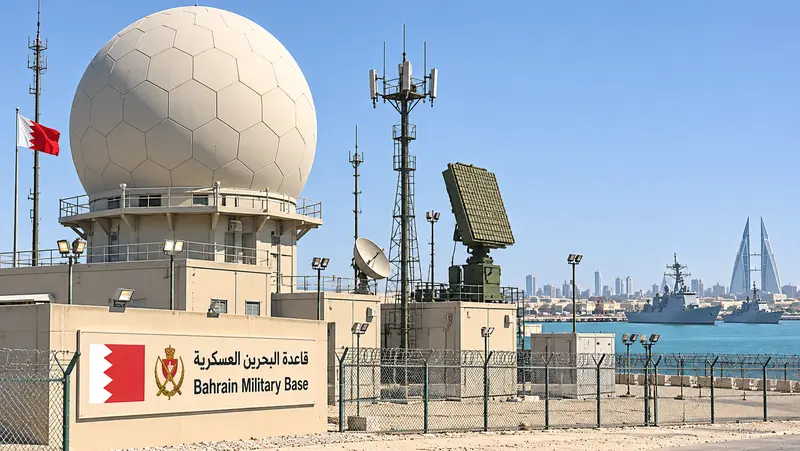
Did Iran destroy a US radar in Bahrain? Nothing so far confirms it. US Central Command says American forces shot down the two Iranian drones launched on 13 November, and Bahrain's military said on Sunday 15 November that its air defences had intercepted a fresh round of Iranian attacks.
The Islamic Revolutionary Guard Corps (IRGC) gave a different account on both days. Its claims have not been backed by any confirmed damage on the ground. Bahrain, which hosts the US Fifth Fleet, has now been targeted twice in three days after a lull that began in September.
What led to the second attack?
An earlier report on this site covered the Guards' Friday claim that they had wrecked a US early-warning radar in Bahrain. The IRGC described that as retaliation for a US strike on a communications tower at Sirik, near the Strait of Hormuz.
CENTCOM answered the same day in a public post dated 13 November. It said the IRGC had launched two one-way attack drones toward Bahrain and that US forces shot down both. It reported no injuries and no damage, and labelled the radar claim false.
Sunday brought a larger episode. Explosions were heard across Bahrain at about 4am (0100 GMT), and residents described a second series of blasts near 6.30am. Sirens sounded nationwide, and authorities pushed alerts out through social media. They were the first such warnings in Bahrain since September.
Bahrain's Interior Ministry told residents to stay calm, move to the nearest safe place and rely on official channels for information. The military said it had intercepted several attacks before they reached their targets. The foreign ministry separately confirmed that air defence systems shot down Iranian drones.
The IRGC, in a statement, said six drones from its Aerospace Force had hit the US air defence radar system at the Al-Riffa helicopter base. It added a warning: "The Strait of Hormuz is closed, and any aggression by the American enemy will be met with an even harsher and more forceful response."
The Guards present the attacks as a response to American military action on Iranian soil. The Sirik tower strike was the stated trigger on Friday. US forces have also carried out minor strikes on Iran's Qeshm island in recent weeks, according to CBS-reported background on the run-up, though the IRGC did not tie Sunday's attack to a specific incident in its statement.
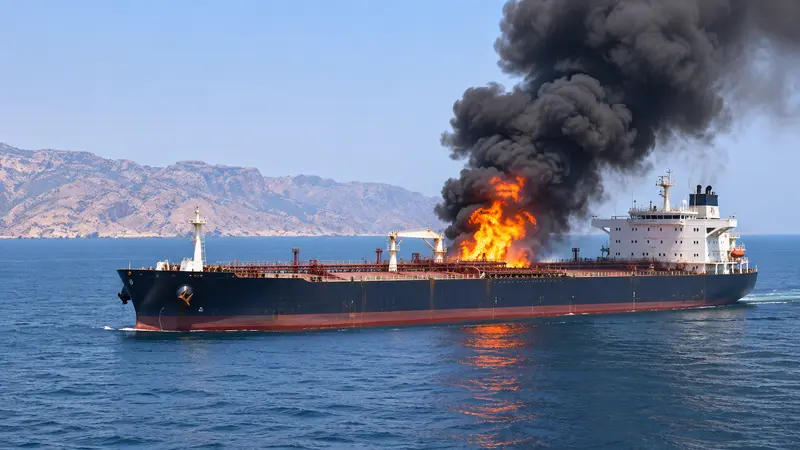
The Guards also claimed that tankers had struck sea mines in the Strait of Hormuz. On Friday they said two oil tankers had exploded and caught fire. A later statement spoke of three tankers on fire after hitting mines overnight. The IRGC did not name the ships, and the claims could not be verified.
The US side has stuck to a narrow, factual line: drones launched, drones destroyed, nothing damaged. CENTCOM has not claimed any wider success. Washington has, however, added weight to its position in the region. A US military official confirmed that the carrier USS Theodore Roosevelt is now in the Middle East, joining the USS George H.W. Bush and the USS George Washington. The three-carrier presence is expected to be temporary as strike groups rotate through.
Bahrain's position is defensive. Its foreign ministry says it has faced thousands of Iranian drone and missile attacks since the war began on 28 February. Iran hit the country repeatedly in the opening months in retaliation for US strikes, but Bahrain has not registered major attacks since September.
Tehran's diplomats are pursuing a separate argument over nuclear policy. Foreign Ministry spokesman Esmail Baghaei said on Sunday that Iran rejects Germany's demand that it halt uranium enrichment, arguing that as a member of the Nuclear Nonproliferation Treaty it has a right to enrich. He also criticised the International Atomic Energy Agency for what he called "nontechnical speculation" about a possible new enrichment facility in Isfahan.
What does this change for Bahrain and the Gulf?
For residents of Bahrain, the practical change is the return of sirens and shelter instructions after two months of quiet. For shipping, the Guards' declaration that the Strait of Hormuz is closed matters more, since the strait is the route the tanker claims centre on. Iran had largely stayed away from US installations in Gulf states since early September and concentrated instead on disrupting shipping.
Diplomacy offers little relief at the moment. Efforts to end the conflict between Washington and Tehran remain stalled. In Israel, Prime Minister Benjamin Netanyahu, speaking about forming a unity government with opposition leader Gadi Eisenkot, raised the prospect of Iran developing nuclear weapons and said it was time to end that threat "once and for all."
The rules for judging the rival claims are plain enough. The IRGC says what it hit. CENTCOM and Bahrain's military say what they stopped. Independent checks of the sites have not borne out the Guards' account of a destroyed radar, so CENTCOM's interception report remains the main official record of Friday's events.
What happens now?
No official body has announced a next step. The Guards have promised a harsher response to any American action, and the US has not said whether it will answer Sunday's attack. Bahrain's alert status will stay under the Interior Ministry's guidance.
The open question is whether the Guards follow Sunday's strikes with a third attack on Bahrain, and no date for any talks to resume has been given.
About the Author
A
Amita Sahani
Staff Writer
I'm a staff writer who spends most of my time hunting down stories and trying to make sense of my notes before deadline. I love the messy process of figuring out what makes people…
A
5 min
What did you think?